


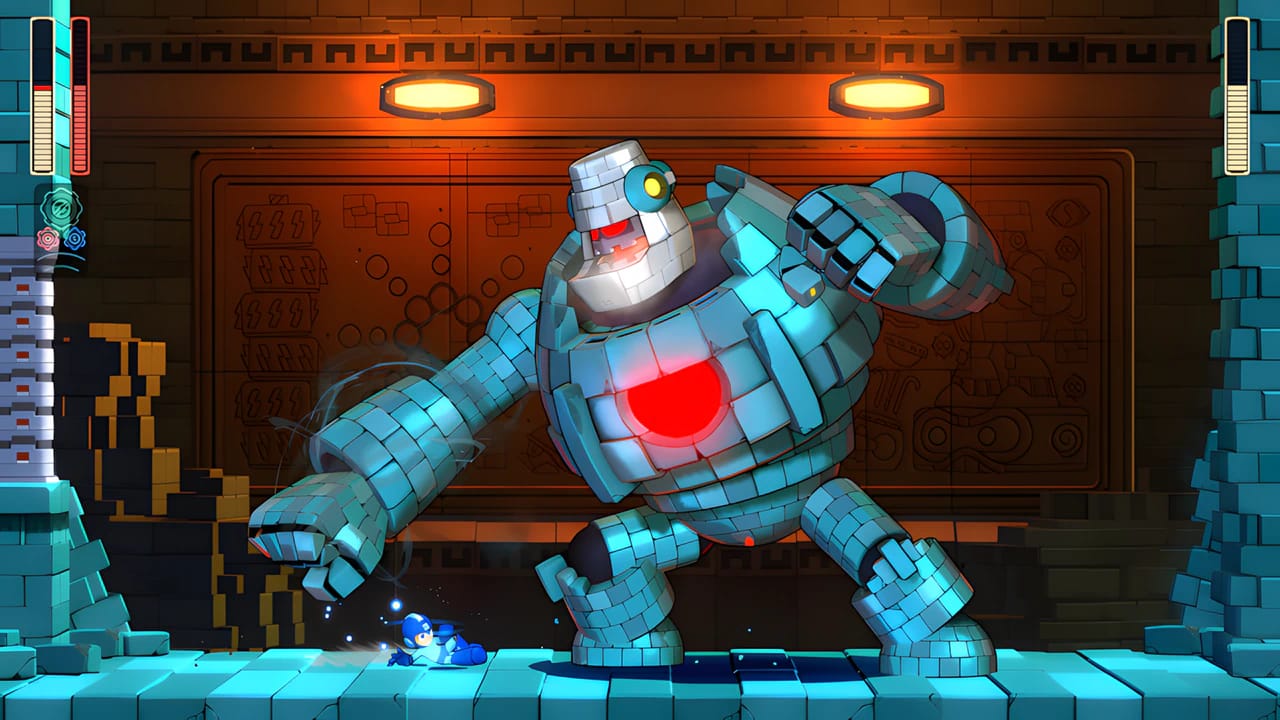
Table of Contents
Mega Man 11 is a 2D platform game developed by Capcom where you take on the role of Mega Man and must fight against Dr. Wily.
With the help of Dr. Light and his Double Gear system, Mega Man dons his armor and sets out to defeat Dr. Wily, overcoming various obstacles known as stages.
Each stage has its own level of difficulty, and if it’s your first time playing Mega Man 11 or other games in the franchise, you might find it a bit challenging. In this review, I will cover various aspects of the game and whether it’s worth buying.
Gameplay and Core Mechanics
At its core, Mega Man 11 follows the classic formula: precise platforming, pattern-based enemies, and a responsive shooting system. Movement feels tight and consistent, which is essential for a game that relies heavily on timing and precision.
Progression is built around defeating Robot Masters to unlock new abilities. While these weapons add variety, most of them feel situational, and it’s entirely possible to rely mainly on the default blaster throughout the game.
Each stage introduces completely different environmental challenges. At one moment, you need lightning-fast reflexes to avoid falling through the floor; the next, you’re dodging drops of acid. The game mixes platforming with fast, reaction-based challenges, often requiring quick decisions during jumps or while avoiding hazards. This creates tension but also makes early attempts feel punishing until you learn the enemy patterns.
During the battle against Torch Man, for instance, I died nearly seven times before mastering his attack patterns. This kind of unpredictability in every stage and boss fight makes the game both challenging and dynamic.
Difficulty Settings and Learning Curve
Mega Man 11 offers various difficulty settings that primarily scale damage taken, enemy behavior, and life counts. This approach ensures the game remains accessible to newcomers without compromising the brutal challenge expected by series veterans.
On lower settings, the experience is far more forgiving, allowing players to recover from errors and advance without the frustration of constant restarts. Conversely, higher difficulties demand absolute precision and flawless enemy behavior, particularly in the later stages where hazards and enemy placements leave zero room for error.
As someone new to the franchise, I opted for Normal mode—though the name is somewhat deceptive regarding the actual challenge involved. The game’s difficulty hierarchy breaks down as follows:
- Newcomer (Easy)
- Casual (Medium)
- Normal (Hard)
- Superhero (Very Hard)
The learning curve is closely tied to repetition. Initial runs through a stage often feel punishing; however, as you memorize enemy telegraphs and platform layouts, progression becomes significantly more attainable. This cycle of repeated attempts remains a fundamental pillar of the Mega Man experience.
The Double Gear System and Its Impact on Gameplay
A defining addition to Mega Man 11is the Double Gear System, a mechanic that allows players to temporarily augment Mega Man’s capabilities in two distinct ways: amplifying attack power or slowing down time. Far from being a passive upgrade, this system is manually toggled, granting the player full control—provided they can manage the heat gauge.
Power Gear: Enhancing Offensive Output
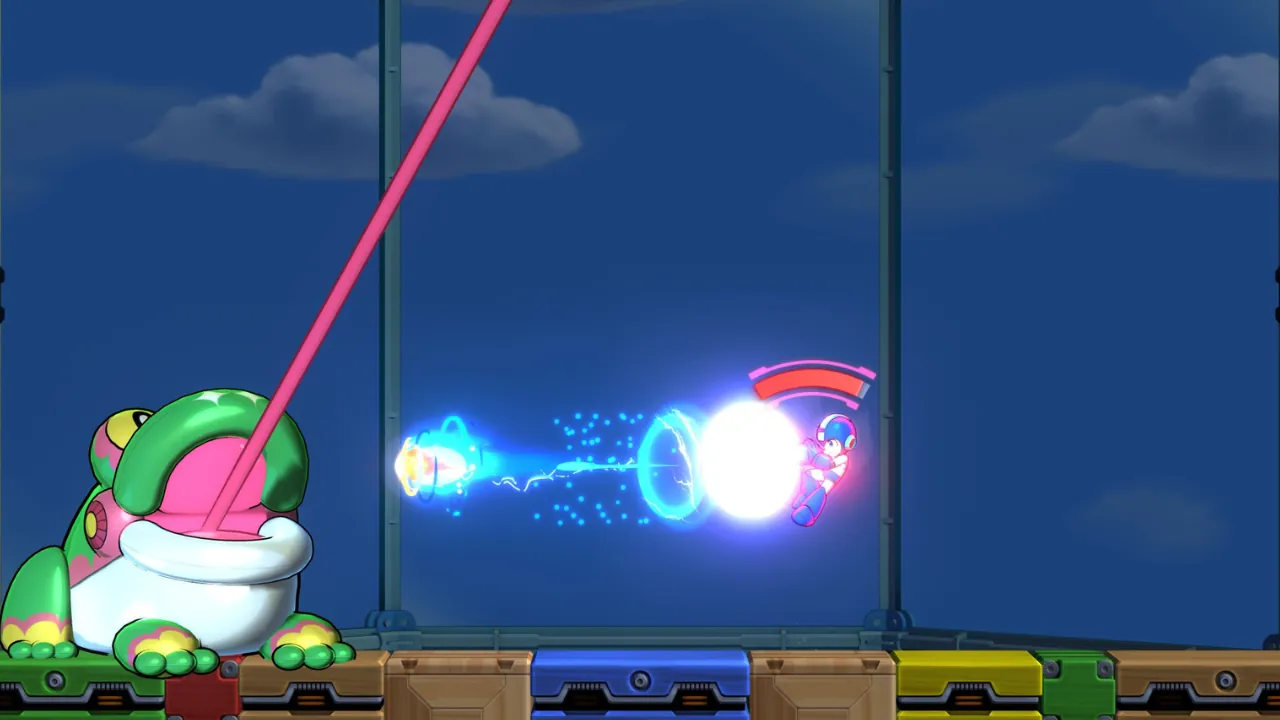
The Power Gear boosts the potency of your standard buster and special weapons, making it invaluable during boss encounters or against high-durability enemies. This is one of Mega Man’s most potent combat tools; when you need to eliminate threats with high burst damage, this ability is an absolute game-changer. While it can significantly shorten a fight, its effectiveness depends entirely on your tactical timing.
Speed Gear: Mastering Time and Precision
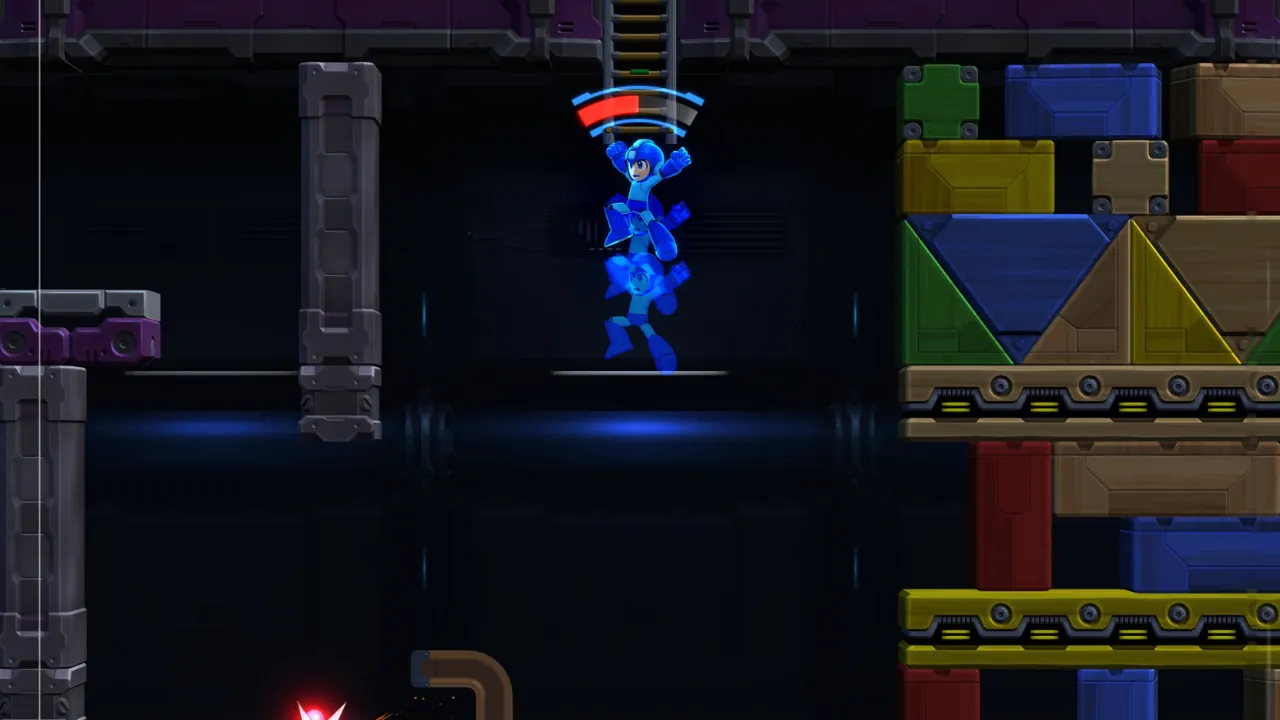
The Speed Gear, by contrast, slows down the world around you, offering superior control during platforming segments or chaotic skirmishes. This is particularly effective when navigating moving platforms, environmental traps, or tight jumps that demand frame-perfect timing. Compared to the Power Gear, the Speed Gear is arguably more essential. There are numerous moments where the need for rapid reflexes is mitigated by this slowing effect—whether you’re dodging a projectile, bypassing an obstacle, or maneuvering to collect health pick-ups.
The Risk-Reward Dynamic
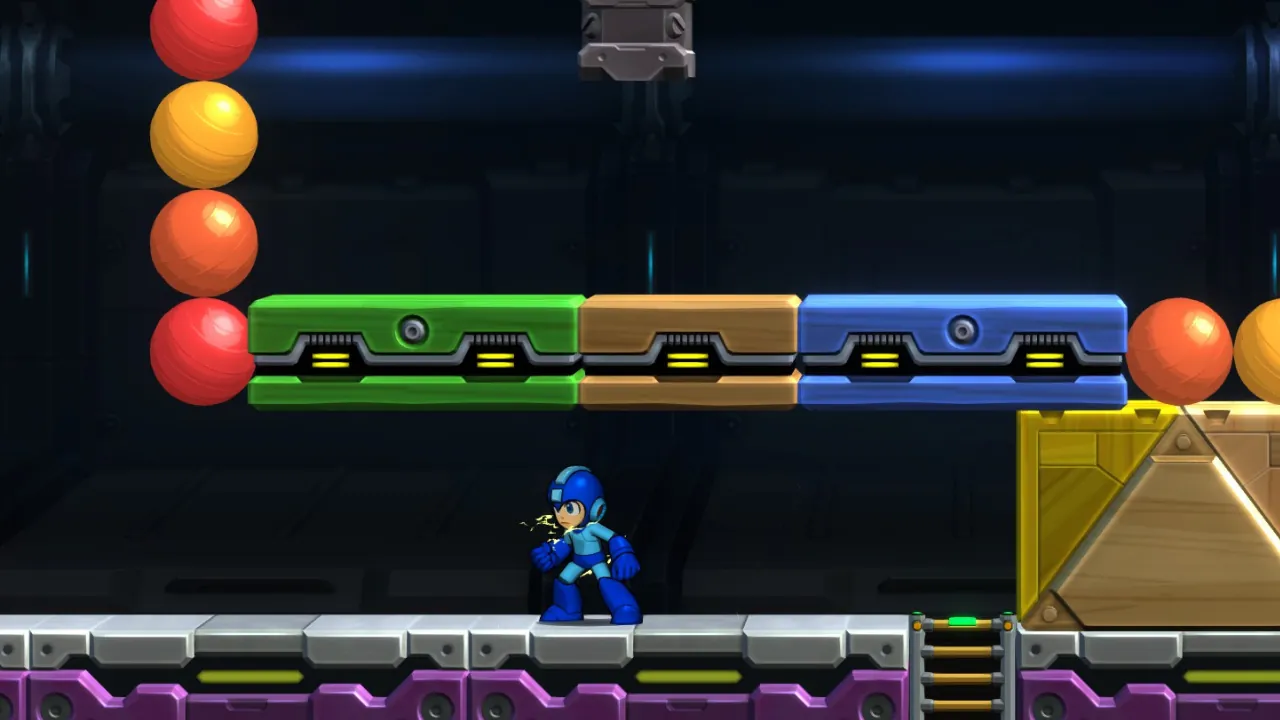
Both abilities are governed by an overheating mechanic. If pushed beyond its limit, Mega Man enters a cooldown state, rendering both gears inaccessible for a short duration. This creates a compelling risk-reward dynamic, forcing you to use these abilities strategically rather than relying on them as a permanent crutch.
In the end, the Double Gear system introduces a layer of flexibility that enhances accessibility without stripping away the game’s inherent challenge. Depending on your playstyle, it serves as both a vital safety net and a tool for high-level performance optimization.
Level Design and Stage Variety
Each stage in Mega Man 11 is meticulously crafted around the identity of its respective Robot Master. Visual themes and gameplay mechanics are tightly woven to reflect the boss awaiting you at the climax. From industrial zones to high-voltage sectors, the game maintains a cohesive link between environmental aesthetics and enemy concepts, ensuring every mission feels distinct.
Beyond the visuals, these environments introduce unique gimmicks that evolve as you advance. Early sections typically introduce a mechanic in a controlled environment, gradually ramping up the complexity by layering hazards, enemy placements, and timing-based obstacles. This progression keeps the gameplay engaging, though it reinforces the series’ signature trial-and-error philosophy.
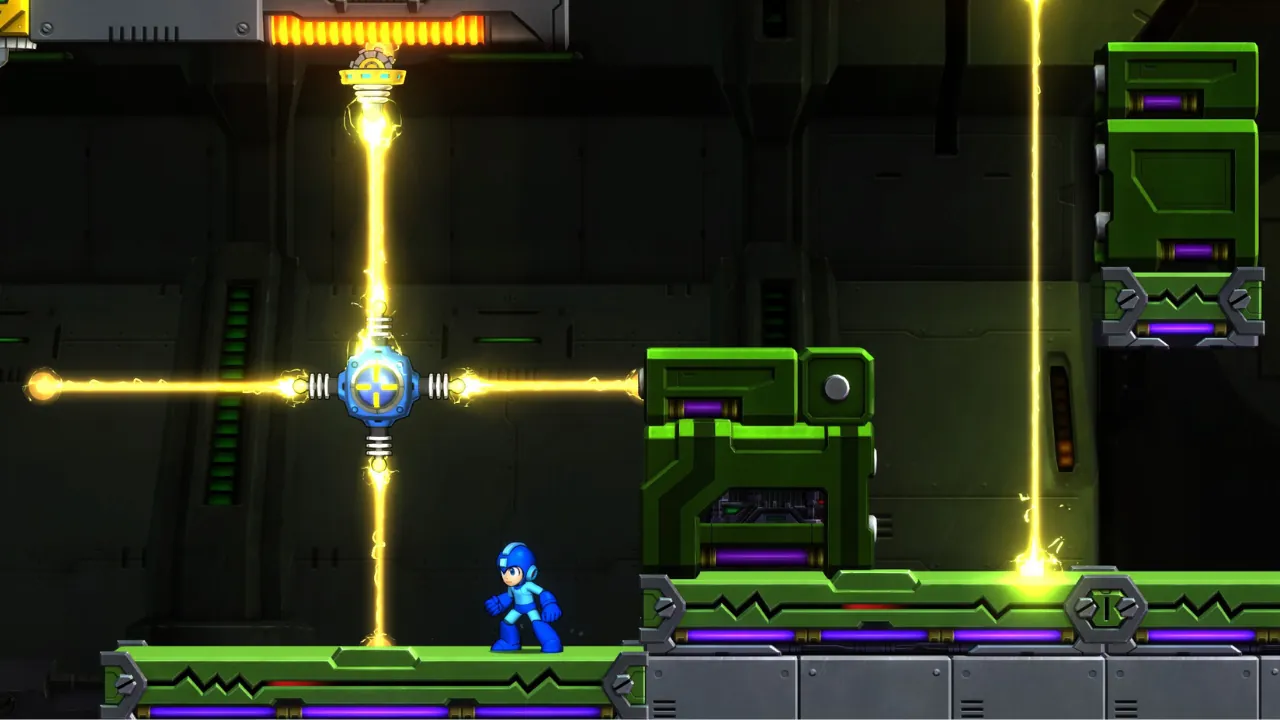
While variety is a hallmark of the experience, significant difficulty spikes can occur. Some areas feel perfectly balanced and intuitive, whereas others demand strict memorization—particularly during initial attempts. As I mentioned earlier, every gauntlet presents challenges inherent to its atmosphere. Some can be quite frustrating; for instance, I found the environmental hurdles in Torch Man’s stage to be particularly taxing.
Despite these occasional hurdles, the overall structure incentivizes replayability. As you gain familiarity with the terrain, what initially seemed chaotic becomes predictable. This transformation rewards players who invest the time to master attack patterns and optimize their routes.
Exploration, Secrets, and Hidden Rewards
Unlike several entries in the Mega Man X series or contemporary platformers, the game lacks traditional collectibles, such as hidden permanent health upgrades or items cataloged in a completion gallery. Instead, the experience prioritizes immediate rewards that support your current run over long-term exploration.
There were moments where I overlooked some of these resources—such as in Tundra Man’s stage, where players must navigate intense blizzards that push them forward. Even so, missing these didn’t hinder my future progress, as the game’s difficulty is balanced around skill rather than a specific collection of items.
The closest equivalent to a collectible system is the Bolts mechanic, which serves as the primary currency. These are scattered throughout levels and can be exchanged in Dr. Light’s Lab for consumables like E-Tanks and extra lives. More importantly, they allow you to purchase permanent enhancements that refine Mega Man’s performance, including accelerated charge times and reduced knockback.

In fact, during my entire run, I almost never visited Dr. Light’s shop, as I was largely unaware it was an option. This meant I tackled most of the game’s challenges without the aid of extra upgrades or consumables, relying purely on base mechanics
Beyond currency, certain enemies may drop rarer items, but these function as temporary aids—refilling health or weapon energy—rather than permanent milestones. For completionists, “true collectibles” are essentially found in the achievement and trophy systems. These tasks demand high-level mechanical mastery, such as clearing the game on the highest difficulties, defeating bosses without taking damage, or fully kitting out Mega Man through the shop.
All things considered, exploration in Mega Man 11 is streamlined. Rather than rewarding curiosity with hidden secrets, the game emphasizes execution, efficiency, and replayability. While this creates a highly focused experience, players who enjoy deep, secret-filled levels might find it somewhat linear.
Graphics and Visual Style Analysis
Mega Man 11 adopts a 2.5D visual style, merging 3D character models with the traditional side-scrolling perspective that defines the series’ roots. The result is a clean, highly readable presentation where enemy animations, hazards, and projectiles are instantly identifiable—a critical factor for a timing-focused platformer.
Rather than pursuing photorealism, the art direction prioritizes clarity and consistency. The backgrounds are vibrant and thematic, perfectly complementing each stage’s identity, while character designs remain faithful to their classic origins, albeit with a modern polish.
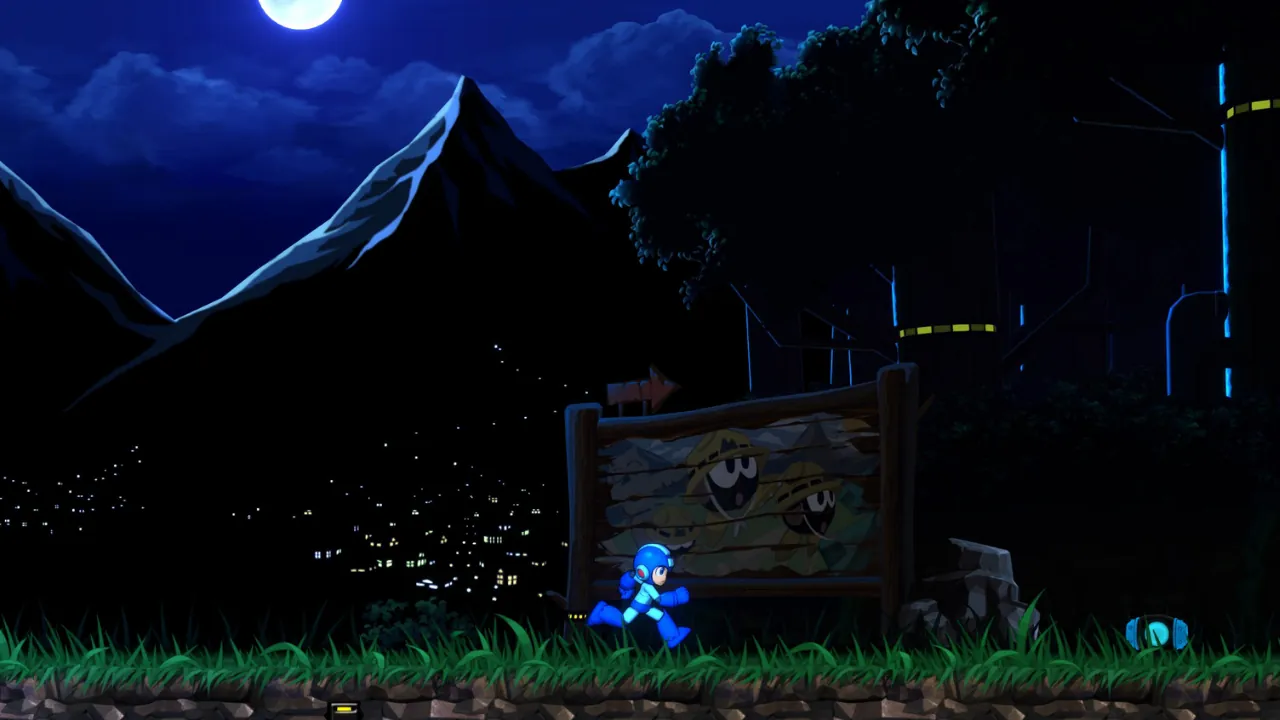
I believe Capcom hit the mark perfectly with this design choice. The color palette is striking, and the enemy variety feels entirely cohesive with the surrounding environments. I can say with certainty that the stage design is one of the game’s greatest strengths, standing right alongside its challenging gameplay.
A significant triumph of the visual design is how effectively it supports the core mechanics. Visual cues—such as enemy telegraphs, trap timing, and environmental hazards—are easy to interpret, which significantly mitigates frustration during the more demanding segments. Even during chaotic encounters, the screen rarely feels cluttered.
That said, while the visuals are undeniably polished, they don’t necessarily push technical boundaries. Compared to other contemporary platformers, the game takes a safer approach, prioritizing functional clarity over groundbreaking innovation. When it comes down to it, the style successfully delivers a modernized version of the classic Mega Man aesthetic, focusing on gameplay readability rather than mere visual spectacle—a trade-off that suits this type of experience perfectly.
Soundtrack and Audio Design
The Mega Man 11 soundtrack adopts a high-octane, energetic style that perfectly mirrors the game’s fast-paced action and platforming demands. Each stage is accompanied by a unique theme tailored to the environment and the sonic identity of its respective Robot Master. During boss encounters, the music shifts into more intense arrangements to heighten the sense of urgency and pressure.
While the compositions complement the gameplay effectively, the score leans more toward consistency than long-term memorability. Unlike the legendary soundtracks of earlier entries in the franchise, few tracks stand out as instantly iconic once the credits roll.
However, the audio design shines when it comes to player feedback. Every action—from firing the Mega Buster and landing hits to jumping and interacting with the environment—is tied to a crisp, distinct audio cue. These auditory signals are vital for maintaining situational awareness, especially during chaotic segments where visual information alone can be overwhelming.
Ultimately, the audio experience is both functional and highly polished. It serves its purpose by supporting the core mechanics, even if it lacks the revolutionary impact seen in the genre’s most celebrated scores.
Characters, Enemies, and Boss Variety
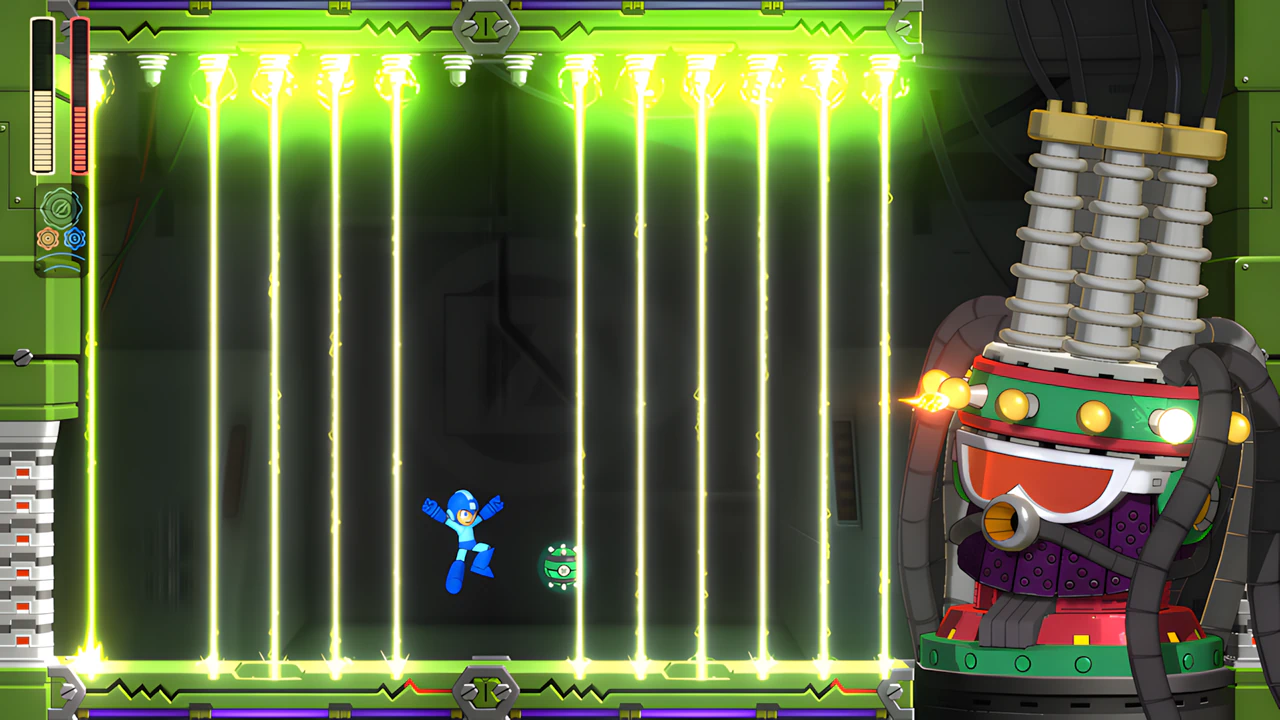
At its core, Mega Man 11 maintains a streamlined cast centered on the iconic archetypes: Mega Man, Dr. Light, and Dr. Wily. While the narrative presence is minimal, these characters effectively uphold the series’ classic structure without obstructing the gameplay flow.
The real diversity, on the other hand, lies in the adversaries. The game features two distinct tiers of bosses: Mini-bosses and the primary Robot Masters. The mini-bosses are generally straightforward encounters, serving as a “taster” for the challenges ahead. In contrast, the main stage bosses represent the true test of skill; mastering their intricate attack patterns usually requires significant time and patience.
The eight Robot Masters — Acid Man, Blast Man, Block Man, Bounce Man, Fuse Man, Impact Man, Torch Man, and Tundra Man — each bring distinct mechanics and attack patterns. Their designs are exaggerated and memorable, following the traditional Mega Man style. Beyond their specialized abilities, every boss boasts excellent visual flair. Fuse Man, for instance, has a striking design centered on speed and high-voltage currents; his sharp, energetic aesthetic perfectly communicates his lightning-fast combat style and electricity-based attacks.
In terms of variety, the game succeeds in keeping each stage feeling fresh. While the Robot Masters are highly specialized, standard enemy behavior often follows familiar patterns. This means the difficulty usually stems from how these enemies are placed within the level design rather than the complexity of the enemies themselves.
When it comes down to it, while the story remains simple, the sheer variety of enemies and bosses provides enough engagement to carry the experience, especially when paired with the game’s inventive stage-specific hazards.
Boss Fights and Combat Strategy
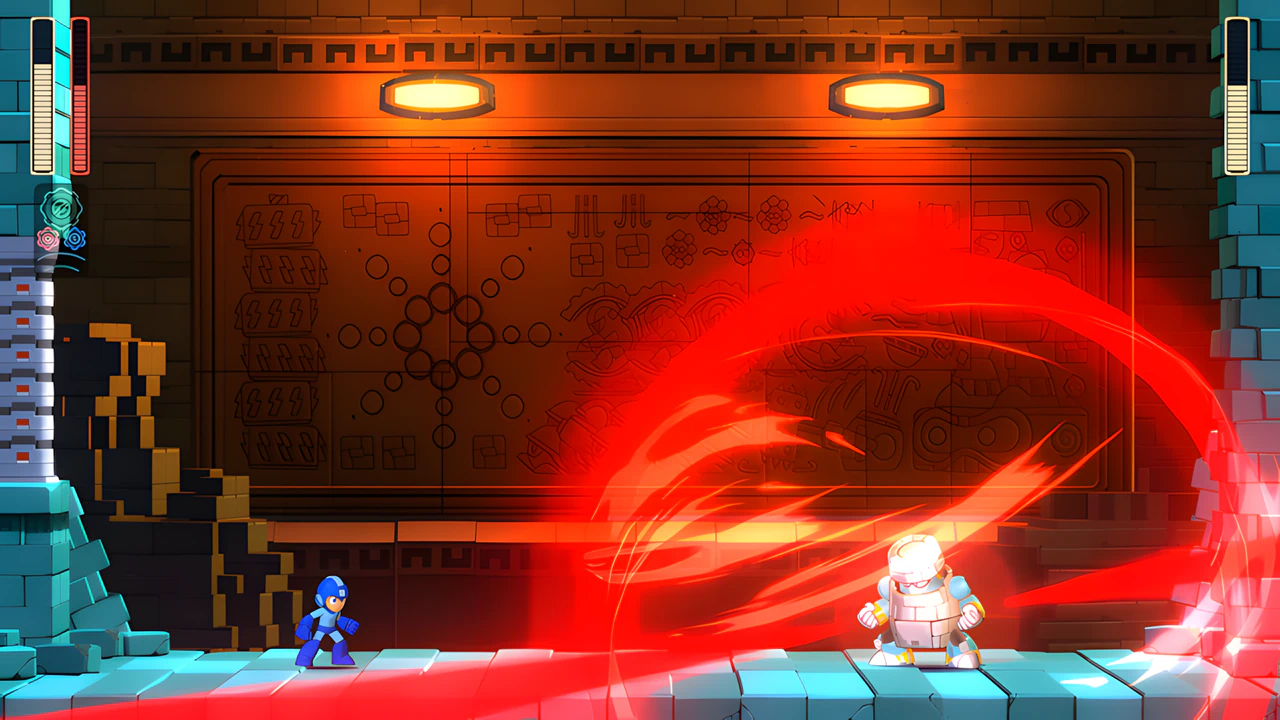
Boss encounters in Mega Man 11 adhere to the classic Robot Master blueprint: every battle is structured around distinct attack sequences that demand observation, adaptation, and eventual mastery. While initial attempts often feel chaotic, these adversaries become significantly more predictable once you decipher their telegraphs and movement cycles.
To emerge victorious, the primary secret lies in analyzing these combat loops and prioritizing evasion. Minimizing damage is often more critical than aggressive offense, especially as you learn how to navigate the arena effectively.
A fundamental pillar of strategy involves exploiting weaknesses. Every Robot Master is vulnerable to a specific weapon acquired from another boss, establishing an indirect progression hierarchy. Leveraging the correct armament provides a massive tactical advantage, transforming a grueling endurance test into a much more manageable skirmish.
Without the optimal weapon, encounters become considerably more taxing, demanding flawless dodging and extreme patience. This reinforces the necessity of preparation, particularly for those who choose to tackle the bosses in a non-linear or challenging order.
The Double Gear System further deepens these encounters. The Speed Gear is invaluable for reacting to intricate bullet patterns, while the Power Gear allows you to capitalize on brief openings with devastating burst damage. In practice, these fights reward analytical observation over raw reflexes; once you grasp the underlying logic of a boss, victory feels like a hard-earned achievement rather than a stroke of luck.
Game Length and Completion Time
The time required to complete Mega Man 11 fluctuates based on your familiarity with precision platformers and how quickly you master its core mechanics. On average, a standard playthrough on Normal difficulty clocks in at approximately 8 to 10 hours for genre veterans.
In my personal experience, the journey took closer to 13 hours. This extended duration was primarily due to the steep learning curve in specific stages where frame-perfect timing and platforming precision were exceptionally demanding.
A substantial portion of this runtime is dedicated to the series’ traditional iterative learning structure. While early attempts at a level can feel punishing, the experience becomes increasingly fluid as you memorize enemy placements and environmental hazards. Progression eventually shifts from a struggle for survival into a rewarding display of skill.
Replay Value and Additional Content
Mega Man 11 lacks traditional DLC or expansive post-launch updates. Nevertheless, the title provides substantial longevity through integrated systems and optional modes tailored for those who relish mastering nuanced mechanics.
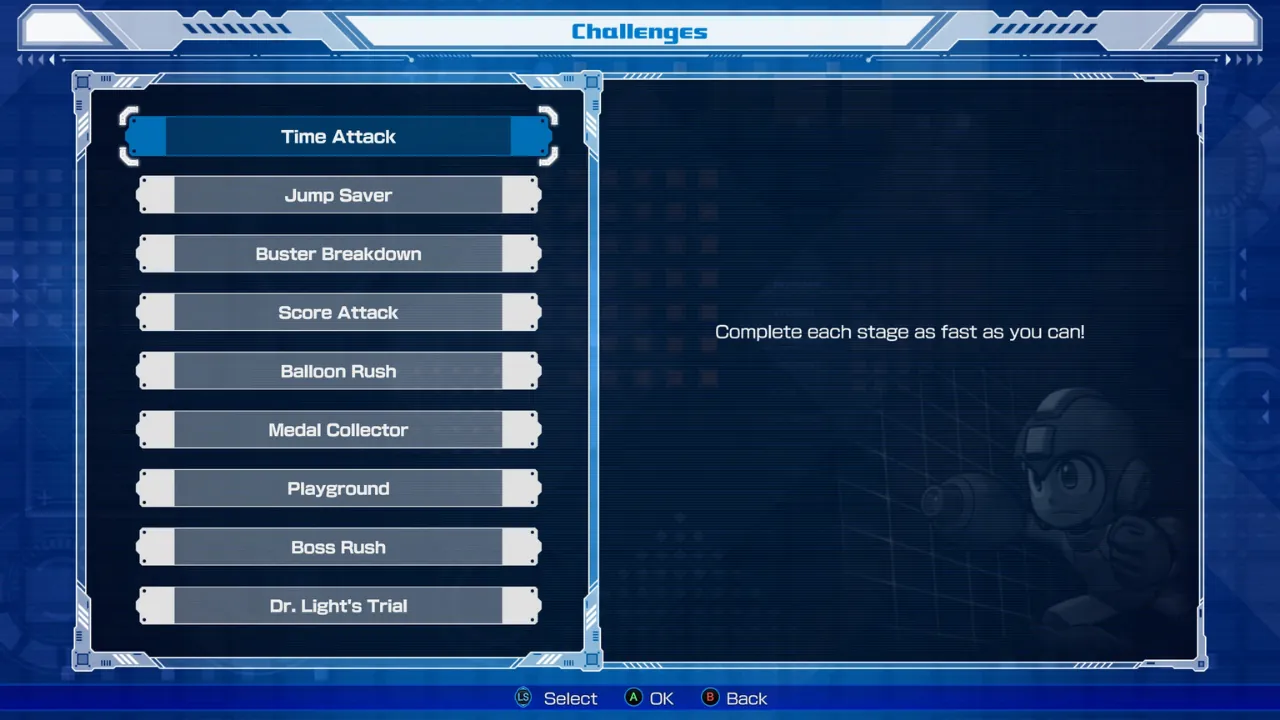
A primary driver of this durability is Challenge Mode. This suite of structured trials extends far beyond the standard campaign, pushing the boundaries of proficiency in areas like speed, platforming precision, and ability management.
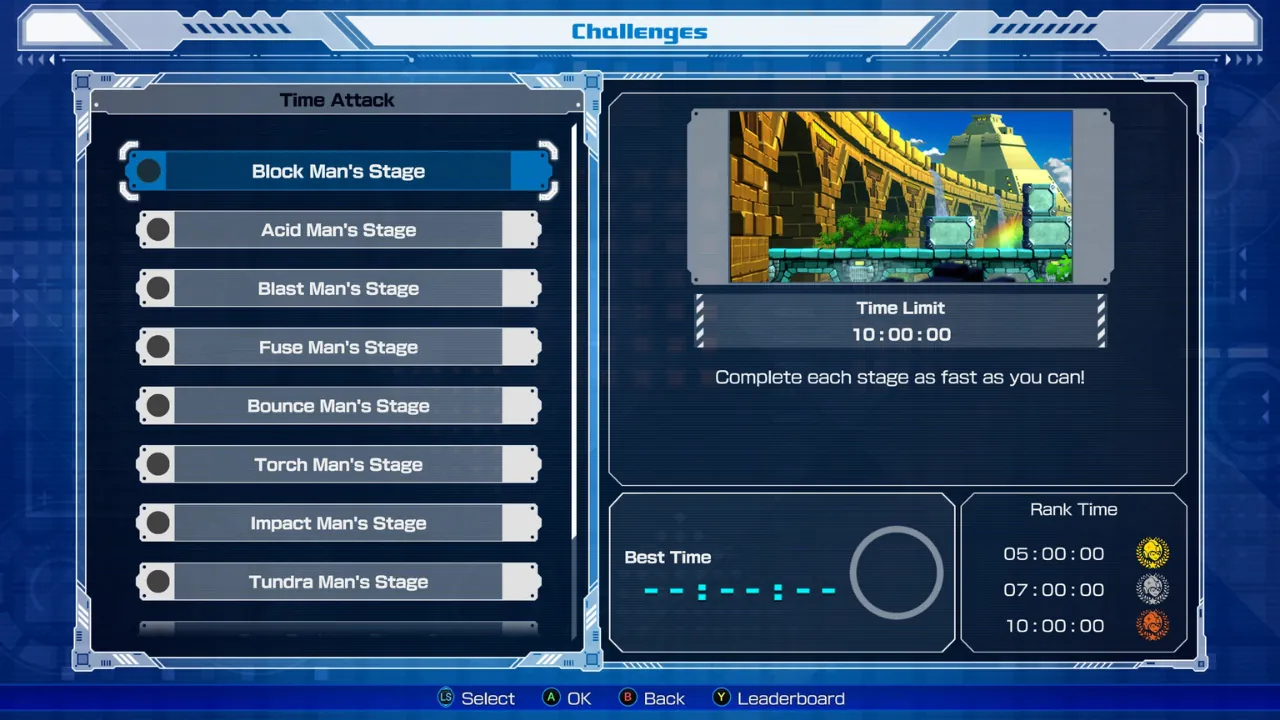
These objectives vary significantly; some focus on Time Attack goals demanding maximum efficiency, whereas others impose survival constraints or specific gameplay limitations. Such variety provides a refreshing contrast to the linear progression of the main story.
Competitive spirits will find the inclusion of Online Leaderboards and ranking systems particularly compelling. The drive to optimize runs and climb global charts incentivizes constant improvement, appealing directly to “perfectionist” players.
Beyond dedicated trials, inherent replay value stems from multiple difficulty tiers and the upgrade paths available in Dr. Light’s Lab. These elements allow for vastly different tactical approaches on subsequent playthroughs. From a broader perspective, while the experience remains focused on its core offering, the depth of these extra modes ensures engagement remains high long after the final credits roll.
Where to Buy Mega Man 11
Mega Man 11 is available for PC via Steam. You can grab your copy through the links below to support my content at no additional expense.
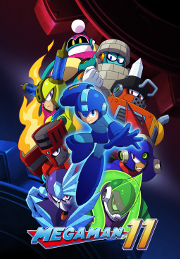
Final Verdict: Is Mega Man 11 Worth Playing Today?
Mega Man 11 belongs to that elite category of platformers—much like Cuphead—where the initial difficulty curve is steep. Until you truly master its mechanics, every stage feels like a hard-fought battle. Still, for enthusiasts of demanding precision-platformers, this title offers a rich and rewarding experience.
Personally, I thrive on high-stakes gameplay, and despite the occasional frustration in certain levels, the journey was incredibly satisfying. The sense of accomplishment after overcoming a particularly grueling section is exactly what makes this genre so compelling.
That said, if you generally prefer a more relaxed experience, Mega Man 11 might be a tough sell. I wouldn’t recommend it to casual players unless you opt for the Newcomer difficulty, which provides practically infinite lives and a much more forgiving environment. On a scale of 1 to 5, with 1 being the worst and 5 the best, my final rating for Mega Man 11 is 4.
For those curious to see the game in action before committing, feel free to check out my full YouTube playlist, where I navigate the highs and lows of the Blue Bomber’s latest adventure.
Rating: 9/10
FAQ (Frequently Asked Questions)
Is Mega Man 11 good?
Yes, Mega Man 11 is a solid platformer with tight controls, creative level design, and a modern twist through the Double Gear system. It stays true to the classic formula while adding accessibility options.
Is Mega Man 11 hard?
Yes, the game can be challenging, especially on higher difficulties. However, multiple difficulty settings make it more approachable for beginners.
Is Mega Man 11 good for beginners?
It can be, thanks to easier modes like “Newcomer,” but new players may still struggle with timing and level memorization early on.
Is Mega Man 11 multiplayer?
No, Mega Man 11 is a single-player experience and does not include any multiplayer modes.
How long is Mega Man 11?
A typical playthrough takes around 8 to 10 hours, but it can take longer depending on your skill level and how often you retry stages.
Is Mega Man 11 worth it?
Yes, especially on sale. It offers a polished and challenging experience, making it a great choice for fans of platformers and players who enjoy skill-based progression.