


Table of Contents
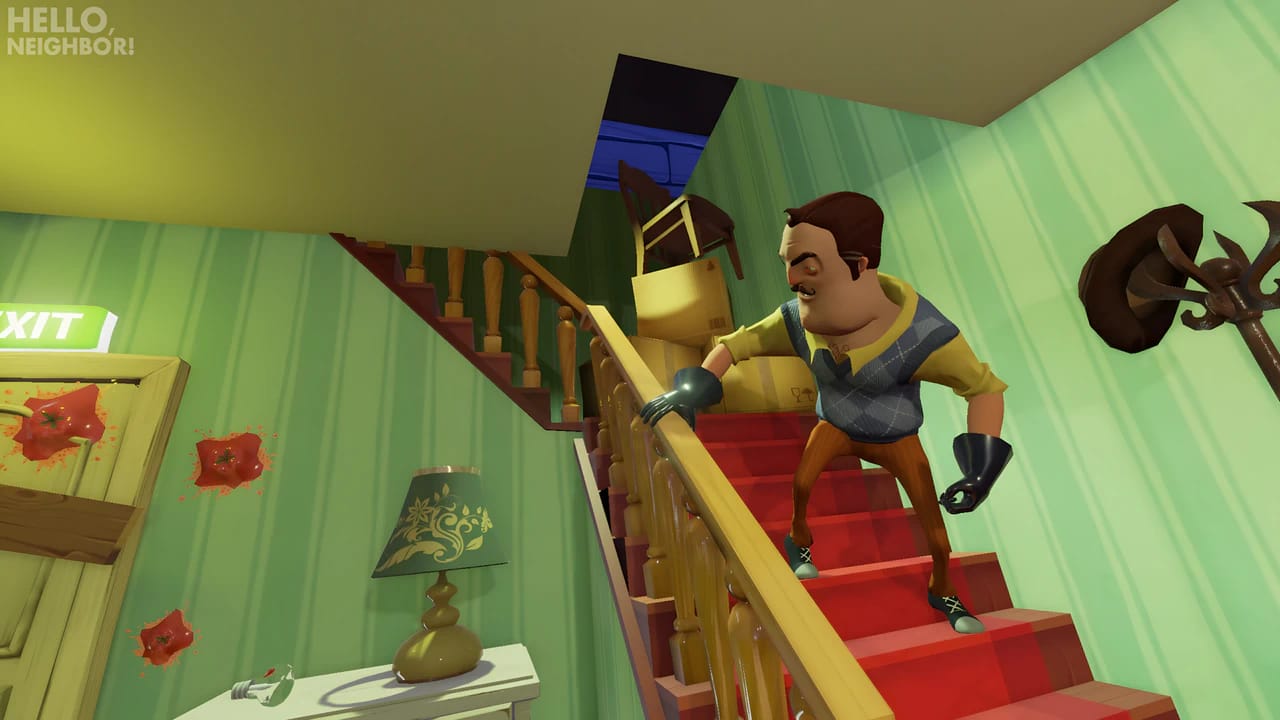
Hello Neighbor is a stealth horror game built around a simple but intriguing concept: breaking into your neighbor’s house to uncover what he’s hiding in his basement. At first glance, it looks like a casual experience with a stylized art style, but the gameplay quickly shifts into a nerve-wracking game of cat and mouse.
Instead of guiding the player, the game emphasizes organic discovery and persistent experimentation, and an adaptive AI system that reacts to your behavior. This creates moments of real tension, but it can also lead to frustration depending on how the mechanics play out.
In this review, I’ll break down the game’s core systems, strengths, and weaknesses to help you decide whether Hello Neighbor is still worth your time.
You may also like: Hello Neighbor – Hide and Seek / Is it worth it?
Gameplay and Core Mechanics
At its core, Hello Neighbor revolves around stealth, exploration, and puzzle-solving inside a constantly evolving house. The main objective is simple — break into your neighbor’s home and uncover what he’s hiding — but the way the game unfolds makes this process far less straightforward.
Rather than providing a clear roadmap, the game throws you into an open-ended environment where progression depends on observation, experimentation, and figuring things out on your own.
What stands out is how the game blends stealth mechanics with environmental puzzles. You’ll spend most of your time searching for keys, unlocking doors, and interacting with objects scattered across the house.
However, these puzzles aren’t always intuitive, often requiring persistent experimentation rather than linear deduction. This design can feel rewarding when things click, but it can also slow down the pacing when solutions aren’t immediately obvious.
Another key element is the constant pressure created by the neighbor himself. Unlike traditional stealth games with predictable enemy patterns, the gameplay here feels more dynamic, as you’re forced to adapt on the fly while exploring unfamiliar areas. This creates tension, but also makes the experience somewhat inconsistent depending on how the systems behave.
In my experience, the game can become frustrating due to certain puzzles that seem almost impossible to solve at first. This tends to happen quite frequently, especially early on. The key is not to get too stressed about it, as this challenge can be considered part of the game’s overall difficulty.
Neighbor AI and Adaptive Behavior
One of the most distinctive features of Hello Neighbor is its adaptive AI system, which is designed to learn from the player’s actions over time. Instead of following fixed patrol routes, the neighbor reacts to how you play — if you repeatedly enter through the same window or door, he may start placing traps, cameras, or even waiting for you in that area. On paper, this creates a more dynamic and unpredictable experience compared to traditional stealth games.
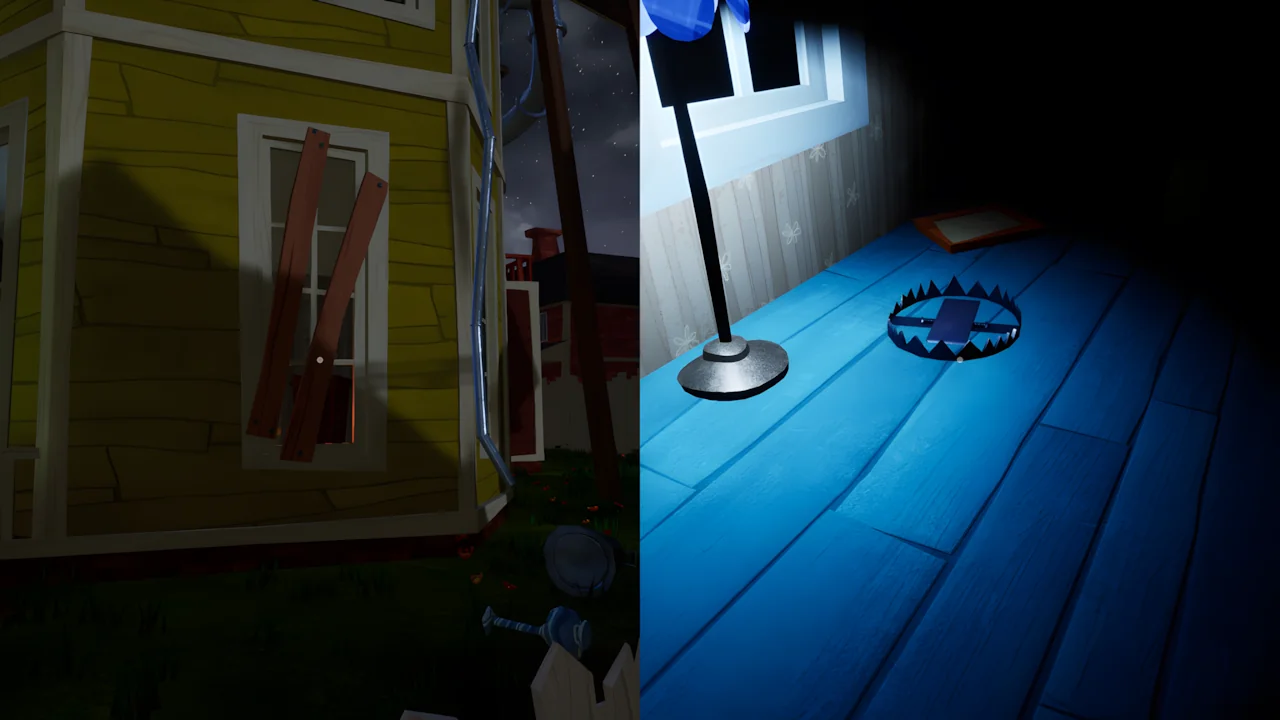
In practice, the AI’s effectiveness can be hit-or-miss. There are moments where the AI genuinely feels reactive and smart, forcing you to change your approach and think more carefully about your actions.
However, there are also situations where the neighbor’s behavior seems erratic or overly aggressive, which can break the sense of strategy and make encounters feel random rather than earned.
This unpredictability ends up being both a strength and a weakness. It adds tension and prevents the gameplay from becoming repetitive, but it can also lead to frustration when the AI doesn’t behave in a way that feels logical or fair.
Some traps are more effective than others. For example, bear traps caused me far more trouble than the water buckets placed above doors. While the AI’s logic is relatively simple, it can still interfere with your progress in certain situations.
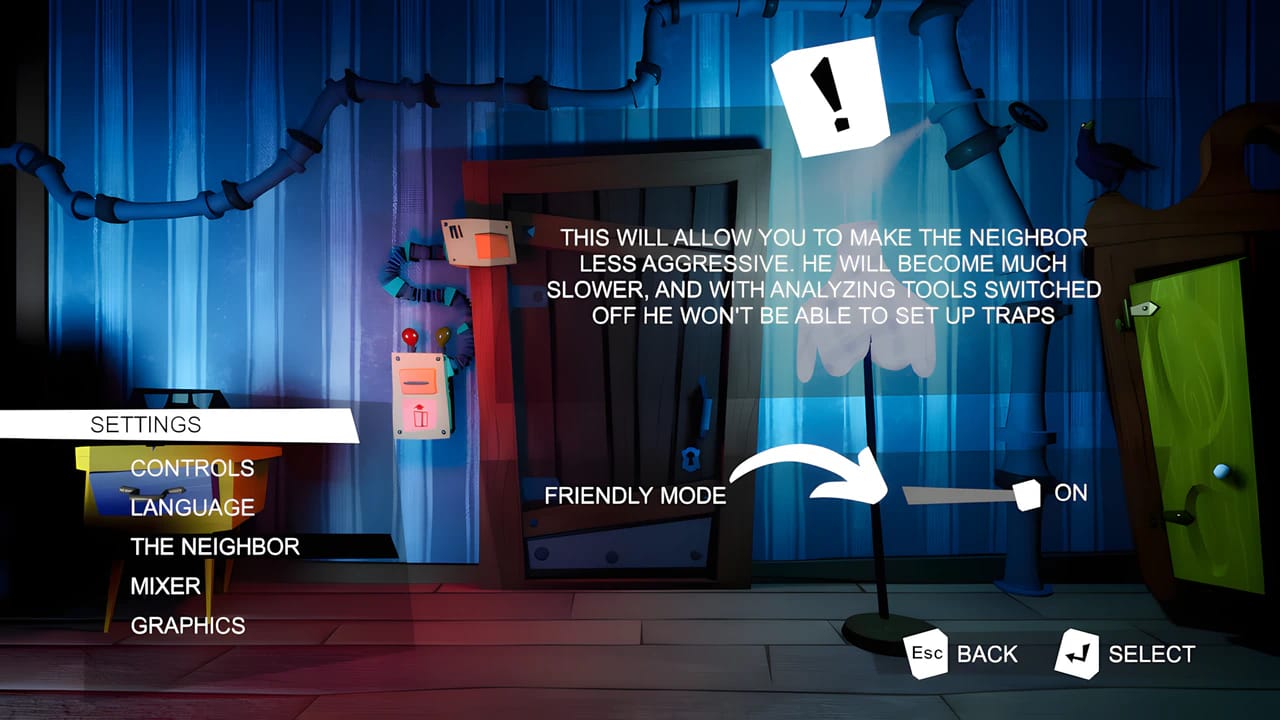
If you find the AI too challenging, you can enable Friendly Mode, which reduces the neighbor’s intelligence and makes the experience more accessible.
Puzzle Design and Exploration
Puzzle-solving is at the heart of this game, and most of your progression depends on exploring the house, finding hidden items, and figuring out how to unlock new areas.
Instead of guiding the player with clear objectives, the game encourages experimentation, requiring you to interact with the environment and pay attention to small details to move forward.

However, the puzzle design is heavily based on trial and error. While some solutions feel clever and rewarding once you figure them out, others can be unintuitive, forcing you to guess rather than logically deduce what to do next. This can slow down the pacing and, at times, break the flow of the experience.
Exploration plays a big role here, as the house itself becomes more complex with each act, introducing new paths, mechanics, and obstacles. While this adds variety, it can also make navigation confusing, especially without clear direction. As a result, the experience can shift between satisfying discovery and frustrating wandering depending on how easily you connect the clues.
Difficulty and Learning Curve
At first glance, Hello Neighbor may seem approachable due to its simple controls and straightforward objective, but the actual experience can be quite challenging. The game offers very little guidance, forcing players to rely on observation, experimentation, and persistence to make progress.
The difficulty doesn’t come from complex mechanics, but rather from the absence of clear pointers and the erratic nature of both the puzzles and the neighbor’s behavior. This creates a steep learning curve, especially in the early stages, where it’s easy to feel lost or unsure about what to do next. Instead of gradually teaching its systems, the game expects players to figure everything out on their own.
Because of this, the experience can feel inconsistent. Some players may enjoy the sense of discovery and independence, while others may find the lack of structure frustrating. The absence of a proper tutorial makes the first few hours particularly demanding, especially for those unfamiliar with stealth or puzzle-based games.
When I first played Hello Neighbor, I seriously considered giving up. The puzzles felt overly complex and almost impossible to solve without watching YouTube videos. However, I decided to stick with it, and over time I started to enjoy both the experience and the challenge. In the end, the puzzles are really the only aspect of the game that feels genuinely difficult.
Graphics and Atmosphere
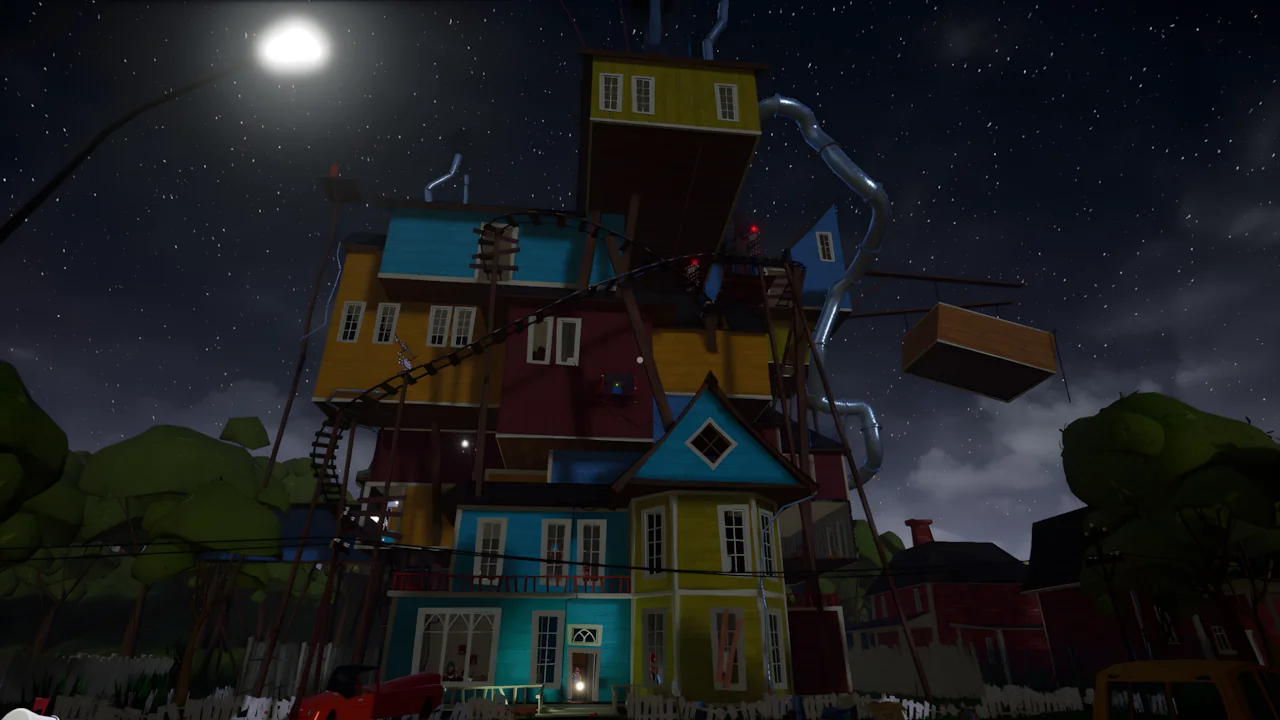
Hello Neighbor uses a stylized, cartoon-like art style that immediately sets it apart from traditional horror games. The bright colors, exaggerated character design, and playful visuals create an unusual contrast with the game’s suspense-driven premise. At first glance, it may not look like a horror experience, but the tension comes more from the gameplay than from the visuals themselves.
The atmosphere is built primarily through psychological unease. Exploring the house while knowing the neighbor can appear at any moment creates a sense of unease, even without relying on dark environments or realistic graphics. However, the visual style can sometimes reduce the overall impact of fear, making the game feel more tense than actually scary.
As the game progresses, the environment becomes more complex and surreal, especially in later acts, adding variety but also making the experience feel slightly inconsistent in tone. While this shift can be interesting, it may also break immersion depending on how the player interprets it.
Bugs and Technical Performance
While Hello Neighbor has received multiple updates since its release, technical issues can still affect the overall experience. In general gameplay, however, I didn’t experience any performance problems — the game ran smoothly, with no noticeable stuttering or FPS drops during my playthrough.
That said, I did encounter a major issue when trying to launch the game on PC (Steam). The game would crash on startup, preventing me from playing at all. This wasn’t a minor inconvenience — it completely blocked access until I found a solution.
I was only able to fix the problem by following this YouTube video, which walks through the steps needed to resolve the crash issue and get the game running properly.
After applying those steps, the game finally launched without any further problems. While the in-game performance was stable, this kind of issue shows that technical problems can still be a barrier, especially for players expecting a smooth experience right from the start.
Game Length and Replayability
The overall length of Hello Neighbor can vary significantly depending on how you approach the game. If you play without any guidance and take time to explore, it will likely take around 8–9 hours to complete. On the other hand, if you already know where key items are located or how to solve certain puzzles, the playtime can drop to around 4–6 hours.
On my first playthrough of Hello Neighbor, it took me around 9 hours to complete the game. This was mainly due to the initial difficulty in solving the puzzles and finding the items and keys required to progress.
Most of this variation comes from how the game handles progression. Since there’s little to no guidance, a big portion of your time is spent figuring out what to do next rather than executing clearly defined objectives. This can either extend the experience in a meaningful way or make it feel artificially longer, depending on your patience.
When it comes to replayability, the value is somewhat limited. While there are achievements and hidden elements to discover, the core gameplay doesn’t change much on a second playthrough. Once you understand the puzzle solutions and layout, much of the challenge is removed, which reduces the incentive to replay the game.
Game Modes and Overall Content
Hello Neighbor is primarily a single-player experience, structured around three main acts that gradually expand both the house and the gameplay mechanics. Each act introduces new areas, puzzles, and elements that build on what you’ve already learned, creating a sense of progression as the environment becomes more complex.
Instead of offering multiple traditional game modes, the content is focused on this evolving structure. As you move from one act to another, the house changes significantly, adding new mechanics and challenges that keep the experience from feeling completely repetitive. However, the core gameplay loop — explore, solve puzzles, avoid the neighbor — remains the same throughout.
Outside of the main campaign, the game doesn’t offer much additional content. There are no official multiplayer modes or extensive side activities, meaning most of the value comes from the main experience itself and optional achievements.
Pros and Cons
Based on my experience with the game, I’ve outlined its main strengths and weaknesses below.
Pros
- Unique adaptive AI system that reacts to player behavior, creating unpredictable moments
- Creative puzzle design that encourages exploration and experimentation
- Distinct visual style that stands out from traditional horror games
- Constant sense of tension while exploring the neighbor’s house
Cons
- Inconsistent AI behavior, sometimes feeling random rather than intelligent
- Heavy reliance on trial and error, which can become frustrating
- Lack of guidance or tutorial, making the early game confusing
- Limited replayability once puzzle solutions are known
- Technical issues, such as crashes on PC in some cases
Who Should Play Hello Neighbor?

Hello Neighbor is best suited for players who enjoy exploration-driven gameplay and don’t mind figuring things out on their own. If you like games that don’t hold your hand and instead encourage experimentation, this can be a rewarding experience.
It’s also a good fit for those who enjoy stealth mechanics mixed with puzzle-solving, especially when combined with unpredictable elements like the game’s adaptive AI. The constant tension of being chased while trying to solve puzzles can create some memorable moments.
On the other hand, this may not be the best choice for players who prefer clear objectives, structured progression, or guided gameplay. The hands-off approach and its cryptic puzzle design can become frustrating, particularly for beginners or those looking for a more straightforward experience.
To figure out whether you’ll enjoy the game, ask yourself these two simple questions:
- Do you enjoy solving challenging puzzles and spending time figuring things out on your own?
- Are you okay with occasional jump scares and moments of tension?
If you answered yes to both, there’s a good chance you’ll enjoy the game.
Where to buy Hello Neighbor
You can purchase the PC/Steam version through the links below. Using these links helps support my work at no additional cost to you.


Final Verdict
Hello Neighbor delivers a unique hide-and-seek experience built around an adaptive AI that reacts to your actions, creating moments of tension that few games manage to replicate. The constant feeling of being watched while exploring the house keeps the gameplay engaging, even when the mechanics don’t always behave as expected.
That said, the experience isn’t for everyone. The hands-off approach and its cryptic puzzle design, and occasional inconsistencies can make the game frustrating, especially for beginners or players looking for a more structured experience. Despite its accessible visual style, it’s not a game I would recommend for complete newcomers.
Overall, I’d recommend Hello Neighbor to players who enjoy figuring things out on their own and don’t mind a bit of frustration along the way. If you’re looking for something different from traditional stealth or horror games, there’s a good chance you’ll find it interesting — but it’s best approached with the right expectations. On a scale of 1 to 5, with 1 being the worst and 5 the best, my final rating for Hello Neighbor is 3.5.
If you want to see how the game actually plays, check out my full YouTube playlist for gameplay footage and key moments.
FAQ (Frequently Asked Questions)
Is Hello Neighbor multiplayer?
No, Hello Neighbor is a single-player game. There is no official multiplayer mode available.
Is Hello Neighbor a horror game?
Yes, Hello Neighbor is considered a stealth horror game, although it focuses more on tension and suspense than traditional horror elements.
Is Hello Neighbor suitable for kids?
While the game has no explicit content, it includes suspenseful moments and jump scares, so it may not be suitable for very young children.
Is Hello Neighbor based on a true story?
No, Hello Neighbor is not based on a true story. It is a fictional game with a mysterious narrative and hidden lore.
Is Hello Neighbor free on Steam?
No, Hello Neighbor is a paid game on Steam that costs $29.99, although it may occasionally be available at a discount during sales.
Is Hello Neighbor offline?
Yes, Hello Neighbor can be played offline, as it is a single-player experience that does not require an internet connection.