

Table of Contents
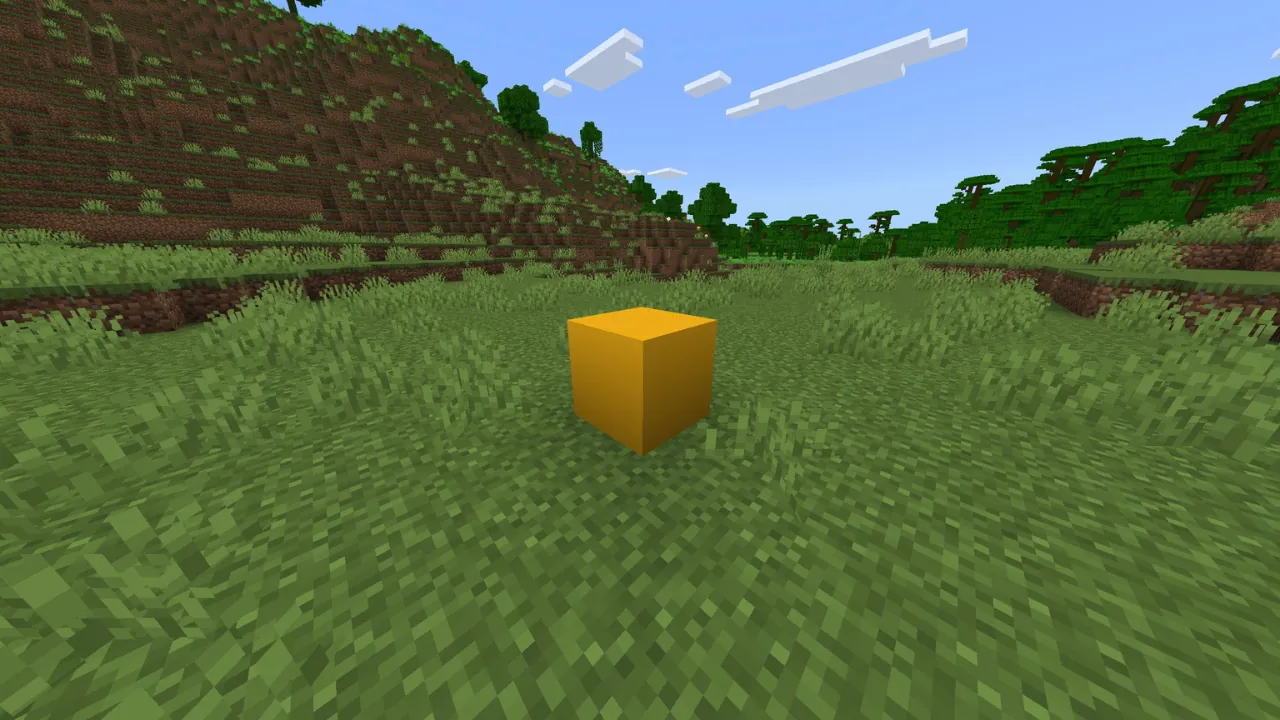
Concrete is one of the best building blocks in Minecraft if you want colorful, modern, and clean-looking builds. It comes in 16 different colors and is especially useful for houses, floors, walls, pixel art, roads, bridges, and large decorative structures.
However, there is an important detail that often confuses new players: you cannot craft concrete directly. First, you craft Concrete Powder, and then you use water to turn the powder into solid Concrete.
In this guide, you’ll learn how to make Concrete in Minecraft step by step, which materials you need, how to turn Concrete Powder into Concrete, and the easiest ways to produce large quantities.
What You Need to Make Concrete in Minecraft
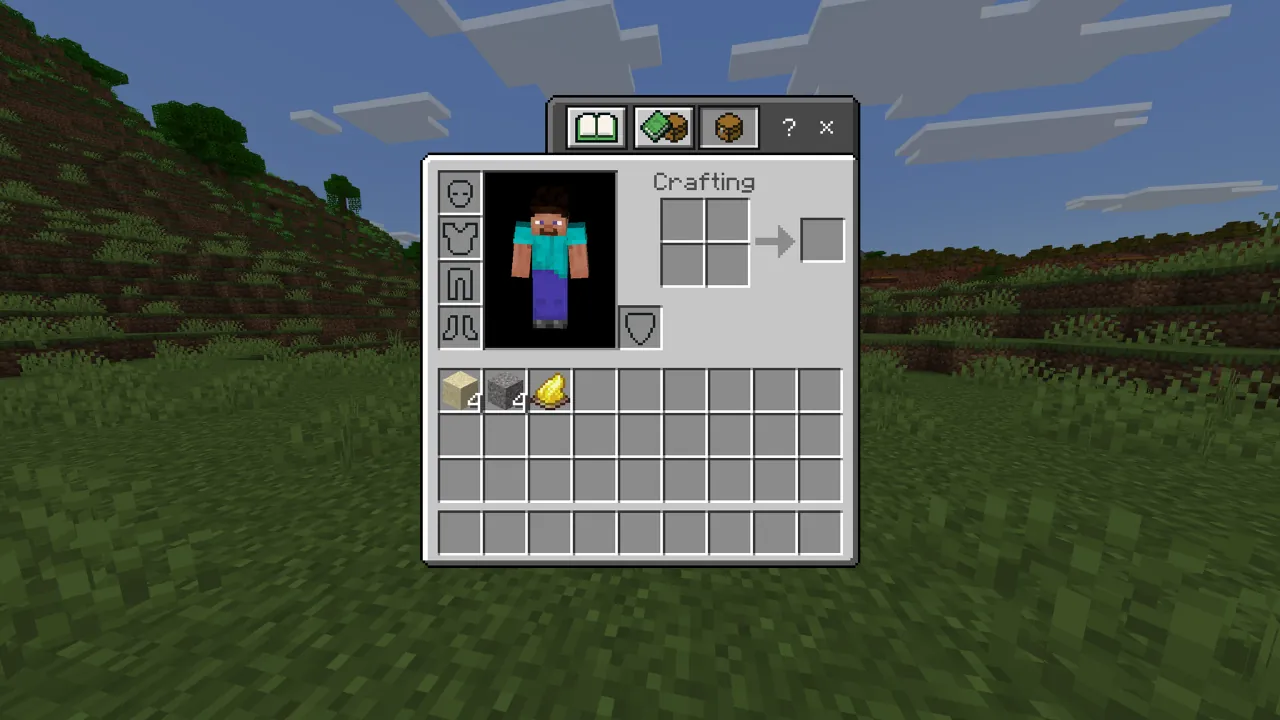
To make Concrete, you first need to craft Concrete Powder. Each crafting recipe requires:
- 4 Sand
- 4 Gravel
- 1 Dye
The type of Dye you use determines the color of the Concrete Powder and, eventually, the Concrete.
The recipe produces 8 Concrete Powder blocks, regardless of which dye you use.
Step 1: Get Sand
The first material you need is Sand.
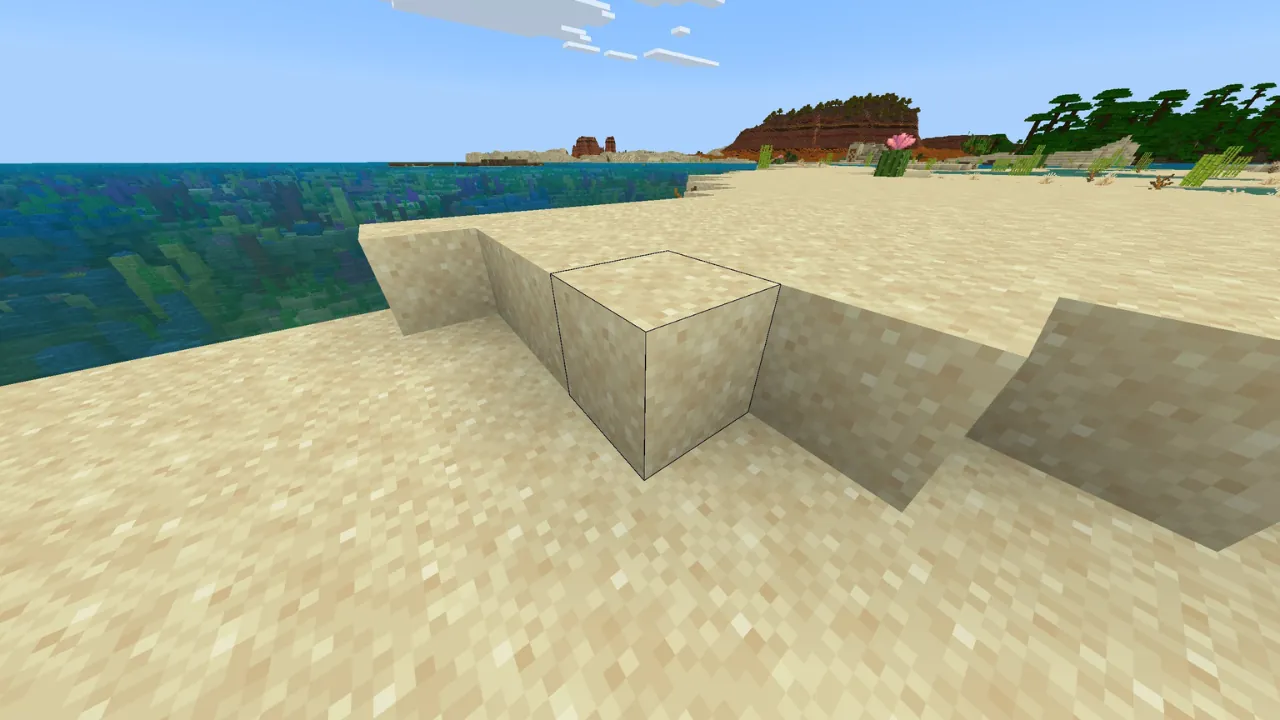
Sand is commonly found near beaches, rivers, lakes, and deserts. You can break it quickly with your hand or a shovel.
For one batch of Concrete Powder, you need 4 Sand.
If you plan to make a large amount of Concrete, it is worth gathering plenty of Sand beforehand. Each batch of four Sand produces eight Concrete Powder when combined with four Gravel and one Dye.
Step 2: Get Gravel
Next, collect 4 Gravel.
Gravel can be found underground, underwater, on beaches, and in various terrain formations. You can also encounter large deposits while mining.
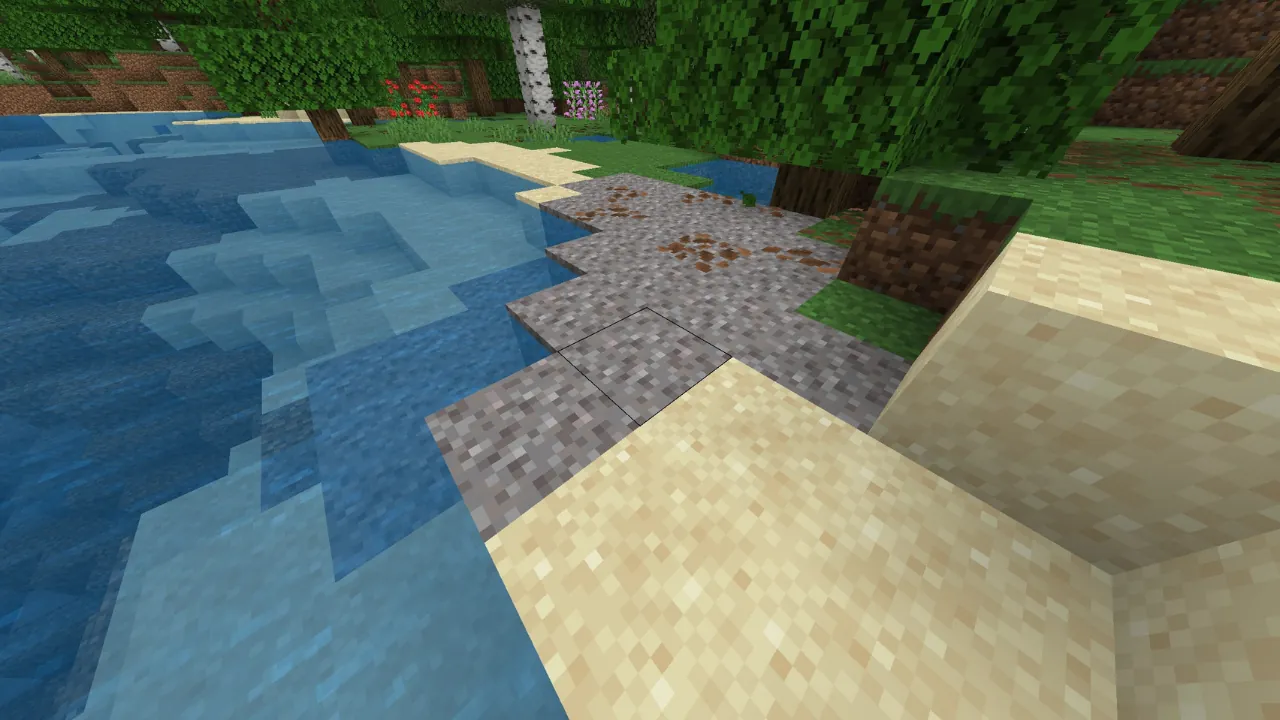
A shovel makes collecting Gravel much faster.
Be careful when mining large gravel deposits because Gravel is affected by gravity and can fall when the block supporting it is removed.
Step 3: Get a Dye
The final ingredient is a Dye.
The Dye determines the color of your Concrete. Minecraft has 16 different Concrete colors, giving builders plenty of options for colorful constructions.
Some examples include:
- White
- Light Gray
- Gray
- Black
- Brown
- Red
- Orange
- Yellow
- Lime
- Green
- Cyan
- Light Blue
- Blue
- Purple
- Magenta
- Pink
The easiest way to obtain a specific Dye depends on its color. Many Dyes can be crafted from flowers, while others require different materials.
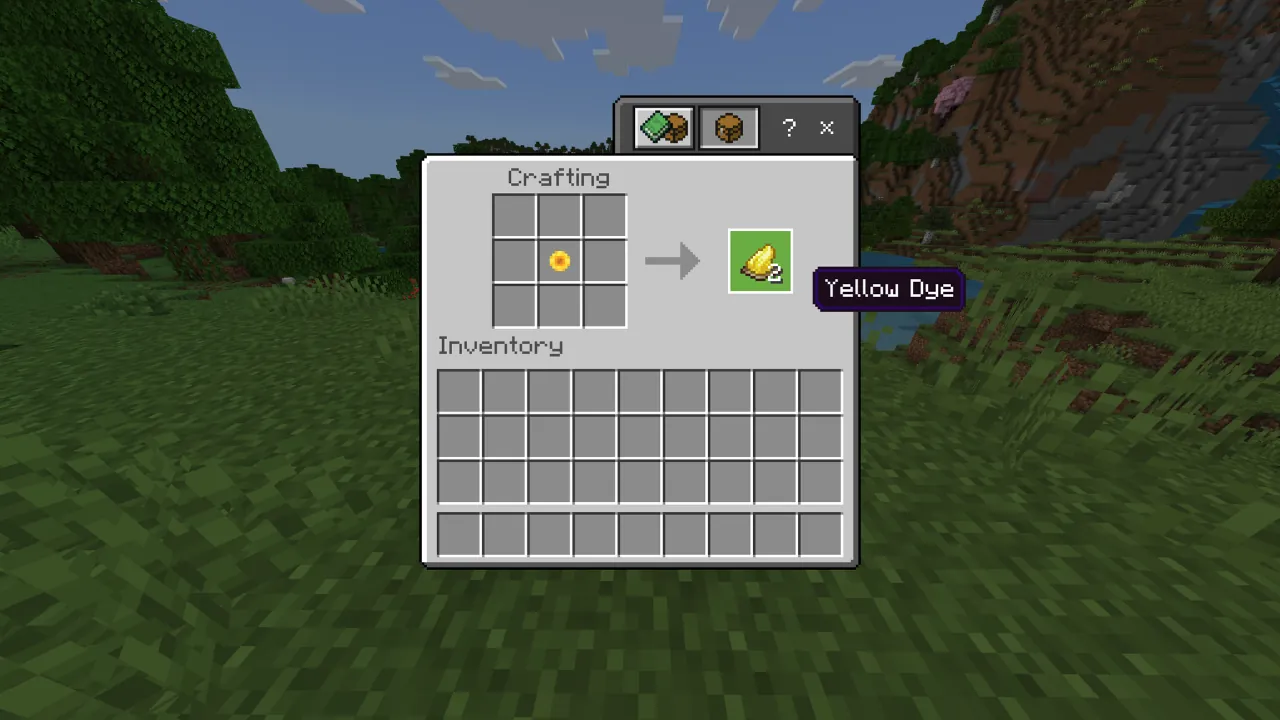
Step 4: Craft Concrete Powder
Once you have your Sand, Gravel, and Dye, open a Crafting Table.
Place:
- 4 Sand
- 4 Gravel
- 1 Dye
into the 3×3 crafting grid.
The exact positions of the ingredients do not matter as long as all nine required items are placed in the crafting grid.
The result will be 8 Concrete Powder blocks in the color corresponding to the Dye you used.
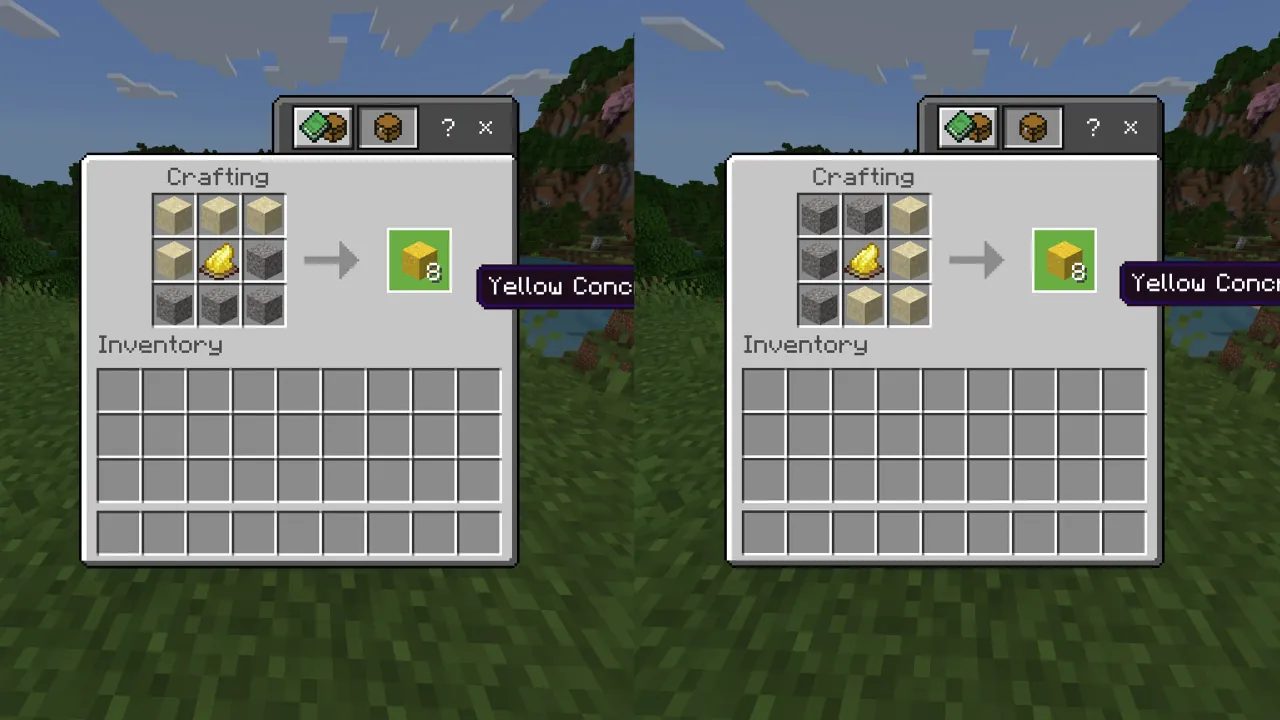
The positions can be rearranged; the important part is using four Sand, four Gravel, and one Dye.
Step 5: Turn Concrete Powder Into Concrete
Now comes the most important part.
Concrete Powder becomes Concrete when it comes into contact with water. The transformation happens immediately when the placed Concrete Powder touches water.
Simply place your Concrete Powder next to or into water.
Once the Powder makes contact with the water, it will turn into a solid Concrete block.
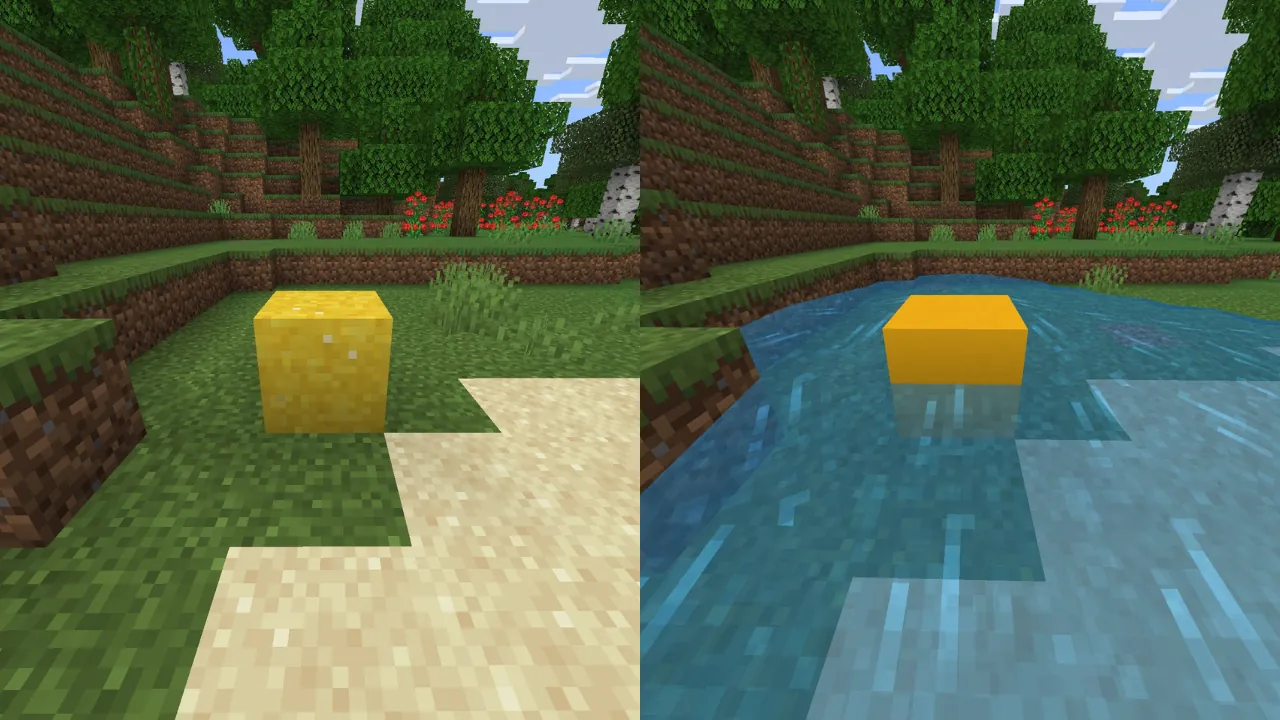
Important: You Must Place the Concrete Powder
There is a small but important mechanic to remember.
You cannot simply throw Concrete Powder into water as an item and expect it to become Concrete. The Concrete Powder must first be placed as a block in the world.
This means the process is:
Craft Concrete Powder → Place the Powder → Expose it to Water → Get Concrete
The Easiest Way to Make Large Amounts of Concrete
If you only need a few Concrete blocks, manually placing Concrete Powder next to water is simple enough.
For large construction projects, however, you will want a faster method.
One straightforward technique is to create a water channel and place Concrete Powder beside it. As you place the Powder next to the water, it immediately turns into Concrete.
You can then mine the hardened Concrete and repeat the process.
A Simple Water Channel Method
You can create a basic production area with:
- Dig a one-block-wide trench.
- Fill the trench with water.
- Stand next to the water.
- Place Concrete Powder directly beside the water.
- Allow the Powder to turn into Concrete.
- Mine the Concrete.
- Repeat the process.
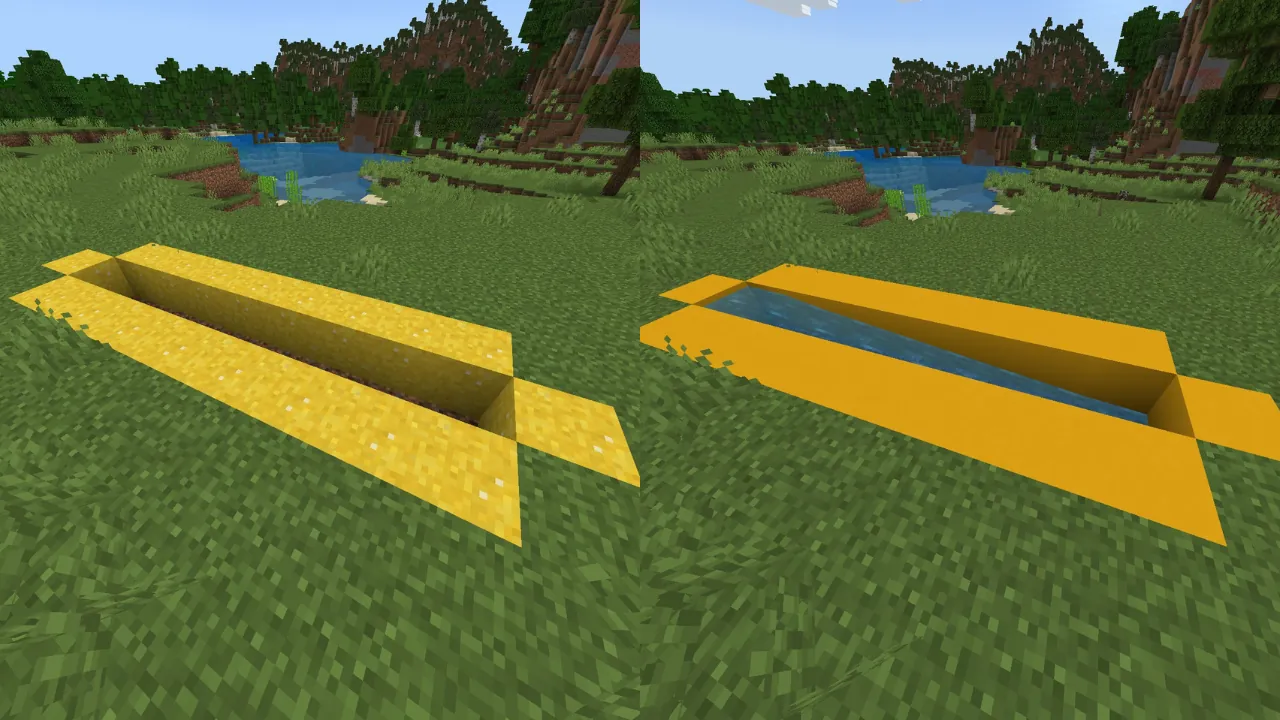
This method does not require complicated Redstone machinery and is suitable for Survival players.
How to Make Different Colors of Concrete
Making different colors of Concrete is simple: just use a different Dye when crafting the Concrete Powder.
For example:
White Concrete
4 Sand + 4 Gravel + White Dye → 8 White Concrete Powder → Water → White Concrete
Red Concrete
4 Sand + 4 Gravel + Red Dye → 8 Red Concrete Powder → Water → Red Concrete
Blue Concrete
4 Sand + 4 Gravel + Blue Dye → 8 Blue Concrete Powder → Water → Blue Concrete
The same process works for all 16 colors available in Minecraft.
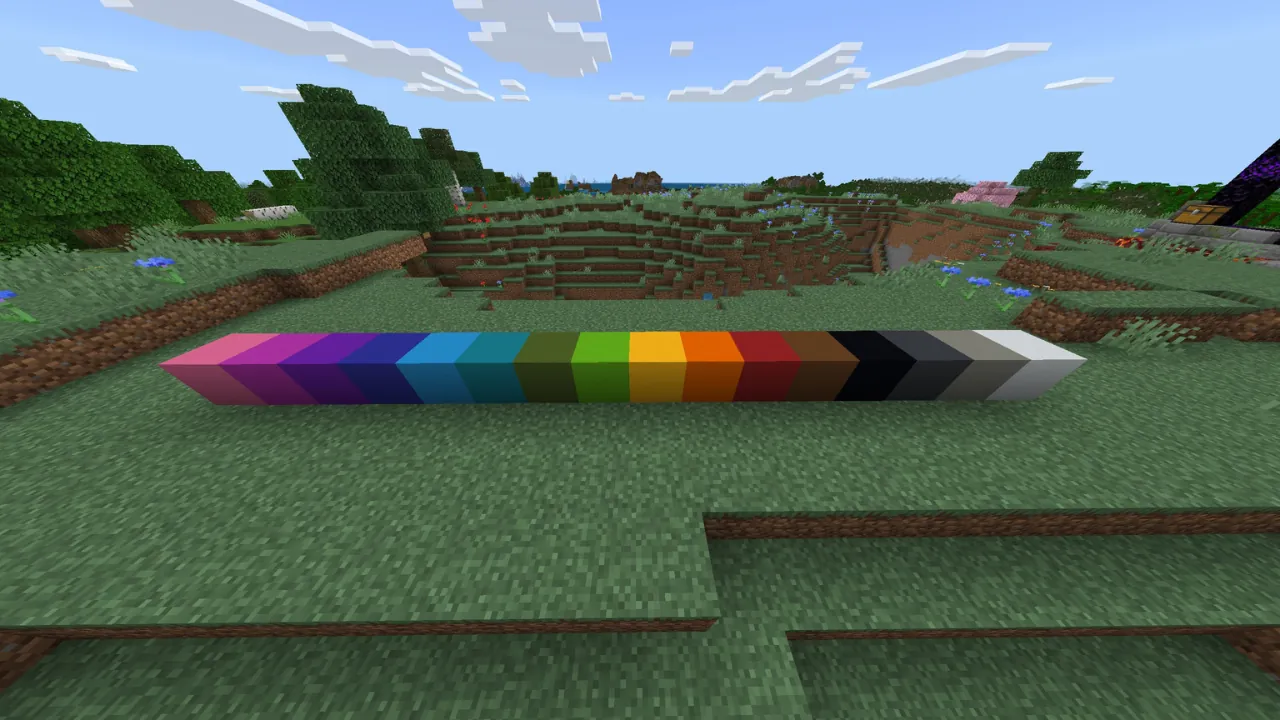
Concrete vs. Concrete Powder
Concrete Powder and Concrete may look similar, but they behave differently.
Concrete Powder is affected by gravity because it is made from Sand and Gravel. If you place it without a supporting block underneath, it can fall.
Concrete, on the other hand, is a solid building block and does not have the same gravity behavior.
Concrete also has a much cleaner and brighter appearance, making it particularly useful for modern builds.
| Feature | Concrete Powder | Concrete |
|---|---|---|
| Requires Dye | Yes | No, made from Powder |
| Requires Water | To convert it | No |
| Affected by gravity | Yes | No |
| Available in 16 colors | Yes | Yes |
| Main use | Intermediate material | Building and decoration |
What Is Concrete Used For in Minecraft?
Concrete is primarily a building and decorative block.
Its strong, solid colors make it particularly useful for modern architecture and colorful builds.
Some popular uses include:
Modern Houses
Concrete works especially well for modern Minecraft houses because of its smooth and consistent appearance.
White, gray, black, light blue, and other neutral Concrete colors can be combined to create clean walls and geometric designs.
Floors and Walls
Concrete can be used for large floors and walls where you want a uniform color.
It is particularly useful for creating colorful interiors, industrial buildings, warehouses, and modern structures.
Pixel Art
The wide range of Concrete colors makes it useful for pixel art.
Because the blocks have strong, consistent colors, players can use them to reproduce characters, logos, landscapes, and other images.
Roads and Urban Builds
Gray, black, white, and other Concrete colors can also be used for roads, sidewalks, parking lots, buildings, and other urban details.
Concrete is therefore a useful material for players building cities or large modern Minecraft worlds.
FAQ (Frequently Asked Questions)
Can You Make Concrete Without a Crafting Table?
No. The Concrete Powder recipe uses the full 3×3 crafting grid, so you need a Crafting Table to make it.
Once you have the Concrete Powder, however, you do not need another crafting station to convert it into Concrete. You simply place it and expose it to water.
Can You Make Concrete in the Nether?
You can use Concrete in the Nether, but converting Concrete Powder into Concrete requires water. Because water behaves differently in the Nether and cannot normally be placed as a conventional water source, producing large amounts of Concrete there is considerably less convenient. For that reason, it is generally easier to convert your Concrete Powder into Concrete in the Overworld before taking the finished blocks to the Nether.
Does Rain Turn Concrete Powder Into Concrete?
No. Rain does not turn Concrete Powder into Concrete. Water bottles also do not work. According to Minecraft’s official explanation of the block, Concrete Powder needs to come into contact with a full water block, or water that flows next to it.
What is the recipe for Concrete Powder?
The recipe requires 4 Sand, 4 Gravel, and 1 Dye in any position. It produces 8 Concrete Powder blocks.
Do water bottles turn Concrete Powder into Concrete?
No. Water bottles do not work. Concrete Powder needs to come into contact with a full water block or flowing water.
How many Concrete blocks do you get from one recipe?
One Concrete Powder recipe produces 8 Concrete Powder blocks. Each Powder block can then be converted into one Concrete block, giving you 8 Concrete blocks in total.
How many colors of Concrete are there in Minecraft?
There are 16 Concrete colors in Minecraft.
Is Concrete better than Concretge Powder?
For most building projects, yes. Concrete is a solid block and is not affected by gravity like Concrete Powder. It also has a cleaner appearance, making it better suited for permanent structures.
Conclusion
Making Concrete in Minecraft is straightforward once you understand the two-stage process.
First, combine 4 Sand, 4 Gravel, and 1 Dye at a Crafting Table to create 8 Concrete Powder. Then place the Powder in the world and expose it to water. The Powder will immediately turn into solid Concrete.
With 16 different colors available, Concrete is one of the most versatile decorative blocks for modern houses, cities, pixel art, roads, interiors, and other large-scale Minecraft builds.
If you are planning a large project, gather plenty of Sand, Gravel, and Dye beforehand and set up a simple water channel to speed up the conversion process.