


Table of Contents
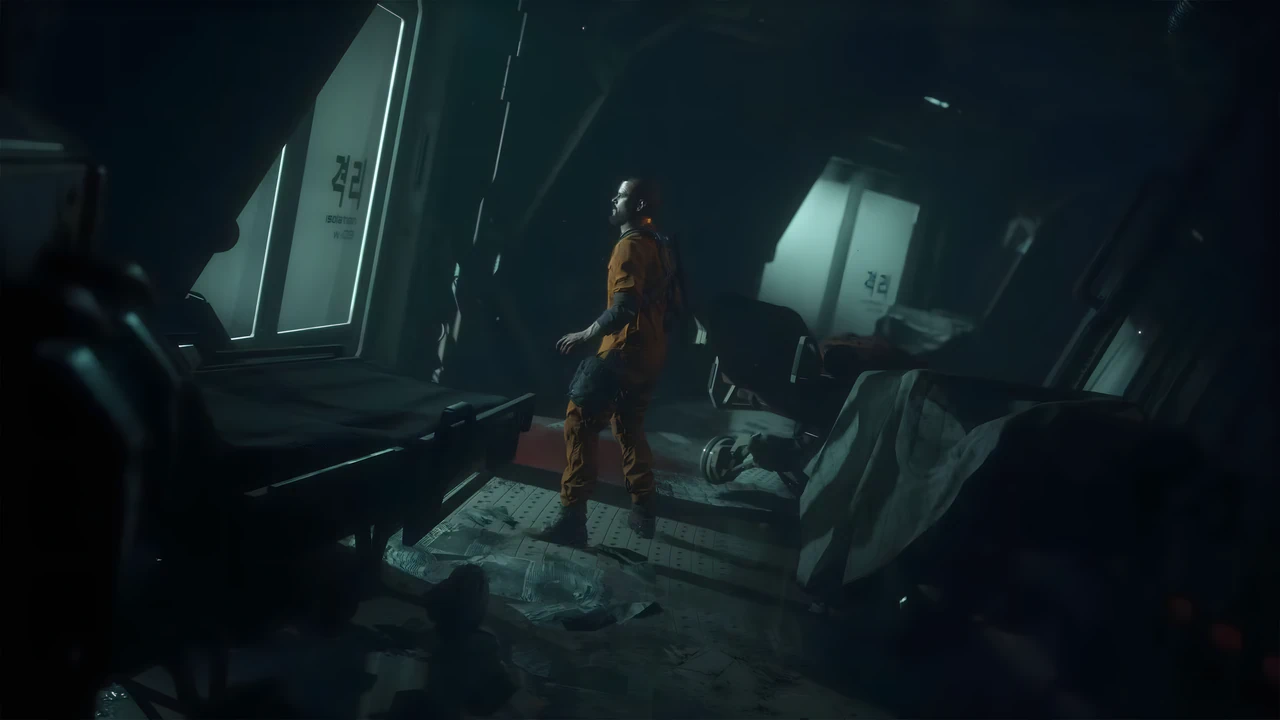
The Callisto Protocol Review takes a closer look at Striking Distance Studios’ survival horror game, combining brutal close-range combat, science-fiction horror, exploration, and a heavily atmospheric setting inside Black Iron Prison.
Developed by Striking Distance Studios and published by Krafton, the game follows Jacob Lee, a cargo ship pilot who unexpectedly ends up imprisoned in the maximum-security Black Iron Prison on Callisto, one of Jupiter’s moons. Shortly after his arrival, a mysterious infection spreads through the facility, transforming inmates and guards into grotesque creatures and turning the prison into a fight for survival.
Rather than relying entirely on firearms, The Callisto Protocol places considerable emphasis on melee combat, forcing Jacob to fight enemies at close range while combining physical attacks with guns, environmental hazards, and the GRP system. This creates a different rhythm from many traditional third-person shooters, where maintaining distance is usually the safest strategy.
The setting is equally important. Narrow corridors, industrial areas, limited lighting, disturbing enemy designs, and the isolation of Black Iron Prison give the game a consistently oppressive atmosphere. Its horror is mixed with more action-oriented sequences, creating an experience that moves between tension, exploration, and violent confrontations.
The game also places a strong emphasis on visual presentation. Detailed character models, dark environments, lighting effects, and support for technologies such as ray tracing help reinforce its science-fiction horror aesthetic, although these graphical features can also place significantly more demand on PC hardware.
Throughout this review, I will examine The Callisto Protocol’s story, combat system, weapons and GRP mechanics, horror atmosphere, exploration, graphics, performance, difficulty, game length, Final Transmission DLC, and whether it is still worth playing today.
Spoiler Notice: This review is mostly spoiler-free, but the Final Transmission DLC and the Ending section contains major story spoilers. A separate warning is included before that section.
Story and Characters

The Callisto Protocol follows Jacob Lee, a cargo ship pilot whose life changes after he is unexpectedly imprisoned in Black Iron Prison, a maximum-security facility located on Callisto, one of Jupiter’s moons. What begins as an attempt to survive imprisonment quickly turns into something far worse when a mysterious infection spreads through the facility and transforms inmates and guards into violent creatures.
From that point forward, the story becomes a mixture of survival, escape, and investigation. As Jacob moves deeper through the prison, he gradually discovers more about the outbreak, the people behind Black Iron, and the events that led to the disaster.
The narrative does not rely on Jacob alone. Other characters become involved in his attempt to escape, creating temporary alliances and giving the story more emotional weight than it would have if the campaign focused entirely on isolation. These interactions also help break up the long stretches of combat and exploration inside the prison.
Black Iron itself is closely tied to the story. The prison is not simply a background for the action; its security systems, laboratories, industrial areas, and abandoned sections gradually reveal more about the larger events taking place on Callisto.
The plot also explores themes such as corporate control, human experimentation, and the consequences of treating people as expendable resources. These ideas fit naturally with the game’s oppressive science-fiction setting and give the story more purpose than a simple escape narrative.
The campaign generally keeps its mysteries moving forward at a steady pace, revealing information gradually instead of explaining everything immediately. That works well with the horror atmosphere because the player often knows only slightly more than Jacob does about what is happening around him.
However, one of the most controversial narrative decisions comes from the way the story continues beyond the base game’s ending. The Final Transmission DLC expands on the conclusion and provides additional context, which makes it important for players who want to see the complete narrative. I will discuss that separately later in this review to avoid spoiling major events here.
I found the story engaging and genuinely wanted to understand what was happening inside Black Iron Prison and what was behind the outbreak.
At the same time, there were moments when I was more focused on surviving than on following every detail of the narrative. Because I played on a higher difficulty, some encounters demanded so much attention that combat and resource management occasionally took priority over the story itself.
Even with that, the plot kept me interested enough to continue, and the gradual revelations surrounding Jacob, Black Iron Prison, and the infection made me want to see how everything would end.
Combat System and Survival Horror Gameplay
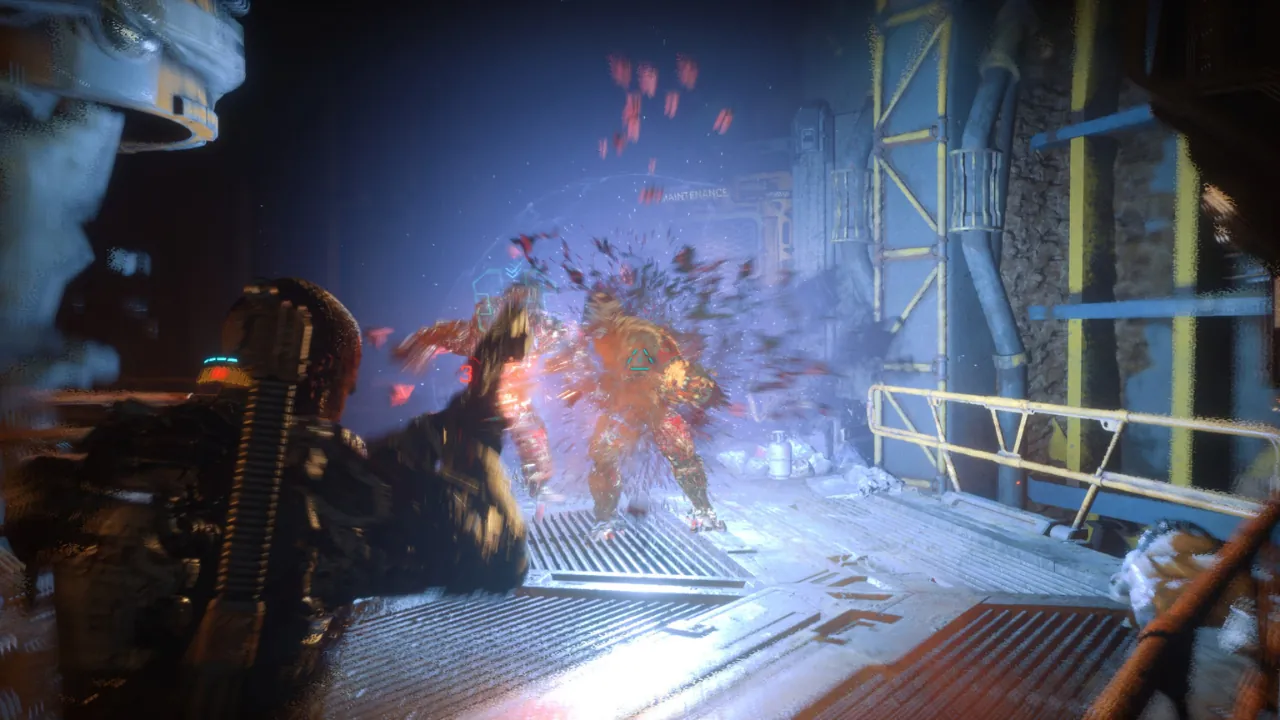
Combat in The Callisto Protocol combines close-range melee attacks with firearms and environmental interactions, creating a more physical style of survival horror than a traditional third-person shooter. The game places considerable emphasis on fighting enemies at close range, while firearms become increasingly important as encounters grow more dangerous. Texto colado
This approach fits the game’s horror atmosphere well because many encounters force Jacob to remain dangerously close to the creatures he is fighting. Instead of constantly keeping enemies at a safe distance, combat often becomes aggressive and tense, especially when several threats appear in confined areas.
The Stun Baton is one of Jacob’s main tools for close combat, while weapons such as the Hand Cannon and Riot Gun provide options for fighting at range. The game also introduces the GRP, a device that allows Jacob to manipulate enemies and objects from a distance and throw them into walls, machinery, or environmental hazards. Texto colado
The GRP is particularly useful because it gives combat an environmental element. Instead of relying entirely on ammunition, players can use parts of the surrounding area to deal with enemies, which can be valuable when resources are limited or when multiple creatures are putting pressure on Jacob.
Weapons and equipment can also be improved through upgrade stations during the campaign. These upgrades increase aspects such as firepower, ammunition capacity, and equipment effectiveness, giving the player more options as the enemies become increasingly dangerous. Texto colado
The result is a combat system that sits between action and survival horror. The Callisto Protocol contains plenty of violent encounters, but its dark environments, grotesque creatures, limited spaces, and emphasis on close-range fighting help maintain tension even when the player becomes better equipped.
I thought the weapon variety was good, and the game gives you enough options to adapt to different situations throughout the campaign.
My main issue was with the melee combat. I often felt that the system was missing a more traditional dodge mechanic. The only way to avoid many enemy attacks is to keep Jacob moving to the left or right while the enemy is attacking, which works, but can feel restrictive compared with games that give the player a dedicated dodge button or more freedom of movement.
This did not ruin the combat for me, but it made some close-range encounters feel less flexible, especially when fighting more than one enemy at the same time.
Weapons, GRP, and Upgrade System
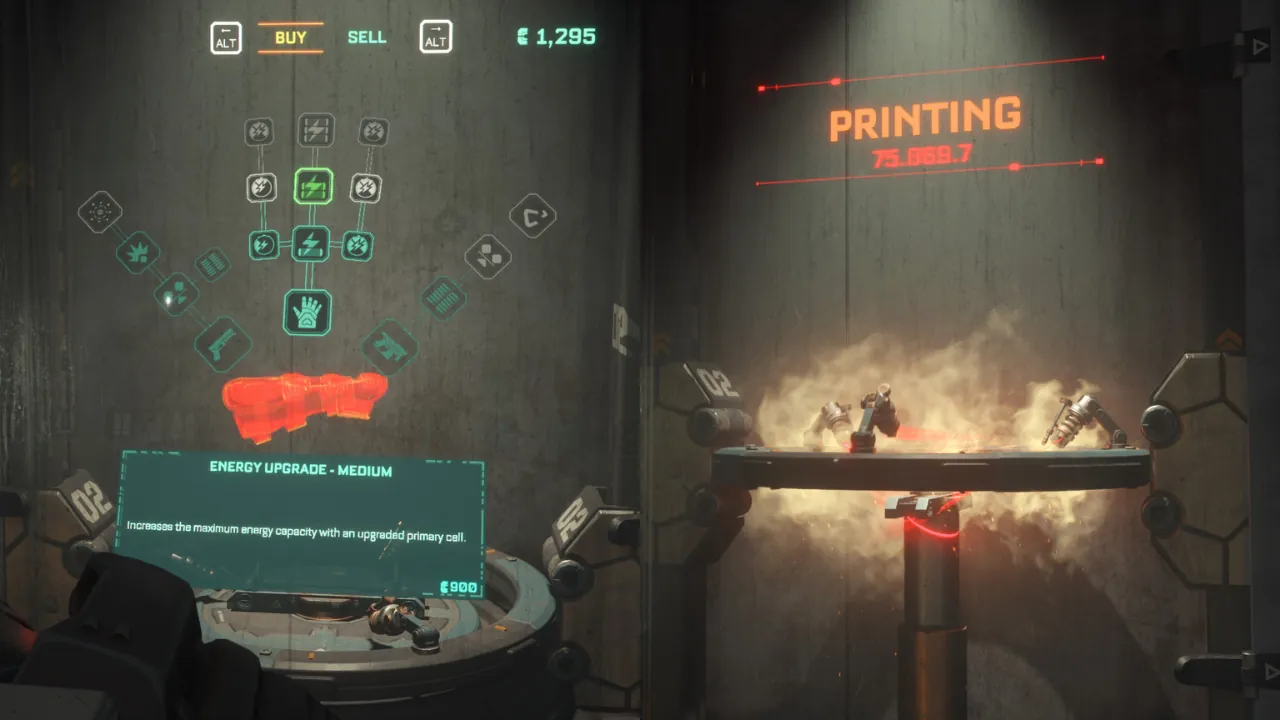
The Callisto Protocol gives Jacob access to a solid selection of weapons and equipment throughout the campaign, allowing combat to gradually expand beyond the melee-focused encounters of the opening hours.
The Stun Baton remains the main melee weapon, while firearms such as the Hand Cannon, Riot Gun, and Skunk Gun provide options for different ranges and situations. The variety is not enormous, but there are enough choices to prevent the arsenal from feeling too limited.
One of the most distinctive tools is the GRP, or Gravitational Restraint Projector. It allows Jacob to grab enemies and objects from a distance before throwing them into walls, machinery, environmental hazards, or other parts of the level.
The GRP adds another layer to combat because it can reduce the need to rely entirely on ammunition. In areas containing spikes, machinery, or other hazards, positioning an enemy correctly can sometimes be more effective than simply shooting it.
Weapons and equipment can also be upgraded at Reforge stations using resources collected throughout the campaign. These upgrades can improve characteristics such as damage, ammunition capacity, and overall weapon effectiveness, making progression increasingly important as tougher enemies begin to appear.
In my experience, the upgrade system can be quite demanding if you want to fully improve your equipment. There are not that many upgrade paths available, but the amount of credits required for the higher-level upgrades is significant. Because of that, I often had to collect and sell a large amount of resources before I could afford the upgrades I wanted.
This makes resource collection much more important than it might initially seem. Exploring side areas, picking up valuable items, and managing what you carry can have a direct impact on how quickly you are able to strengthen your weapons and equipment.
I thought the number of weapons available was well balanced. There were enough options to change how I approached encounters without making the inventory feel overloaded, and upgrading the equipment gave me a reason to think carefully about where I wanted to spend my credits.
Combined with the GRP, the arsenal gives the player more flexibility than the melee system alone. This becomes especially useful later in the game, when relying exclusively on close-range attacks becomes increasingly risky.
Horror Atmosphere and Level Design

The atmosphere is one of the strongest aspects of The Callisto Protocol. Much of the game takes place inside Black Iron Prison, where narrow corridors, security areas, industrial sections, and limited lighting create a constant sense of confinement.
The environments are designed to make the player feel uncomfortable even when no enemy is immediately visible. Dark rooms, abandoned sections, disturbing sounds, and restricted visibility often make it difficult to know what might be waiting around the next corner.
Sound also contributes significantly to this tension. Environmental noises and audio cues help reinforce the oppressive atmosphere and make quieter sections feel threatening rather than completely safe.
The level design is predominantly linear, guiding Jacob from one major area to another as the story progresses. However, there are occasional opportunities to explore secondary paths and search the environment for resources, which becomes particularly important because credits and upgrade materials are valuable throughout the campaign.
This structure works well with the survival horror format. The game rarely gives the player the feeling of moving through a large open environment. Instead, Black Iron Prison frequently feels restrictive and controlled, reinforcing the idea that Jacob is trapped inside a hostile facility.
The horror also comes from the contrast between quiet exploration and sudden violent encounters. Long corridors and darker sections can build tension before combat begins, while the grotesque enemy designs make close-range confrontations considerably more uncomfortable.
Because of this, The Callisto Protocol does not depend entirely on jump scares to create fear. Much of its atmosphere comes from the environment itself, with Black Iron Prison functioning as an important part of the horror rather than simply serving as a background for combat.
I found The Callisto Protocol genuinely effective at creating tension and scares. A big part of that came from the grotesque appearance of the enemies, which made many encounters uncomfortable even before they became difficult.
The amount of gore also contributes heavily to the horror. Combat is extremely violent, and the game does not hold back when showing injuries, dismemberment, or the consequences of close-range attacks. That made many encounters feel more disturbing than they would have with a cleaner presentation.
I was also caught off guard by several jump scares throughout the campaign. Combined with the dark corridors, limited visibility, and disturbing creature designs, these moments kept me tense even when I was simply moving between combat sections.
Exploration, Puzzles, and Linear Progression
The Callisto Protocol follows a predominantly linear structure, with the campaign guiding Jacob from one major area of Black Iron Prison to another as the story progresses. The game is not built around large open areas, and most locations have a clearly defined route toward the next objective.
That does not mean exploration is completely absent. Some areas contain secondary paths and rooms that reward players who take the time to look around instead of immediately following the main objective.
Exploration becomes especially valuable because resources are important throughout the campaign. Searching side areas can provide ammunition, health items, valuable objects, and other materials that can eventually help fund upgrades at Reforge stations. Considering how expensive some of the higher-level upgrades can become, checking optional areas can make a noticeable difference.
The game also includes environmental objectives that occasionally interrupt the usual combat and exploration loop. These can involve locating an alternative route, activating machinery, or finding items such as fuses needed to open a door or access another part of the facility.
However, puzzles are not a major part of The Callisto Protocol. Most of these situations are relatively straightforward and are designed to keep the player moving through the environment rather than presenting complex challenges that require extensive problem-solving.
I think this approach fits the pacing of the game. Exploration gives the player a reason to pay attention to the environment and search for resources, while the simpler objectives avoid slowing the campaign down for too long between combat encounters.
At the same time, the linear structure means there is rarely much uncertainty about where the campaign is taking you. Players looking for extensive exploration or elaborate puzzles may find this aspect limited, but the more focused design works well with the game’s survival horror pacing.
Graphics, Ray Tracing, and Visual Presentation
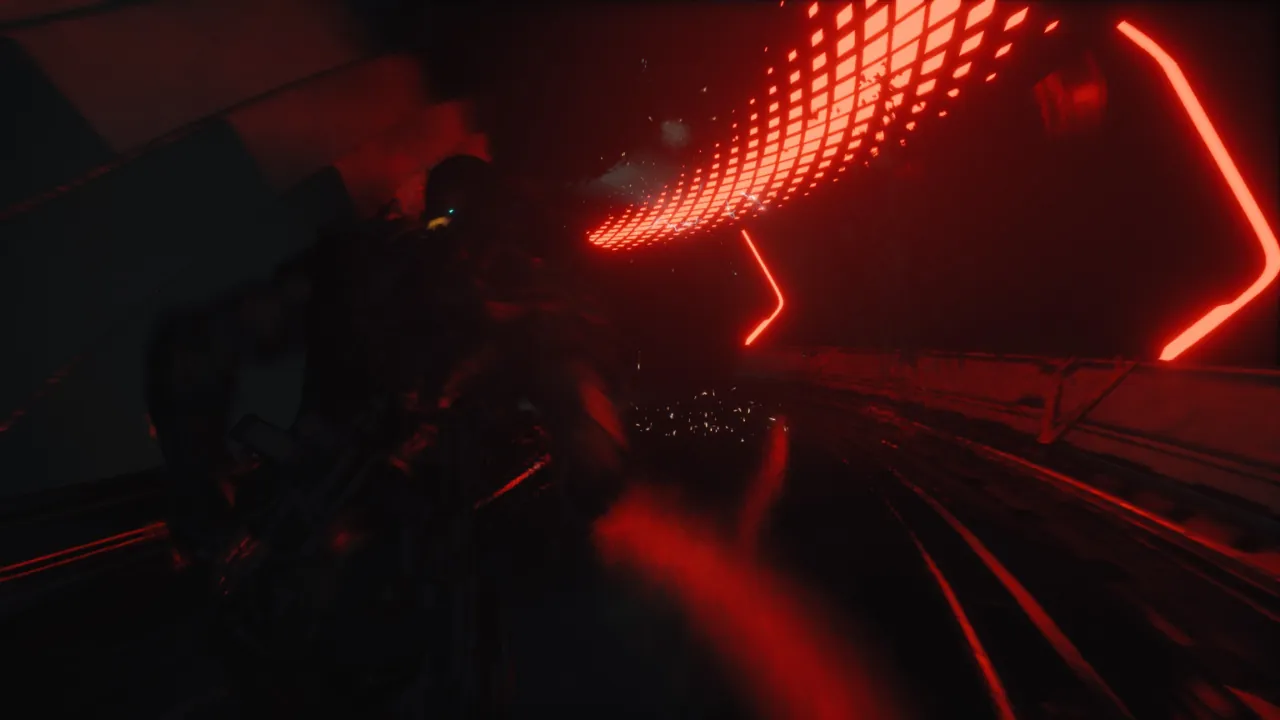
Visually, The Callisto Protocol is one of the strongest parts of the game. Built with Unreal Engine 4, it uses detailed environments, strong lighting, realistic character models, and heavy atmospheric effects to reinforce the horror setting.
Black Iron Prison benefits the most from this presentation. Narrow corridors, metallic surfaces, industrial rooms, low-light areas, smoke, and environmental effects give the facility a dense and oppressive look that works well with the game’s tone.
Character rendering is also a major highlight. Facial detail, skin textures, injuries, blood, and other small visual elements are often shown from very close distances during cutscenes and combat, which makes the violent nature of the game even more noticeable.
The game also supports ray tracing, which enhances lighting, shadows, and reflections on compatible hardware. In areas with reflective surfaces, artificial lighting, and darker interiors, these effects can make Black Iron Prison look more realistic and visually impressive.
Ray tracing is not essential to appreciate the game’s visual design, however. The environments, lighting direction, creature design, and cinematic presentation already do most of the work in creating the atmosphere.
In my experience, the ray-traced effects became much more noticeable in brighter and more damaged environments. Areas with stronger light sources, exposed surfaces, debris, and broken structures made the reflections and lighting differences easier to see than in the darker corridors of Black Iron Prison.
In those scenes, ray tracing added more depth to the environment and made the lighting feel more natural, especially when light interacted with metallic surfaces and damaged areas. In darker sections, the effect was still present, but it was not always as immediately noticeable.
Another visual strength is the enemy design. The Biophages are intentionally grotesque, with mutations, wounds, and distorted bodies that become especially disturbing during close-range encounters. Combined with the game’s heavy use of gore, this makes the horror feel much more graphic than atmospheric horror games that rely mostly on darkness or suggestion.
Even years after its release, I think The Callisto Protocol still looks very good. Its strong lighting, detailed characters, environmental design, and cinematic presentation have aged well, especially in darker scenes where the game’s visual direction is at its best.
Performance and Optimization
In my experience, The Callisto Protocol performed better than I initially expected. I played the game using FSR 2 in Quality Mode, and I did not experience any significant performance problems during the campaign.
Considering the level of visual detail, lighting, character rendering, and environmental effects, I found the game reasonably well optimized on my system. Performance remained stable enough that technical issues rarely distracted me from the gameplay.
Using FSR 2 in Quality Mode also worked well as a balance between image quality and performance. The game still looked sharp while maintaining smoother performance, making it easier to use higher graphical settings without sacrificing too much visual fidelity.
Ray tracing was naturally more demanding, but with FSR 2 enabled, the overall experience remained manageable on my hardware. In brighter and more damaged environments, where the ray-traced effects were easier to notice, the additional visual quality felt more worthwhile.
My original playthrough also took place before Denuvo was later removed from the PC version, so performance may differ depending on the version of the game and the hardware being used.
Overall, I would consider The Callisto Protocol well optimized based on my experience. With FSR 2 set to Quality Mode, I was able to enjoy the game’s high visual quality without encountering major performance issues.
Difficulty and Enemy Encounters
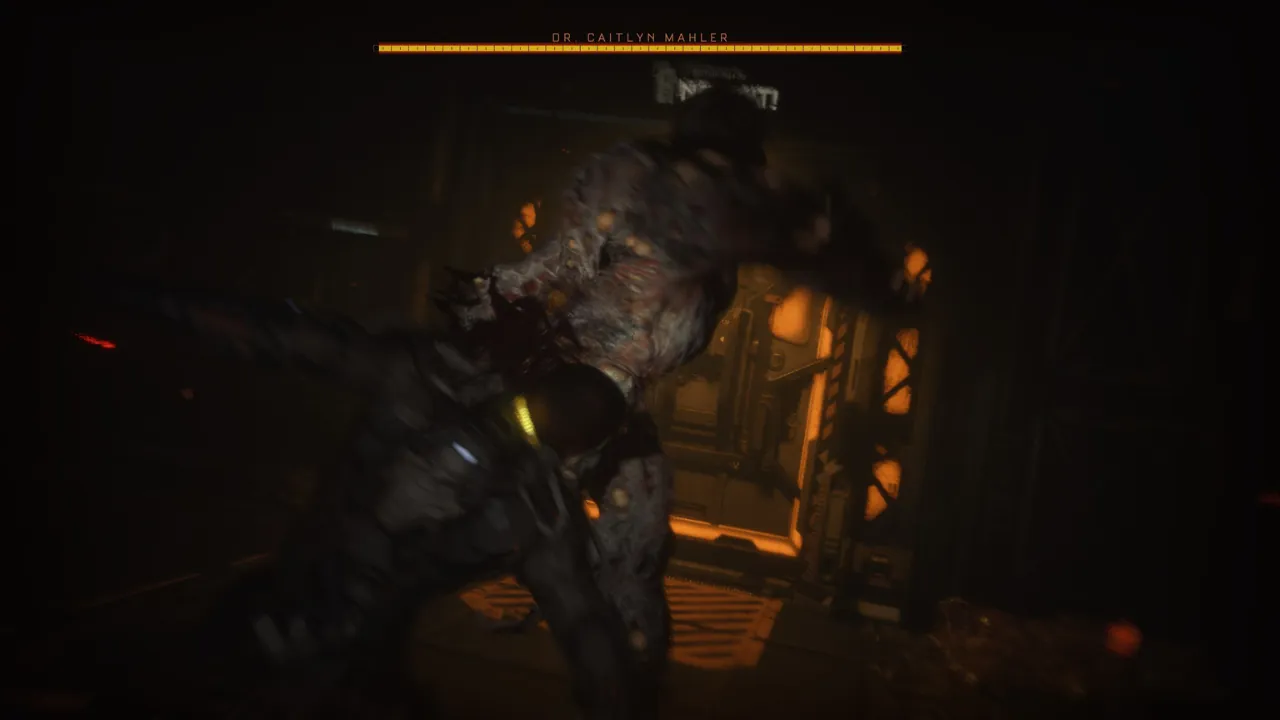
The Callisto Protocol becomes significantly more demanding on higher difficulty settings, especially because many encounters take place at close range and enemies can punish mistakes very quickly.
The challenge does not come only from enemy damage. Positioning, timing, resource management, and knowing when to use melee attacks, firearms, or the GRP all become more important as the campaign progresses. This is particularly noticeable when more than one enemy is attacking at the same time, because the melee system is much easier to control in one-on-one encounters.
The dodge system also has a direct impact on difficulty. Since avoiding attacks depends on moving Jacob to the left or right while an enemy is striking, combat can become more restrictive when multiple enemies are surrounding you. There is no traditional dedicated dodge button that lets you quickly reposition, so poor positioning can become a serious problem.
Enemy encounters also become more stressful because ammunition and healing resources are not always something you want to waste freely. That encourages a more careful approach, especially in longer sections where you do not know exactly how many enemies are still ahead.
For me, the higher difficulty made the game much more focused on survival. There were moments when I was paying more attention to staying alive than to the story itself, simply because some encounters demanded so much concentration.
That challenge also made the horror more effective. Enemies were not only visually disturbing; they were a genuine threat, and entering a new area without knowing what was waiting ahead created additional tension.
At the same time, some encounters can feel frustrating when several enemies attack at once. The combat system works best when you can read one enemy’s movements and react properly, but it becomes less flexible when the game puts pressure on you from multiple directions.
Game Length and Replay Value
The Callisto Protocol is not an unusually long game by modern standards, but for a relatively linear survival horror title, the campaign can feel substantial, especially when playing on a higher difficulty and spending time searching for resources.
Current completion estimates place the main story at around 10 hours, while exploring additional content can push a playthrough closer to 12 hours. A more completion-focused run can reach roughly 15 to 16 hours. The Final Transmission DLC adds approximately another three hours to the experience.
My own playthrough took around 17 hours to complete the main game and Final Transmission together.
Personally, the game felt quite long to me. Part of that was probably related to the difficulty I played on, since tougher encounters required more cautious progression and sometimes multiple attempts. I also spent time searching environments for resources, which was particularly important because fully upgrading equipment requires a considerable amount of credits.
The pacing also contributes to that perception. Although The Callisto Protocol is mostly linear, its progression constantly alternates between exploration, combat, story sequences, resource management, and slower horror sections. Because of this, the journey through Black Iron Prison can feel longer than the raw completion time might suggest.
Replay value has also improved compared with the game’s original release. New Game Plus allows another playthrough while carrying progression forward, while additional modes such as Hardcore, Contagion, and Riot Mode provide more demanding alternatives for players who want to return after finishing the story.
New Game Plus is particularly relevant considering how expensive some of the higher-level equipment upgrades are. Since fully developing every weapon during a single campaign can be difficult, another playthrough gives players more opportunity to experiment with equipment and complete upgrades they may not have been able to afford the first time.
For players primarily interested in the story, one complete playthrough followed by Final Transmission will probably provide enough content. Those who enjoy the combat system, higher difficulties, collecting upgrades, or mastering enemy encounters have considerably more reason to return.
Final Transmission DLC and the Ending
Spoiler Alert: This section contains major spoilers for the ending of The Callisto Protocol and the Final Transmission DLC.
The ending is one of the most controversial parts of The Callisto Protocol, mainly because the base game does not fully conclude Jacob Lee’s story. Instead, the events following the original ending are continued in the Final Transmission DLC, which effectively serves as the final chapter of his journey.
At the end of the main campaign, Jacob manages to save Dani and sends her away with evidence that could expose the United Jupiter Company and the experiments conducted at Black Iron Prison. Jacob remains behind as the facility collapses, apparently accepting the consequences of his involvement in the events that led to the outbreak.
Final Transmission continues from this point. Jacob appears to have survived and begins another attempt to escape Black Iron while following instructions from Dr. Caitlyn Mahler. During the DLC, he travels through new sections of the prison, collects additional information, and fights new threats while trying to reach what appears to be his final opportunity to escape.
However, the final revelation completely changes the meaning of the DLC.
Most of what Jacob experiences during Final Transmission is a hallucination. In reality, he was critically injured after the events of the main game. Mahler recovered what remained of his body and connected him to life-support equipment, keeping him alive long enough to use his CORE connection to transmit additional evidence and information to Dani.
Jacob never truly makes the escape he believes he is fighting toward. Once the transmission is completed, his injuries ultimately prove fatal, bringing his story to a definitive end.
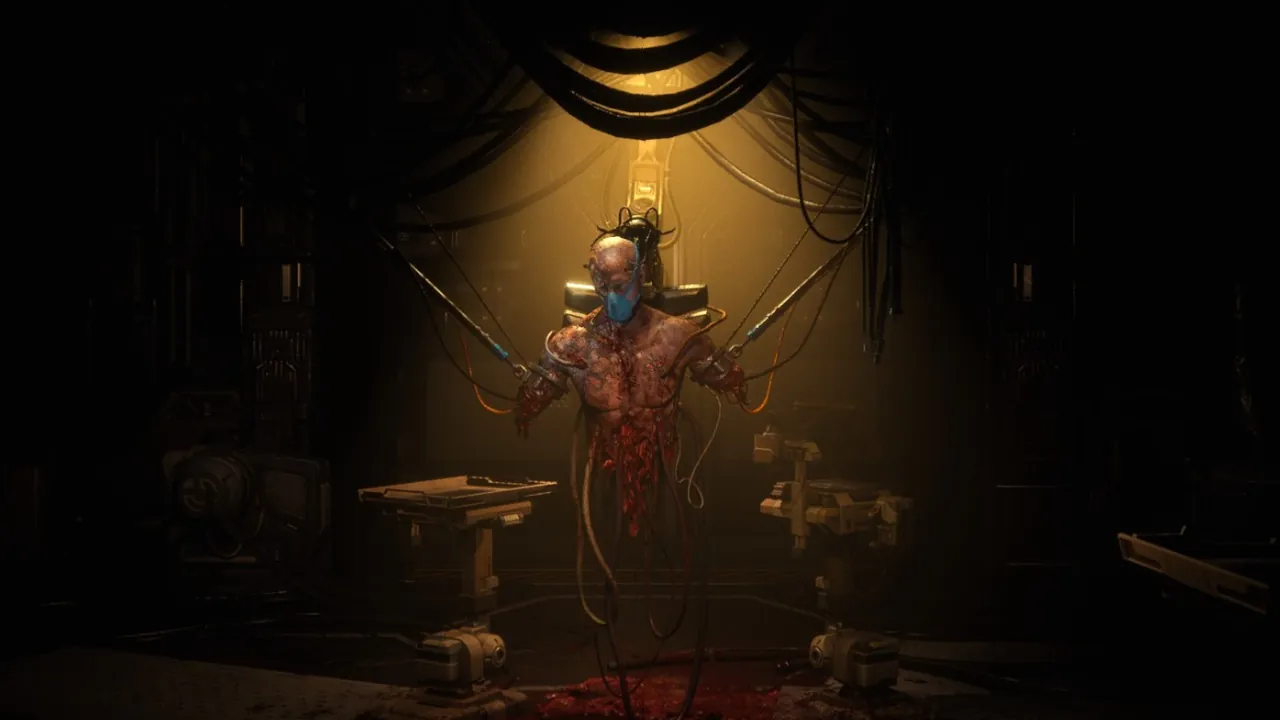
This revelation gives Jacob’s final moments more meaning because his objective is no longer simply survival. By the end, his remaining time is used to help Dani obtain the information needed to continue fighting against the people responsible for Black Iron and the Biophage experiments. Mahler’s recordings also frame the transmission as an attempt to expose what happened and prevent the same events from being repeated elsewhere.
At the same time, I think placing such an important conclusion behind a separate DLC is difficult to ignore. The base game’s ending leaves Jacob’s fate deliberately unresolved, while Final Transmission provides the actual conclusion to his story. My original review already identified this as one of the game’s most controversial decisions.
The DLC therefore feels less like a completely separate side story and more like the final chapter that completes the narrative started in the main campaign. Whether the ending itself works will depend heavily on how invested the player became in Jacob, but Final Transmission is difficult to skip for anyone who wants to know his ultimate fate.
Strengths and Weaknesses
After completing The Callisto Protocol and its Final Transmission DLC, I think the game succeeds most in its atmosphere, visual presentation, combat intensity, and story, while some design decisions make certain parts of the experience more frustrating than they need to be.
Strengths
- Strong horror atmosphere: Black Iron Prison feels oppressive and dangerous, with dark environments, grotesque enemy designs, jump scares, and a heavy amount of gore that kept me tense throughout the campaign.
- Impressive visual presentation: Detailed environments, character models, lighting, and ray-traced effects make The Callisto Protocol visually striking, particularly in brighter and more damaged environments where the lighting effects become easier to notice.
- Good weapon variety: I found the number of available weapons well balanced, giving me enough options without making the arsenal unnecessarily large.
- Useful GRP mechanics: The GRP adds more flexibility to combat by allowing enemies and objects to be manipulated and used alongside environmental hazards.
- Engaging story: The narrative kept me interested in discovering what happened inside Black Iron Prison and what was behind the outbreak. Even when difficult encounters demanded most of my attention, I still wanted to see how Jacob’s story would develop.
- Solid performance with FSR 2: Using FSR 2 in Quality Mode, I did not experience significant performance problems and found the game reasonably well optimized considering its visual quality.
Weaknesses
- Limited melee dodging: Melee combat would have benefited from a dedicated dodge mechanic. Avoiding attacks mainly requires holding Jacob to the left or right while an enemy attacks, which can feel restrictive, particularly when facing multiple enemies.
- Expensive equipment upgrades: Fully upgrading weapons and equipment requires a considerable amount of credits. I often had to search extensively for resources and valuable items before being able to afford the upgrades I wanted.
- Combat can become difficult to manage against groups: The melee system works much better against individual enemies than when several creatures attack from different directions.
- Limited puzzle complexity: Exploration is useful for finding resources, but most puzzles and environmental objectives are relatively simple and rarely require much problem-solving.
- Final Transmission completes an important part of the story: The DLC provides the definitive conclusion to Jacob’s journey, which makes it feel more essential than optional. The original review also identified the need for Final Transmission to see the complete ending as one of the game’s major problems.
For me, the strengths outweigh the weaknesses. The Callisto Protocol managed to keep me engaged through its story, atmosphere, graphical quality, and challenging combat. Some mechanics could have been more flexible, particularly melee dodging and progression costs, but these issues were not enough to prevent me from enjoying the overall experience.
Is The Callisto Protocol Worth Playing Today?
The Callisto Protocol is still worth playing today, particularly for players who enjoy cinematic survival horror, oppressive environments, brutal combat, and science-fiction stories.
One of the strongest reasons to play it is its presentation. The detailed character models, lighting, grotesque creature designs, gore, and environments inside Black Iron Prison still make the game visually impressive. Ray tracing can further improve some scenes, especially in brighter and heavily damaged environments where reflections and lighting effects are easier to notice.
The horror also worked well for me. The creature designs, jump scares, dark environments, and graphic violence managed to catch me off guard several times during the campaign. Combined with the higher difficulty I played on, there were moments when simply surviving became more important than paying attention to every detail of the story.
Combat has some limitations, particularly the melee dodge system. I would have preferred a dedicated dodge mechanic instead of relying primarily on moving Jacob left or right as enemies attack. This becomes especially noticeable when several enemies are involved.
On the other hand, the weapon variety, GRP mechanics, environmental interactions, and upgrade system provide enough options to keep combat interesting. Progression can be demanding because higher-level upgrades require a significant amount of credits, which makes exploring and collecting resources particularly important.
I also found the story engaging. Even though difficult encounters sometimes distracted me from following every narrative detail, I still wanted to understand what was happening inside Black Iron Prison and see what would ultimately happen to Jacob.
Performance was another positive part of my experience. Using FSR 2 in Quality Mode, I did not encounter significant performance problems and considered the game reasonably well optimized for the graphical quality it delivers.
The biggest narrative issue is Final Transmission. Players who want the definitive conclusion to Jacob’s story will need to continue into the DLC, making it feel much more important than a typical optional expansion.
For me, The Callisto Protocol is worth playing if you enjoy survival horror and do not mind a relatively linear campaign or a melee system with some limitations. Its atmosphere, visuals, story, challenging encounters, and brutal presentation were strong enough to outweigh the problems I had with certain mechanics.
Conclusion
The Callisto Protocol delivers a memorable survival horror experience built around brutal combat, disturbing environments, strong visual presentation, and an engaging science-fiction story.
What stood out to me most was the atmosphere. Black Iron Prison constantly feels hostile, and the combination of grotesque creatures, heavy gore, dark environments, and jump scares managed to surprise me several times throughout the campaign. The higher difficulty also made many encounters genuinely tense, sometimes forcing me to focus more on surviving than on following every detail of the story.
Combat has some weaknesses, particularly the lack of a traditional dodge mechanic, but I still enjoyed the weapon variety, GRP system, and environmental interactions. Progression also encouraged me to explore because fully upgrading equipment requires a considerable amount of credits and resources.
Visually, the game remains one of its strongest aspects. Ray tracing was particularly noticeable in brighter and more heavily damaged environments, where lighting, reflections, debris, and exposed surfaces made the graphical improvements easier to appreciate.
Performance was also better than I originally expected. I played using FSR 2 in Quality Mode and did not experience significant performance problems. Considering the graphical quality of the game, I found it reasonably well optimized on my hardware, even though ray tracing naturally increased the performance requirements.
The story was another reason I kept playing. I wanted to understand what happened inside Black Iron Prison and ultimately discover Jacob Lee’s fate. However, I still think placing the definitive conclusion of his story inside the Final Transmission DLC was a questionable decision, since the expansion feels more like the final chapter of the main narrative than an optional side story.
I have not played Dead Space, so I cannot personally judge the frequent comparisons between the two games. Based purely on my experience with The Callisto Protocol, however, I think it stands well enough on its own through its atmosphere, presentation, story, and distinctive approach to close-range survival horror combat.
Despite some limitations in its melee system, expensive upgrades, and the way its ending is handled, The Callisto Protocol is a game I would still recommend to survival horror fans today.
If you want to see the full game in action, you can watch my complete The Callisto Protocol gameplay playlist on YouTube.
