


Table of Contents
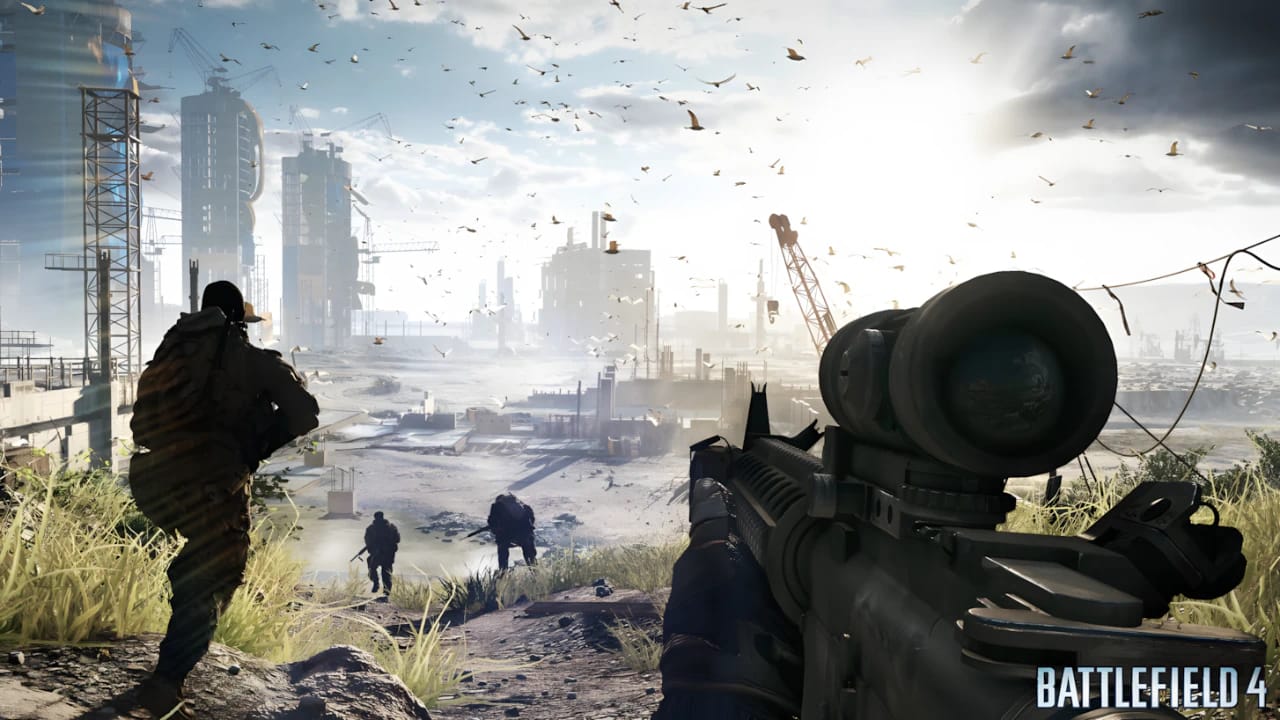
Battlefield 4 Review looks at DICE’s modern military shooter through its single-player story mode, combining calculated gunplay, large-scale action, vehicles, environmental destruction, and a cinematic war narrative.
Developed by DICE and published by Electronic Arts, Battlefield 4 casts players as Sergeant Daniel Recker. Early on, Recker and his squad are dispatched to Azerbaijan to retrieve information from a Russian defector, but the operation unravels quickly and drags the team into open conflict with Russian forces.
Compared with the historical settings of Battlefield 1 and Battlefield V, Battlefield 4 centers on modern warfare, giving players access to contemporary firearms, military vehicles, and technology. Its fights frequently blend direct shootouts with situations where positioning, cover, and choosing how to approach an area matter more than simply charging toward the objective.
One of the title’s most recognizable features is Levolution, a system built around environmental change and large-scale destruction. Paired with the Frostbite 3 engine, these events can reshape parts of the battlefield while also showing off the engine’s lighting, effects, and environmental detail.
Personally, Battlefield 4 struck me as slightly more measured than many shooters I had played before. The story mode still delivers plenty of fast, cinematic action, but several moments rewarded observing enemy positions, using cover, and thinking through an approach before pushing forward.
Visually, though, Battlefield 4 clearly shows its age today. The presentation still holds up in places and some large-scale scenes remain striking, but textures, character models, and environmental detail can look dated next to newer games and later entries in the series.
If you want to see how DICE tackled warfare in different historical periods, you can also read my Battlefield 1 Review and Battlefield V Review. Both build on the same franchise foundations in World War I and World War II, making them interesting points of comparison against Battlefield 4’s modern setting.
Throughout this review, I will examine Battlefield 4’s gameplay, story mode, mission design, weapons and vehicles, Levolution system, graphics, performance, enemy AI, replay value, and whether it still holds up today.
Campaign Story and Characters
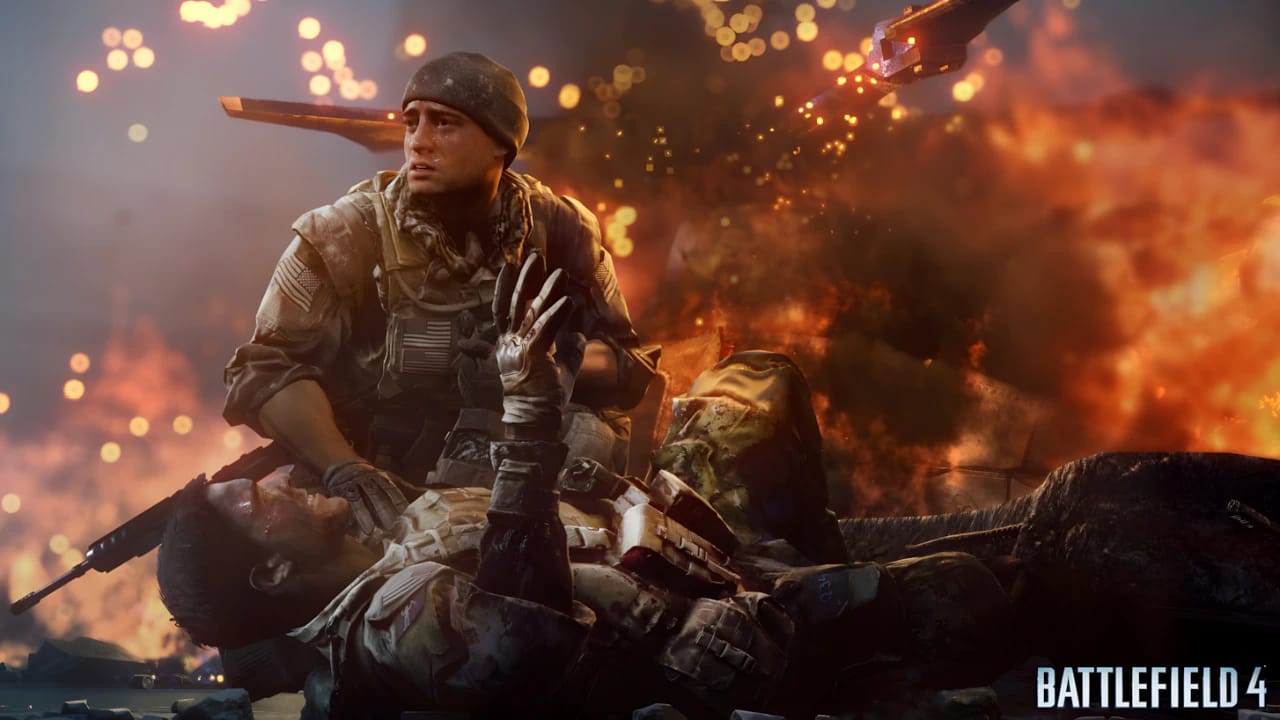
Battlefield 4 follows a more traditional, continuous narrative structure than Battlefield 1 or Battlefield V. Rather than splitting the plot into separate chapters, it keeps the focus on Sergeant Daniel Recker and his squad as the conflict escalates from one mission to the next.
The story opens with Recker and his team operating in Azerbaijan, where a mission to recover intel from a Russian defector quickly snowballs into a wider military conflict. From there, the plot moves through different locations while keeping the same core group of characters involved.
This continuity gives the writing more room to build relationships between squad members. Conversations between missions and scripted sequences help establish their personalities, while the fights they share gradually make the group feel more like a real unit.
The plot itself is fairly straightforward and clearly exists to serve the action rather than aim for a deeply narrative-driven experience. Even so, it gives the missions enough context to feel connected instead of playing out as a string of unrelated military scenarios.
One of the story’s more important threads is how it tries to build an emotional bond with the squad. That pays off near the end, when the player faces a difficult decision involving characters they have spent the whole playthrough alongside — a moment that, for me, was one of the reasons the plot stayed engaging despite its short length.
The relatively brief runtime does limit how deeply some characters can be developed, but following the same squad from start to finish gives Battlefield 4 a more cohesive story than the anthology-style structure used in later Battlefield titles.
Gameplay and Combat Mechanics
Battlefield 4 mixes fast-paced shooting with a more measured approach than many traditional military shooters. The action is still built around quick reactions and intense firefights, but positioning, cover, weapon choice, and awareness of enemy locations often outweigh simply rushing toward the objective.
The story mode frequently drops players into relatively open arenas where enemies can strike from multiple directions. Advancing without scanning the surroundings can leave you exposed fast. Using walls, vehicles, buildings, and other forms of cover becomes essential, especially against larger groups.
Weapon variety also shapes the fighting. Assault rifles and carbines hold up well at short and medium range, while sniper rifles suit open areas where long sightlines pay off. Shotguns and other close-range weapons shine indoors or in tighter spaces.
This gives players some freedom to adapt instead of leaning on a single weapon for the whole playthrough. The setting often decides which firearm feels most effective, making loadout choices matter more than simply picking whatever deals the most damage.
Squad mechanics add another layer. Players can mark enemies and direct squadmates toward targets, reinforcing the sense of operating as part of a military unit rather than fighting solo. It’s a fairly simple system, but it fits the more measured tone of the story mode.
Pacing shifts regularly too. Some encounters let players scope out enemy positions and move in carefully, while others escalate quickly into large firefights involving explosions, vehicles, and several enemies at once. That variation keeps the fighting from feeling too predictable.
Despite its more calculated elements, Battlefield 4 is not a hardcore tactical shooter. The story mode still leans on cinematic spectacle and accessibility, and the gunplay stays responsive and easy to pick up. The strategic side comes more from positioning and approach than from deep military simulation.
That balance between planning and action is one of the main reasons the fighting stays engaging throughout the playthrough. The game gives players enough room to think through an encounter without dragging the pace down.
Playing through it myself, Battlefield 4 felt slightly more calculated than many of the shooters I’d tried before. Positioning and picking the right moment to advance often mattered more than simply rushing enemies.
Even so, the action never dragged. There are still plenty of intense firefights, but I appreciated how some encounters encouraged me to size up the battlefield first and plan an approach.
Mission Design and Combat Variety
Battlefield 4’s story mode avoids leaning on a single type of encounter for too long. Missions regularly shift between close-quarters shootouts, more open arenas, vehicle sections, and larger scripted set pieces, which helps the playthrough keep its momentum despite the relatively short runtime.
The level design often gives players more room than a traditional corridor shooter. Some areas let you approach from different angles, use cover to reposition, or keep your distance and engage from a safer spot. That works well with the slightly more measured style defining Battlefield 4’s fighting.
Indoor sections naturally push players toward shorter-range engagements, while larger outdoor environments open up opportunities for rifles, long-range weapons, and vehicles. Because the available space changes from mission to mission, the same loadout doesn’t always feel equally effective.
Vehicle sequences deliver some of the strongest pacing shifts. Rather than keeping players on foot the entire time, Battlefield 4 occasionally turns the focus toward armored combat and other military hardware, giving certain missions a noticeably different rhythm.
The story mode also blends slower, more measured sections with heavily scripted spectacle. A mission might open with controlled movement and positioning before escalating into explosions, collapsing structures, or large firefights. These transitions help build a cinematic feel without fully taking control away from the player.
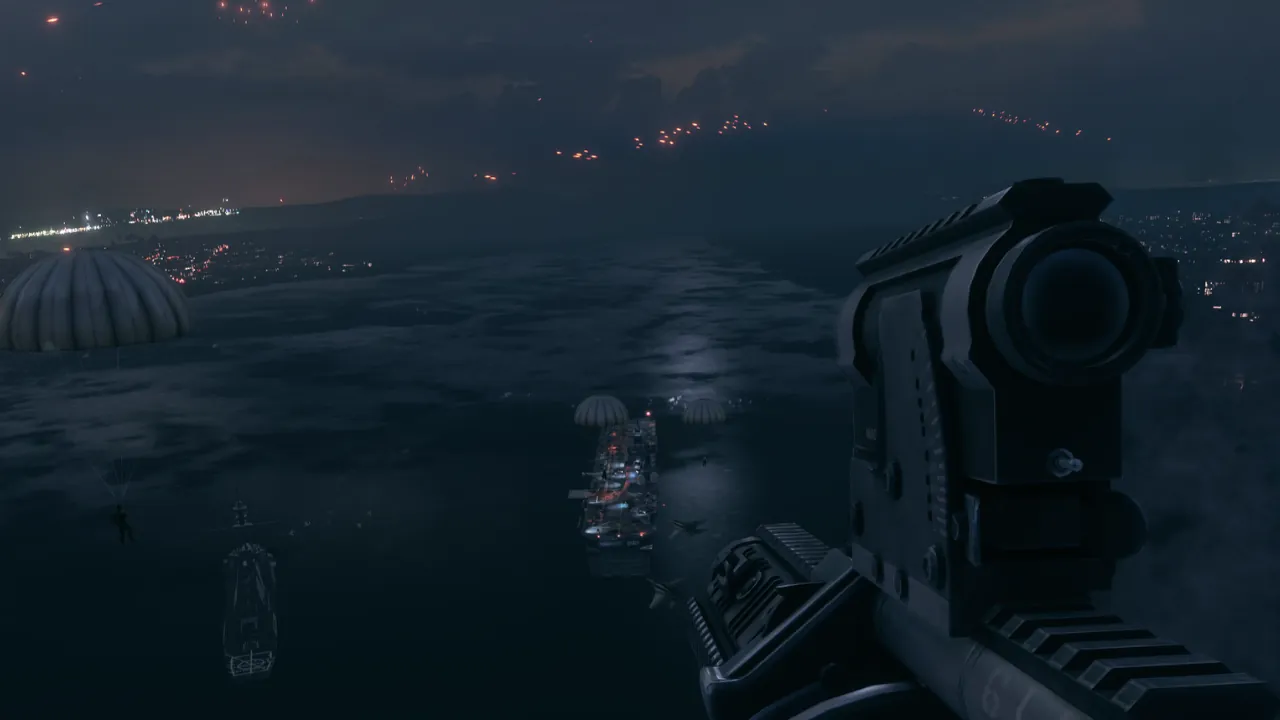
Another point worth noting is that mission variety comes not only from the setting, but from the objectives themselves. Fighting remains the core mechanic, but the story mode changes the circumstances around it often enough that different sections feel distinct even when the underlying goal still involves pushing through enemy territory.
This works especially well because Battlefield 4 is a relatively short playthrough. Rather than stretching the same mechanics across dozens of hours, it moves briskly between environments and combat scenarios, which helps cut down on repetition.
From my time with it, I didn’t find Battlefield 4’s fighting particularly varied. Most encounters follow the familiar Battlefield formula: infantry firefights, cover-based shooting, and the occasional vehicle section.
Missions swap environments and sometimes introduce new wrinkles, but the underlying gameplay stays fairly consistent from start to finish. To me, that made Battlefield 4 feel more like a traditional series entry than a playthrough constantly reinventing its combat mechanics.
That’s not necessarily a knock, especially for players who already enjoy the Battlefield formula, but I wouldn’t call combat variety one of the story mode’s strongest points.
Levolution and Environmental Destruction
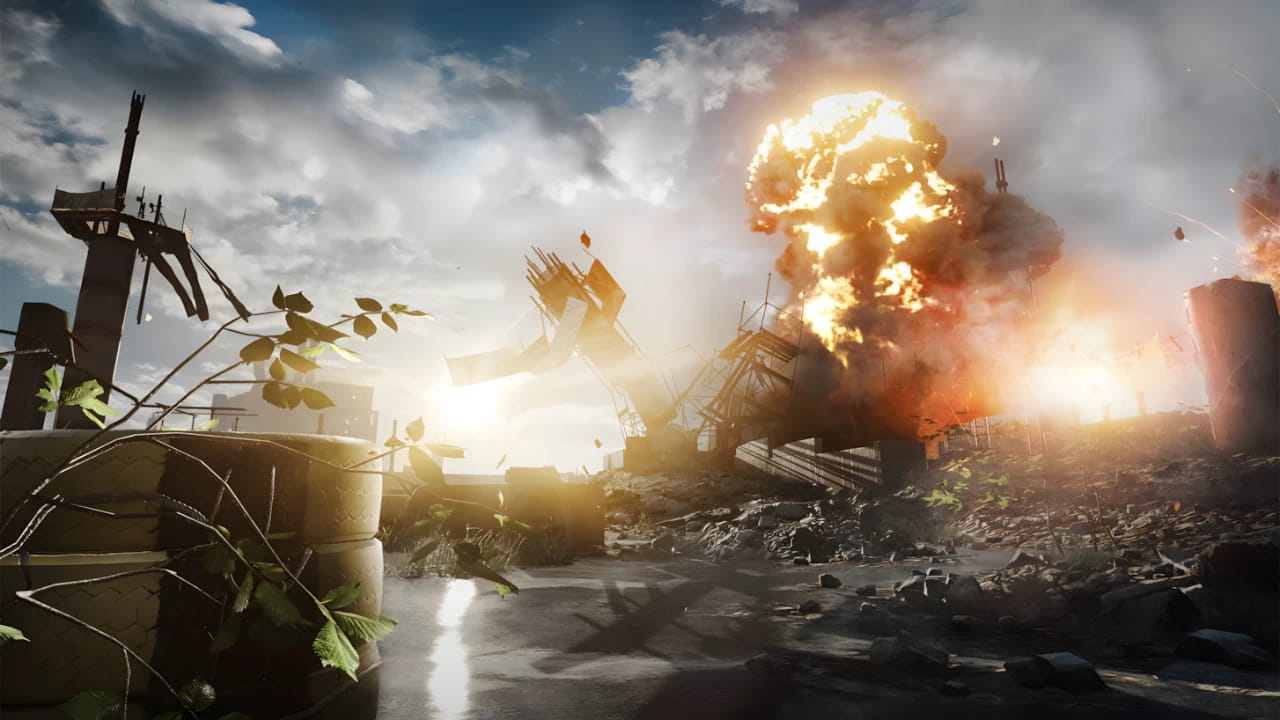
One of the most recognizable features of Battlefield 4 is its Levolution system, which lets certain maps and combat zones change dynamically as events unfold. These shifts can include collapsing structures, flooding, and other large-scale environmental events that alter how a battlefield looks and, in some cases, how players move through it.
The idea behind Levolution is to make the setting feel less static. Instead of treating buildings and terrain as fixed scenery, Battlefield 4 lets parts of the map react to combat or scripted events, creating moments where the layout can shift mid-mission or mid-match.
Structural damage works on a smaller scale as well. Walls, cover, and parts of buildings can be chipped away by explosives, gunfire, or vehicles, which can open new sightlines or strip away protection that was there a moment earlier.
This gives destruction a practical role beyond visual flair. A position that initially feels safe can become exposed after an explosion, while damaged structures can carve out new routes or make certain areas riskier to cross.
The Frostbite 3 engine is central to this system. Its handling of particle effects, debris, smoke, lighting, and structural damage helps these moments land as bigger and more dramatic when they happen.
Compared with later Battlefield titles, some of the destruction can feel more scripted or limited, especially in the single-player story mode. Still, Levolution remains one of the features most closely tied to Battlefield 4’s identity, since it adds another layer of unpredictability to the environments.
From what I played, Battlefield 4’s environmental destruction pairs very well with the gameplay. Even though parts of the environment can’t be destroyed, the interplay between explosives and the scenery still makes fights feel more dynamic.
Grenades are a good example. Tossing one into a room or near cover visibly affects the surroundings, adding more punch to the explosion and keeping firefights from feeling static.
The system isn’t completely open-ended, and some areas stay fixed no matter how much damage surrounds them. Even so, I liked how destruction complemented the fighting and made the battlefield feel more reactive.
Graphics, Frostbite 3, and Visual Presentation

Battlefield 4 was visually ambitious for its time, and the Frostbite 3 engine played a major role in that presentation. It introduced improved lighting, environmental effects, destruction, and larger levels, helping the game craft more detailed, cinematic combat scenarios.
The environments are often the strongest part of the presentation. Urban districts, military bases, open landscapes, and heavily damaged combat zones provide enough visual range to keep the story mode from looking repetitive.
Lighting and particle effects also add heavily to the atmosphere. Explosions, smoke, dust, sparks, and debris frequently crowd the screen during larger battles, giving the action more weight and making combat scenes feel appropriately chaotic.
The Frostbite 3 engine is especially effective when several effects fire at once. Vehicles, explosions, collapsing structures, and environmental damage can all share the same scene without the battlefield feeling disjointed or artificial.
That said, Battlefield 4 clearly shows its age next to modern games. Some textures, facial animations, character models, vegetation, and environmental details look noticeably simpler today, particularly against Battlefield 1, Battlefield V, and newer shooters.
That doesn’t mean the game looks bad. Its art direction, large environments, and effects still hold up, but the technological gap between Battlefield 4 and more recent releases is far easier to spot now than it was at launch.
In my view, Battlefield 4 still looks decent today, but the graphics are noticeably dated next to modern games. Some environments and large-scale scenes still look good, especially during explosions or vehicle combat, but character models, textures, and smaller environmental details clearly show their age.
I don’t think this hurts the gameplay much, but visually the gap is much easier to notice when comparing Battlefield 4 with newer entries such as Battlefield 1 and Battlefield V.
Performance and Optimization
Despite its age, Battlefield 4 runs very efficiently on modern hardware. The Frostbite 3 engine can still produce large environments, explosions, particle effects, vehicles, and environmental destruction without being particularly demanding by current PC standards.
During the story mode, performance stays consistent even with several effects happening at once. Large firefights can combine smoke, debris, explosions, enemy soldiers, vehicles, and destructible scenery, yet the game generally handles these scenes without placing an excessive load on capable hardware.
The relatively modest requirements also make Battlefield 4 easier to run at higher resolutions and settings than newer series entries. That’s especially useful for players returning to it today, since modern mid-range and high-end PCs have far more headroom than the hardware available around its original release.
In my case, Battlefield 4 was extremely light to run. I had no meaningful performance issues during the story mode, and the game stayed smooth even during more demanding sequences. My earlier testing also had it holding 4K at 60 FPS without any tuning needed.
Considering how much can happen on screen at once, I was impressed by how little the game demanded from my current PC. The graphics may look dated next to modern releases, but the upside is that Battlefield 4 now runs remarkably smoothly on capable hardware.
Enemy AI and Difficulty
Battlefield 4 becomes considerably more punishing on higher difficulty settings, especially since enemies deal heavy damage and punish poor positioning very quickly. That makes cover and situational awareness far more important than they are on easier settings.
Enemy soldiers do more than sit in one spot waiting to be picked off. During firefights, they reposition between cover, pressure the player from different angles, and capitalize on moments when you’re exposed. They seem capable of anticipating movement, growing markedly more dangerous as the difficulty climbs.
That behavior stands out most in larger encounters. Pushing too aggressively can expose you to several enemies at once, while lingering in one spot too long makes it harder to control the battlefield. This reinforces the more calculated side of Battlefield 4’s story mode.
Higher difficulty also raises the stakes of weapon choice and positioning. An approach that might be survivable on an easier setting can lead to a quick death here, making it worthwhile to spot enemies, use cover properly, and decide which targets to eliminate first.
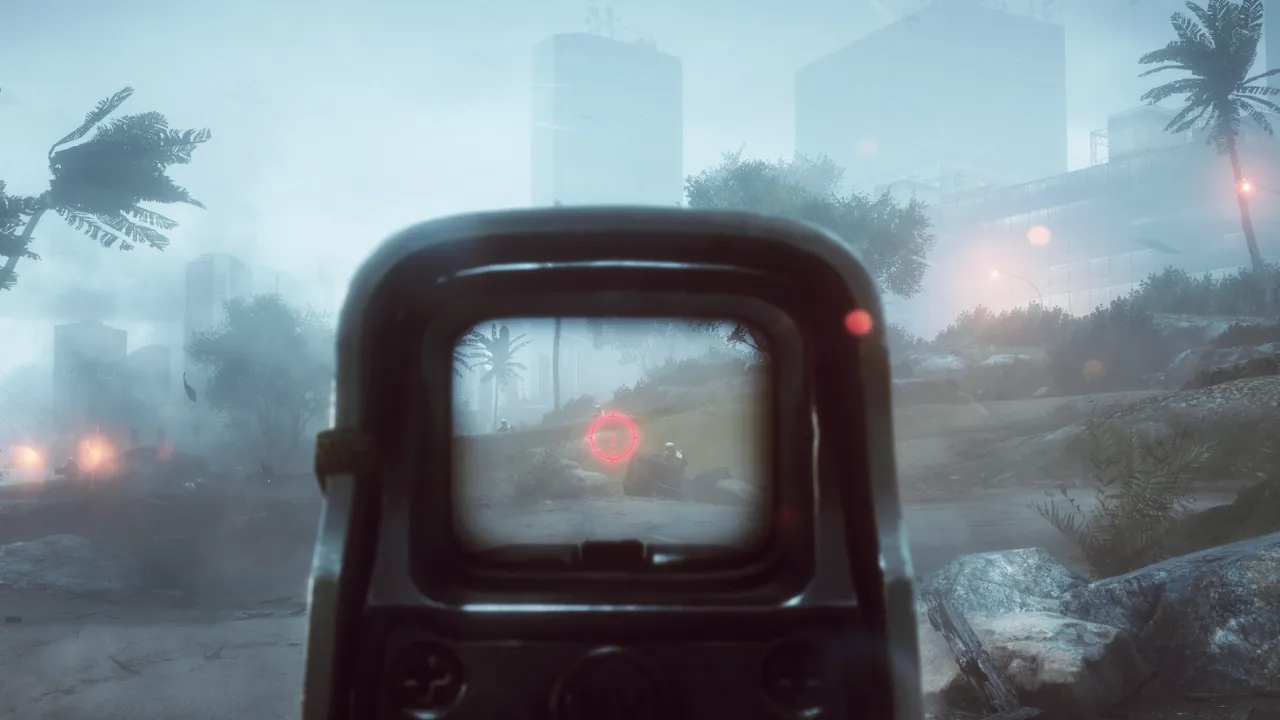
The AI isn’t flawless. Enemies can still act predictably in some scripted moments, and Battlefield 4 isn’t aiming to simulate highly sophisticated squad tactics. Still, on harder settings, the mix of aggressive enemy behavior and increased damage creates enough pressure to make encounters significantly more demanding.
I completed Battlefield 4 on Hard difficulty, and this was one of the areas where the game pushed me the hardest. I died several times over the course of the playthrough, not just because enemies deal a lot of damage, but because they’re noticeably more dangerous at that setting.
I often had to think twice before leaving cover or pushing into an area. Rushing forward without checking enemy positions could end in a very quick death, especially with several soldiers firing from different directions.
What made the challenge more interesting to me was that it didn’t feel based solely on inflated enemy damage. The AI was sharp enough to punish careless movement, which made some encounters far more calculated than I initially expected.
Because I played the whole thing on Hard, Battlefield 4 gave me a noticeably tougher experience than a straightforward run-and-gun shooter. Some sections took multiple attempts, but that difficulty also made successful encounters more satisfying.
Game Length and Replay Value
Battlefield 4’s single-player story mode is relatively short, which suits the game’s brisk pacing and cinematic structure. The main story takes roughly 6 hours to finish, while a more completionist run stretches closer to 9 hours.
Because the story mode moves quickly between locations, combat scenarios, and scripted sequences, its shorter length doesn’t necessarily read as a major weakness. The plot keeps advancing without dwelling too long on the same objectives.
Replay value, however, is more limited if single-player is all you’re after. Once the story mode is finished, the main reasons to return are tackling a higher difficulty, trying different weapons and approaches, or revisiting specific missions.
The Hard difficulty can add some replay value for players after a tougher experience. Enemy damage climbs significantly, and encounters demand more careful positioning, which can make a second run feel more challenging than simply repeating the same missions.
Battlefield 4 also includes collectibles and optional objectives that may tempt some players back into missions, although the story mode isn’t built around extensive long-term progression.
For players focused purely on the story, it’s best viewed as a compact military shooter rather than a long single-player experience. Its replay value comes down mainly to how much you enjoy the fighting and whether you want to push yourself on higher difficulty settings.
Strengths and Weaknesses
After finishing the story mode, Battlefield 4’s strengths come mainly from its measured combat, demanding higher difficulties, smooth performance, and the way the Frostbite 3 engine supports large-scale action and environmental effects. At the same time, its age is much more noticeable today, particularly in the visuals and the limited variety of some encounters.
Strengths
- Measured but accessible combat: Battlefield 4 gives positioning and cover more weight than a typical run-and-gun shooter without becoming overly complex.
- Demanding enemy AI on Hard: Enemies punish careless movement quickly, dealing heavy damage and pressuring the player from different angles.
- Levolution and environmental interaction: Explosions and destruction pair well with the gunplay, and grenades interact with the scenery in a satisfying way.
- Solid pacing: The story mode moves through different locations and large set pieces without overstaying its welcome.
- Well-drawn characters and a continuous plot: Following the same squad throughout gives the story more continuity, and the final decision carries extra weight because of the time spent with those characters.
- Excellent performance on modern hardware: In my case, Battlefield 4 was extremely light to run and stayed smooth throughout. My earlier testing also had it holding 4K at 60 FPS without any tuning needed.
Weaknesses
- Dated graphics: Battlefield 4 still has some visually striking moments, but textures, character models, animations, and environmental detail clearly show their age next to modern shooters.
- Limited combat variety: Although missions change locations and occasionally add vehicles or larger set pieces, the core gameplay stays very close to the standard Battlefield formula throughout most of the story mode.
- Less advanced destruction than newer Battlefield games: Environmental interaction is enjoyable, but some objects and areas can’t be destroyed, and the system feels less dynamic than what later entries achieved.
- Relatively short story mode: Players after a long single-player experience may find the amount of content limited.
- Occasional technical issues: My playthrough ran into a few bugs that affected certain moments, though not enough to keep the story mode from being enjoyable.
For me, Battlefield 4’s strengths outweigh its weaknesses. The measured combat, the challenge on Hard, the environmental interaction, and the smooth performance were the aspects I appreciated most. Its age is evident, particularly in the graphics and the comparatively limited destruction, but those limitations didn’t significantly dent my enjoyment of the playthrough.
Is Battlefield 4 Worth Playing Today?
Battlefield 4 is still worth playing today, especially if you enjoy military shooters with a slightly more measured pace, demanding combat, and large-scale action.
The story mode is short, but it stays engaging because it moves quickly between firefights, vehicle sections, scripted sequences, and different settings. The core gameplay still feels solid, and the balance between positioning, cover, weapon choice, and fast action gives it more depth than a straightforward run-and-gun shooter.
The biggest sign of its age is the presentation. Next to newer Battlefield games, it has noticeably dated textures, character models, animations, and environmental detail. Its destruction system is also less advanced than what later entries in the series achieved.
Even so, those limitations don’t make the story mode feel outdated from a gameplay standpoint. The gunplay stays responsive, the challenge on Hard can still be demanding, and the Levolution system gives some encounters a stronger sense of scale.
Performance is another point in its favor today. On my PC, the game was very light to run and stayed smooth even at high settings and 4K resolution, making it easy to revisit on modern hardware without worrying about steep system requirements.
For players who already enjoy the Battlefield formula, Battlefield 4 still delivers a solid single-player experience. It isn’t the most varied story mode in the series, and its visuals are clearly from an older generation, but the measured combat, challenge, environmental interaction, and pacing are still strong enough to make it worth playing.
Conclusion
Battlefield 4 remains a solid entry in the series, even though its age is far more noticeable today than in newer Battlefield titles.
What stood out to me most was the slightly more measured approach to combat. The game often rewards positioning, cover, and patience, especially on Hard difficulty, where enemies deal heavy damage and punish careless movement very quickly.
I also liked how environmental destruction complements the gameplay. The system is more limited than in newer Battlefield games, but grenades, explosions, and heavier weapons still interact with the scenery in a satisfying way and keep firefights from feeling static.
The story mode itself is relatively short and the fighting doesn’t change dramatically from mission to mission, but the pacing holds up well enough that it rarely turns frustrating. Following the same squad throughout also gives the narrative more continuity and makes the final decision more meaningful.
Visually, Battlefield 4 clearly shows its age, but that’s offset by excellent performance on modern hardware. In my case, it ran very smoothly, and its lower system demands make it easy to play at high settings today.
Overall, I’d still recommend Battlefield 4 to players who enjoy modern military shooters, calculated gunplay, and the classic Battlefield formula. It may not feel as technically advanced as newer entries, but the playthrough still delivers enough action, challenge, and personality to remain enjoyable.
If you want to see the story mode in action, you can also check out my Battlefield 4 gameplay playlist on YouTube.