

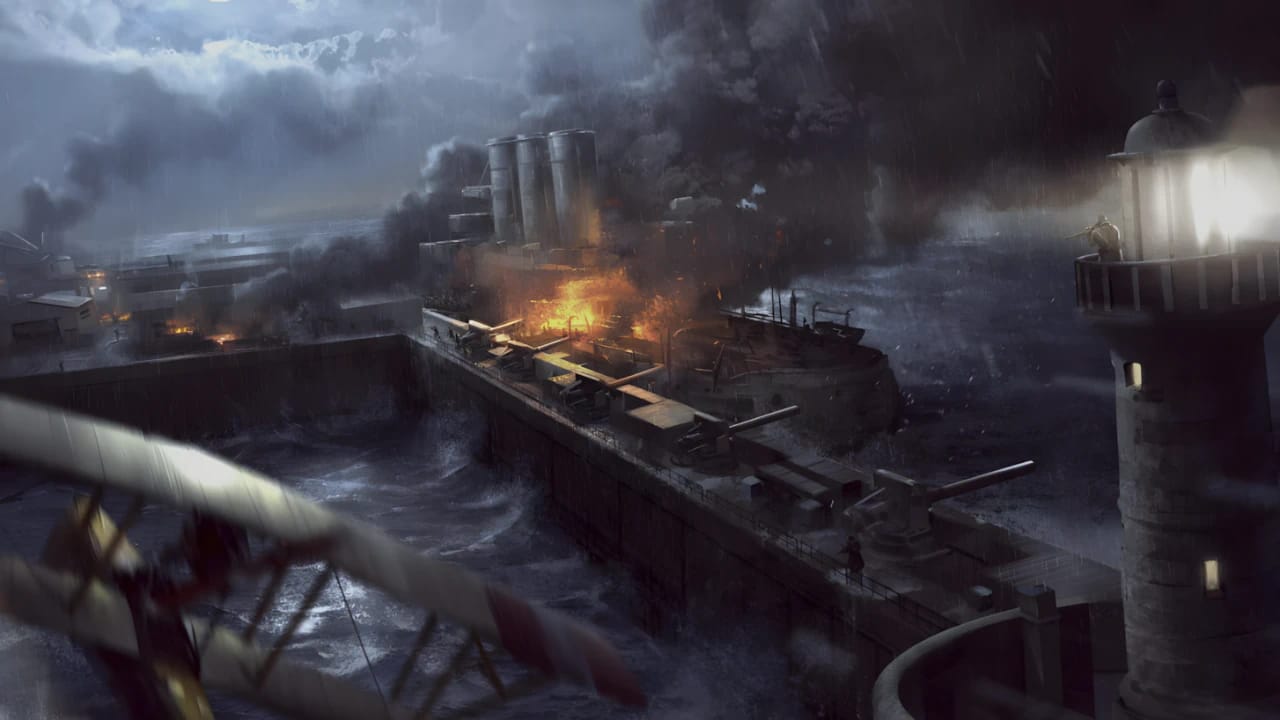
Battlefield 1 Review takes a closer look at DICE’s World War I shooter, a game that combines infantry combat, early military vehicles, cinematic storytelling, and large-scale battlefields without losing the series’ fast, accessible gunplay.
Developed by DICE and published by Electronic Arts, Battlefield 1 steps away from the modern and near-future settings associated with many military shooters. Rifles, machine guns, tanks, aircraft, artillery, and close-quarters combat give the game a very different identity from more contemporary entries in the genre.
Its single-player campaign is divided into War Stories. Instead of following one protagonist from beginning to end, each chapter moves to a different character, location, and situation, giving the campaign room to show several sides of the conflict.
Atmosphere is a major part of what makes Battlefield 1 work. Dynamic weather, detailed environments, battlefield noise, military vehicles, and the constant signs of destruction make the war feel larger than the firefight directly in front of you. DICE still takes creative liberties with history, so this is better understood as a cinematic interpretation of World War I than a precise reconstruction.
The setting was one of the things that impressed me most. Battlefield has always been known for spectacle and realism, but here the historical framing gives that spectacle more weight. Some moments made me think less about simply winning a firefight and more about the people caught inside the conflict.
Battlefield 1 also pairs naturally with Battlefield V, which applies the War Stories format to World War II. If you want to see how DICE handled a later conflict, you can read my Battlefield V Review, where I cover its campaign, combat, destruction, graphics, and historical presentation.
In this review, I will cover Battlefield 1’s gameplay, World War I setting, War Stories, historical approach, destruction, weapons and vehicles, graphics, performance, sound design, replay value, and whether it is still worth playing today.
Gameplay and Combat Mechanics
Battlefield 1 adapts the series’ familiar gunplay to World War I without making the combat feel sluggish. Bolt-action rifles, semi-automatic weapons, machine guns, pistols, explosives, melee weapons, tanks, and aircraft all appear across the War Stories, and the frequent changes in equipment give each chapter its own rhythm.
The gunplay feels heavier than in many modern military shooters. Bolt-action rifles reward patience and accuracy, while faster weapons are better suited to close and medium range but can be harder to control under sustained fire. Recoil, reload speed, magazine size, and effective range all matter enough to change how I approached an encounter.
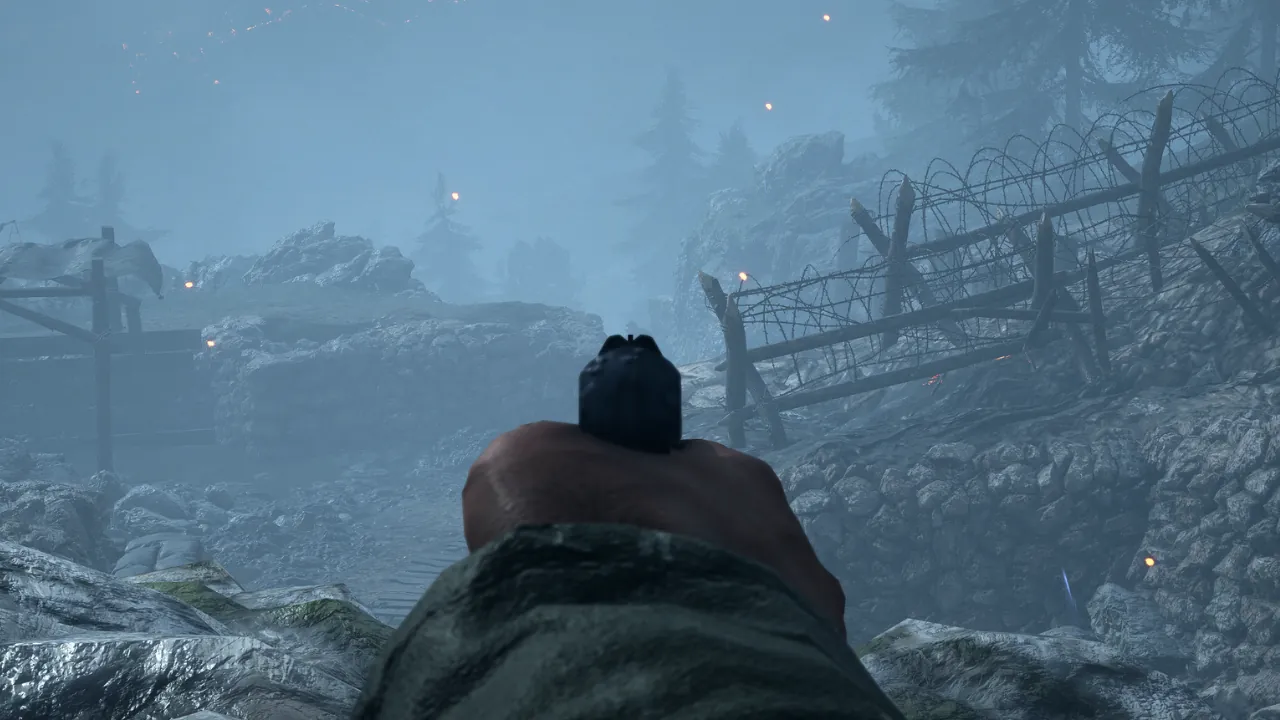
Close-range fights can become surprisingly aggressive. Melee attacks and bayonet charges are useful when the distance collapses, but charging at the wrong moment can leave you exposed. That physicality fits the setting and gives infantry combat a different feel from shooters built around advanced optics and modern equipment.
The campaign also changes pace regularly. Some missions throw you into large infantry battles, while others lean into stealth, armored combat, aircraft, or smaller engagements where positioning matters more than raw firepower.
Vehicles are a big part of that variety. Tanks give you far more protection and destructive power than fighting on foot, while aircraft missions switch the game into a completely different style built around movement, machine-gun fire, and dogfights.
Stealth appears in several sections as an alternative to direct combat. You can watch patrols, isolate enemies, and move through some areas quietly. It is simple compared with a dedicated stealth game, but it gives you another option before a firefight starts.
What I liked most was how fluid the whole campaign felt. Infantry battles were the most frantic moments for me, especially when enemies, vehicles, and explosions were all competing for attention at once. The aircraft sections were even more enjoyable, although I found them a little harder because I played on Hard difficulty.
That mix of fast ground combat and more demanding vehicle sections kept the campaign moving without making every chapter feel like a variation of the same mission.
World War I Setting and Battlefield Atmosphere
The World War I setting shapes almost everything in Battlefield 1. Weapons, vehicles, weather, architecture, terrain, and the scale of the fighting all help separate it from modern military shooters.
The campaign moves through muddy battlefields, trenches, ruined villages, deserts, mountains, forests, and damaged urban areas. Each location has its own character, yet all of them carry signs of a conflict that has already torn through the landscape.
Trenches and defensive positions are especially effective at selling that atmosphere. Narrow passages, barbed wire, artillery craters, broken fortifications, and exposed open ground make movement feel dangerous even before an enemy appears.
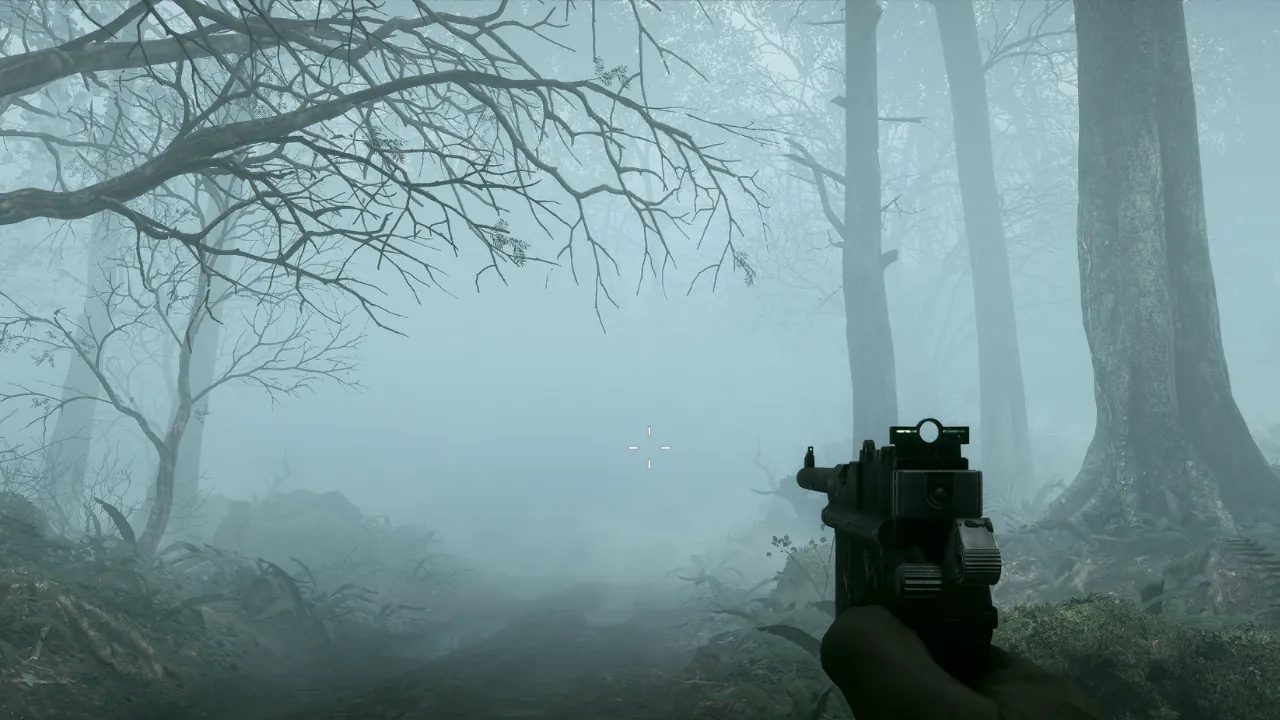
Weather gives many of these places a different mood from one moment to the next. Fog, rain, dust, and reduced visibility can make a familiar area feel less predictable and can change how confidently you move through open terrain.
The period’s military technology reinforces the setting as well. Tanks feel heavy, aircraft look fragile beside modern jets, and many firearms have slower firing rates or more deliberate handling than contemporary weapons. Even when DICE bends history for the sake of playability, the equipment still feels rooted in the early 20th century.
What stayed with me most, though, was the human side of the setting. There were moments when the game made me think about what it would mean to be in the place of those characters, surrounded by destruction and by the consequences of a war that killed so many people.
The campaign also shows that soldiers on opposing sides were still human beings capable of fear, hesitation, and compassion. That gave several War Stories more weight for me and reinforced how the conflict affected people in very different parts of the world.
Battlefield 1 should not be treated as a historical simulation, but its atmosphere can still make the period feel immediate. That balance between spectacle and human perspective is one of the reasons the setting works so well.
Campaign and War Stories
Rather than building the entire campaign around one protagonist, DICE divides the single-player experience into several War Stories. Each one follows a different character, location, and type of combat, giving the campaign a broader view of the war.
That structure lets Battlefield 1 move between infantry assaults, armored warfare, aerial combat, stealth, and more personal moments without forcing every idea into one character’s journey.
The opening sequence makes the campaign’s tone clear almost immediately. Instead of presenting the player as an unstoppable soldier, it emphasizes how vulnerable the people on the battlefield are. Death is treated as part of the conflict itself rather than simply as a conventional failure screen.
Each War Story has a distinct gameplay identity. One chapter may put you inside a tank, another in an aircraft, while others return to infantry combat or quieter stealth sections. The constant change keeps the relatively short campaign from feeling repetitive.
The trade-off is character development. Because each story has limited screen time, some protagonists and relationships end just as they are becoming interesting. A longer narrative could have explored them in greater depth.
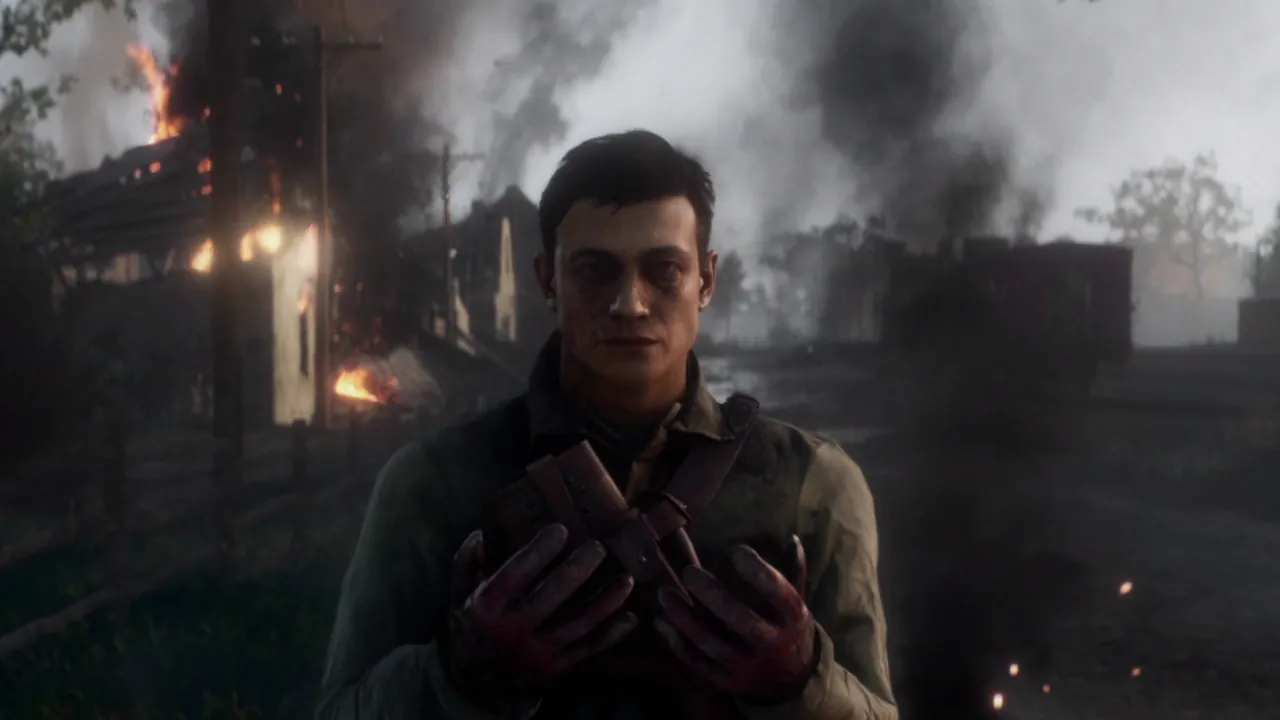
Even so, the format suits Battlefield 1. The campaign is less interested in telling one continuous epic than in presenting several smaller perspectives on the same global conflict. Some chapters are built around spectacle; others lean more heavily on fear, sacrifice, relationships, or survival.
For me, the War Stories were more than a way to add gameplay variety. They made the war feel broader and more personal at the same time. Moving between different characters and fronts helped me think about the people behind the battles, not just the objectives on the screen.
Historical Accuracy and Creative Choices
Battlefield 1 uses World War I as its foundation, but it is not trying to be a simulation. DICE mixes period weapons, vehicles, equipment, locations, and historical circumstances with fictionalized characters and cinematic scenarios built for a first-person shooter.
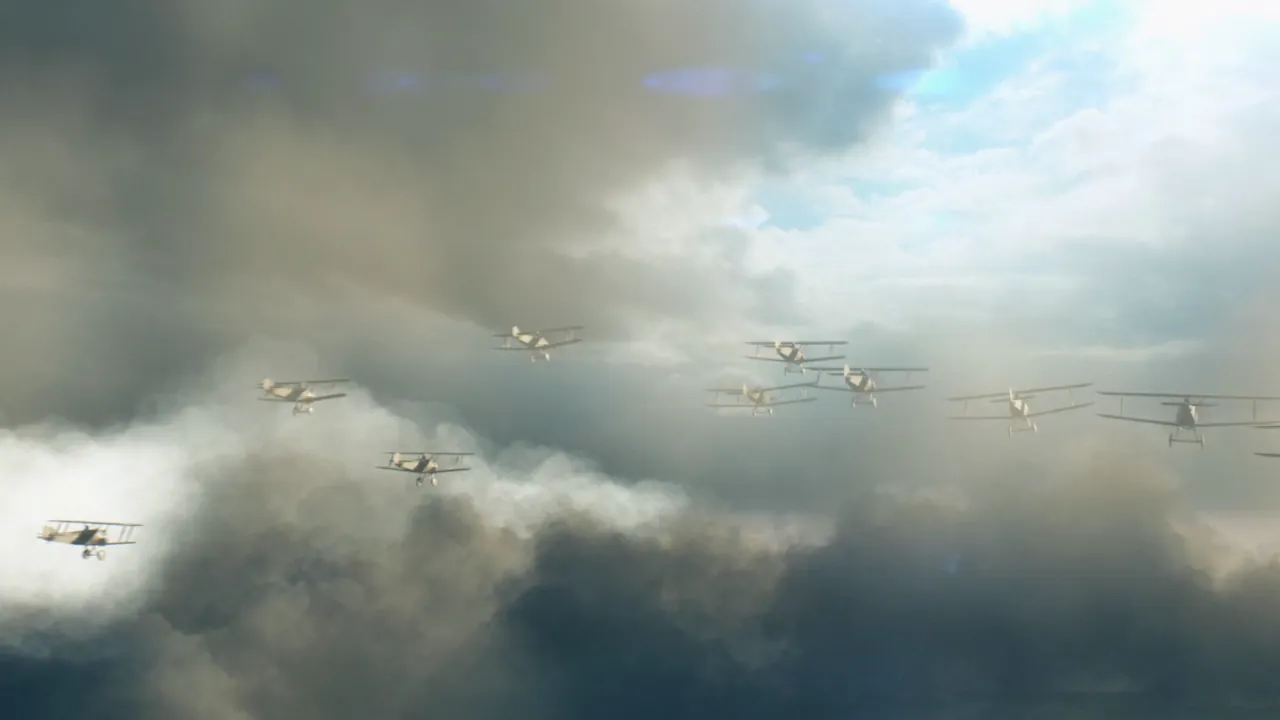
Many recognizable elements of the era are present: bolt-action rifles, early automatic weapons, artillery, armored vehicles, biplanes, cavalry, gas attacks, trenches, period uniforms, and defensive fortifications. Those details give the game a strong historical identity even when the action itself is dramatized.
Weapon availability is one of the clearest compromises. The player encounters a broader selection of automatic and experimental firearms than a typical soldier would have had access to, which helps preserve the variety expected from a Battlefield game.
Vehicles are treated in a similar way. Tanks and aircraft are based on real machines from the period, but their handling, durability, frequency, and combat effectiveness are tuned around gameplay rather than strict technical accuracy.
The War Stories also blend history and fiction. They draw from real conflicts, places, and military situations while giving DICE room to create characters and scenes that serve the campaign’s narrative.
That distinction matters. Battlefield 1 can spark interest in World War I, but it should not replace historical research. Its compressed timelines, cinematic staging, and gameplay balancing are designed to create an engaging shooter first.
The result is a recognizable World War I setting shaped by deliberate compromises. DICE preserves enough period detail to establish the era while allowing the combat to remain fast, varied, and accessible.
Destruction System and Battlefield Immersion
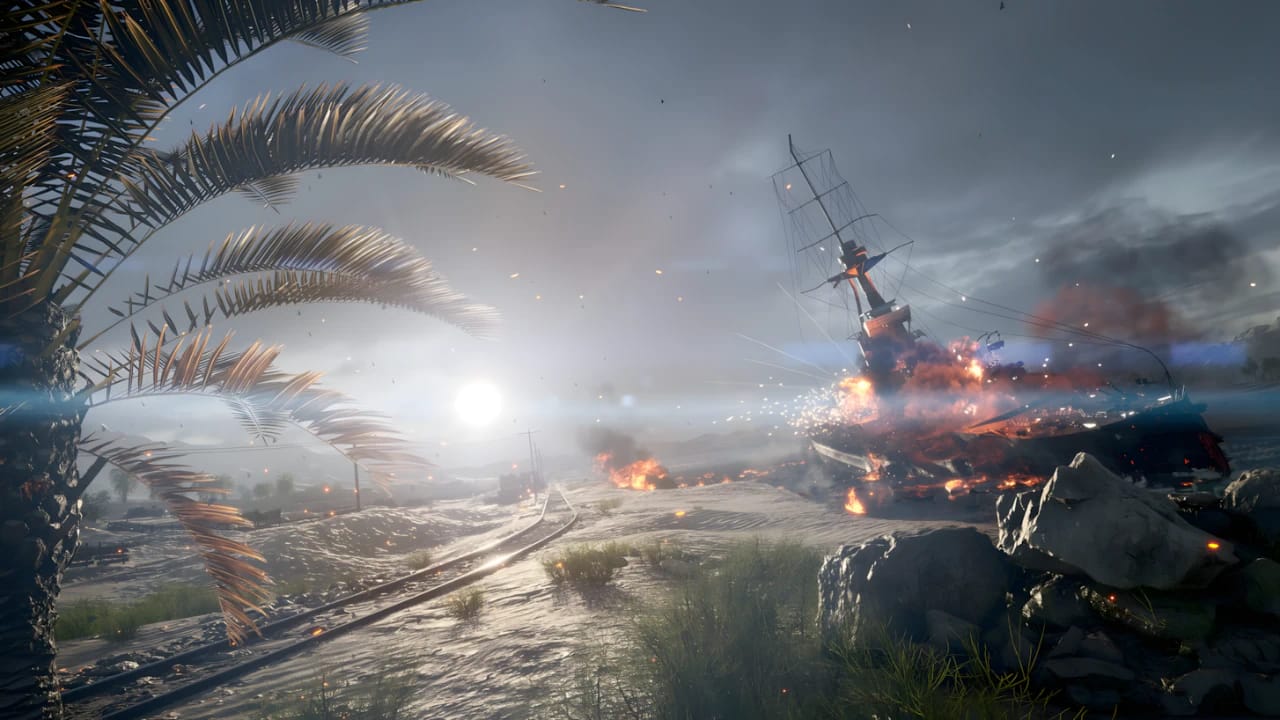
Environmental destruction is part of Battlefield 1’s identity, although its impact depends heavily on what you are using. Heavy weapons and vehicles can damage walls, structures, and cover far more dramatically than ordinary infantry equipment.
Tanks are where the system becomes most noticeable. Their firepower can punch through walls and larger sections of structures, changing sightlines and making the battlefield feel more reactive during vehicle-heavy encounters.
On foot, I found the system far less impressive. Grenades often seemed to affect doors or smaller pieces of the environment rather than transform an area in a meaningful way. I barely relied on destruction during infantry combat because it rarely changed how I approached a fight.
That stood out even more after playing Battlefield V. In my experience, destruction in the later game felt much more dynamic and more closely tied to the flow of combat.
Battlefield 1 still benefits visually from smoke, debris, fire, damaged terrain, and collapsing structures during larger encounters, but I would separate that spectacle from how useful the destruction actually felt while I was playing on foot.
So while the system adds to the chaos of the battlefield, it was not one of the campaign’s strongest mechanics for me. It became far more convincing whenever tanks or heavier weapons were involved.
Weapons, Vehicles, and Combat Variety
One of the campaign’s strongest qualities is how many ways it gives you to approach a fight. Weapons cover short, medium, and long ranges, and the War Stories regularly change the equipment available to match the mission.
Shotguns, pistols, automatic weapons, melee weapons, and the bayonet charge work well at close range. Semi-automatic rifles are useful when you need flexibility, while bolt-action rifles reward careful positioning and accurate shots over longer distances.
That range matters because Battlefield 1 frequently shifts between tight interiors and large open spaces. A weapon that feels perfect inside a building may be a poor choice when you suddenly need to cross a field or engage enemies from a distance.
Several missions also allow a stealth approach. You can watch patrols, move carefully, and pick off isolated enemies before the situation escalates. It reminded me a little of Metal Gear Solid, although the system here is much simpler.
The simplicity actually works in its favor. If stealth goes wrong, the game does not fall apart; you can simply switch to direct combat and fight your way through. That made stealth feel like another tool rather than a rigid playstyle I had to follow perfectly.
Vehicles create an even bigger change in pace. Tanks bring heavier firepower and make environmental destruction more noticeable, while aircraft missions ask you to track enemies in three dimensions and manage movement, altitude, and weapons at the same time.
The aircraft sections were some of my favorite parts of the campaign. Dogfights were extremely fun, but they were also slightly more demanding than ground combat for me, especially on Hard difficulty.
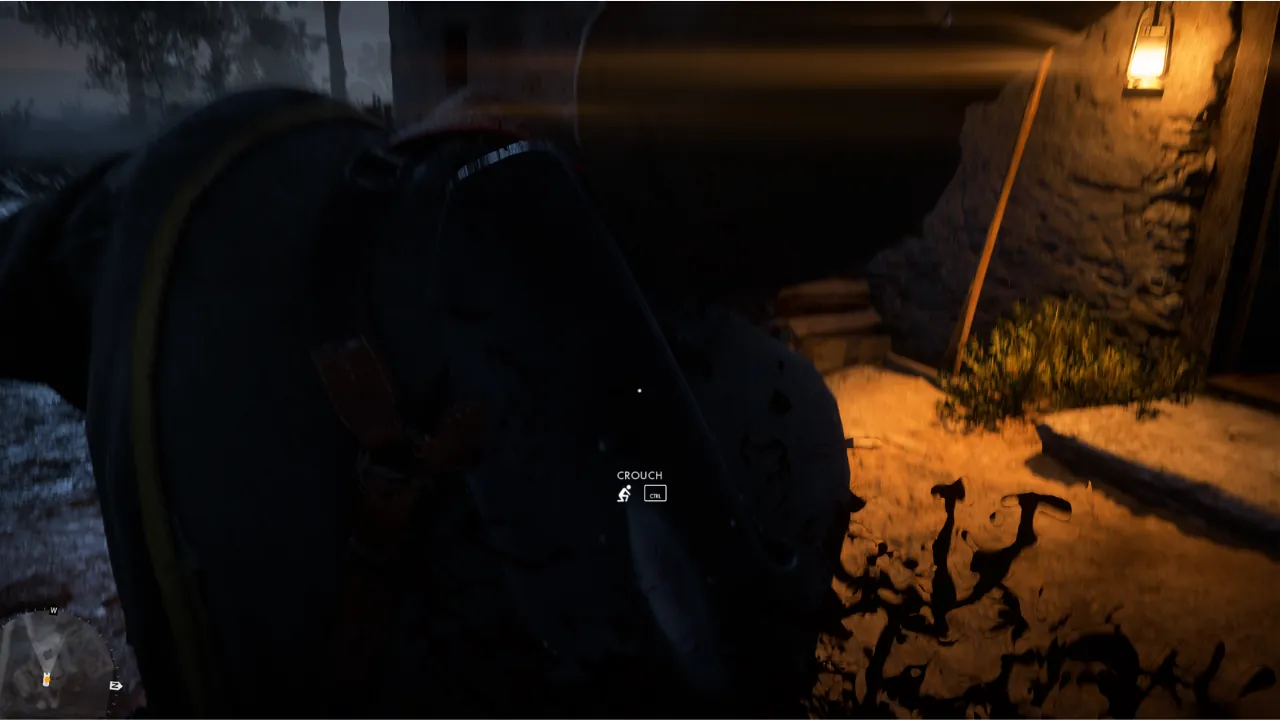
Between close-range fights, long-range shooting, stealth, tanks, and aircraft, the campaign rarely locks you into one way of playing. That variety is a major reason the single-player experience stayed fresh for me despite its relatively short length.
Graphics, Frostbite Engine, and Visual Presentation
Battlefield 1 still looks remarkably good. The Frostbite Engine brings together lighting, weather, particle effects, environmental detail, and large battlefields in a way that remains convincing years after release.
What stands out most is how those elements interact. Smoke can swallow distant targets, explosions briefly light nearby surfaces, dust hangs in the air after impacts, and weather can completely change the mood of a location.
The art direction does just as much work as the technology. Deserts, villages, forests, mountains, beaches, trenches, and damaged cities all have a distinct look, so the campaign never feels like it is recycling one visual template.
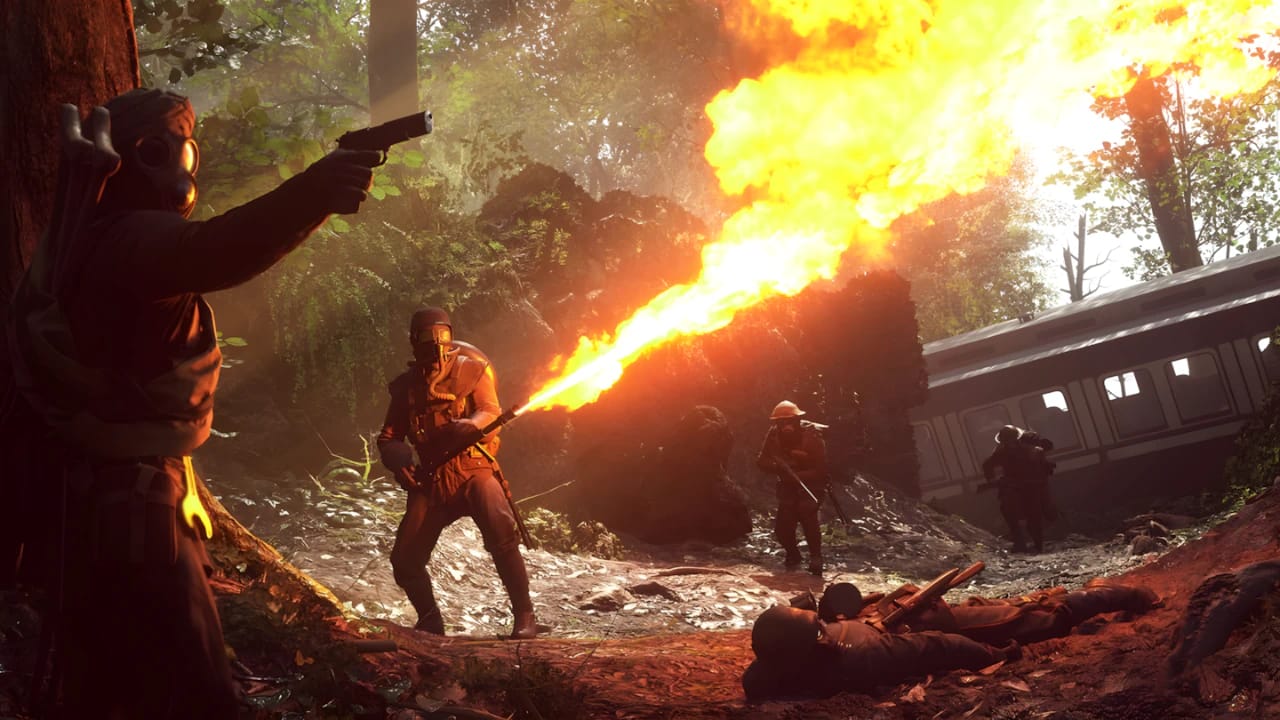
Small details help sell the setting too: worn uniforms, mud, debris, damaged surfaces, mechanical parts on vehicles, and the contrast between intact areas and places already devastated by combat.
I played with every graphics setting on Ultra and had very little to complain about visually. The game still holds up extremely well at high settings.
The aircraft missions impressed me the most. Even from high above the battlefield, fields, roads, buildings, smoke, terrain, and other details remain visible far below. The ground never felt like a flat or simplified backdrop, which gave those missions an excellent sense of scale.
Some individual assets naturally show their age when examined closely, but the overall presentation has aged far better than I expected. Lighting, composition, environmental effects, and strong art direction matter more here than raw texture resolution alone.
Performance and Optimization
Battlefield 1 can put a lot on screen at once: infantry, vehicles, explosions, smoke, weather, particle effects, and large environments. In a fast first-person shooter, that makes stable performance especially important.
On my PC, performance was consistently strong. I played with the graphics settings on Ultra, and the campaign remained smooth even during heavier scenes with vehicles, explosions, and large amounts of smoke.
The aircraft missions also ran well despite showing large portions of the battlefield at once. That was particularly noticeable because the environments remain detailed even when viewed from high altitude.
I did run into a few bugs and occasional crashes, but they were rare enough that they never became a serious problem or changed my opinion of the campaign.
My PC is relatively powerful, so I would not assume everyone will have the same experience on older hardware. On my setup, though, Battlefield 1 delivered excellent performance at its highest visual settings.
Sound Design and Audio Experience
Battlefield 1’s audio does a lot of work in making battles feel convincing. Gunfire, artillery, vehicles, aircraft, explosions, soldier voices, and ambient battlefield noise often overlap, giving large encounters a sense of scale that the visuals alone would not achieve.
Different weapon types have distinct enough sounds to match their character, while tanks and aircraft carry much more weight than ordinary infantry noise. Distant artillery and nearby explosions also help suggest that the battle continues beyond whatever is directly in front of the player.
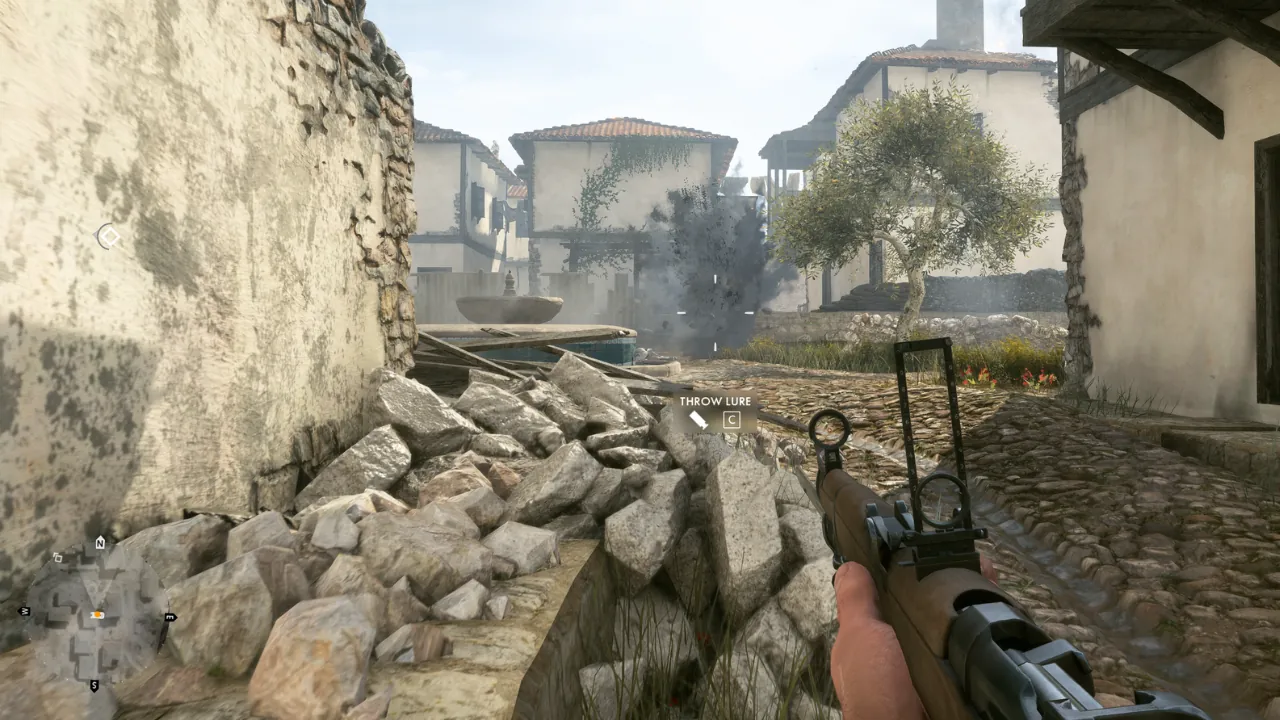
Quieter sections are handled well too. Wind, distant fighting, burning structures, movement, and environmental ambience keep areas from feeling empty when the shooting stops.
I do not have enough technical audio knowledge to judge every detail of the mix, and I would rather not pretend otherwise. What I can say is that the overall sound fidelity was very good throughout my playthrough.
Weapons, explosions, vehicles, and the surrounding battlefield all sounded convincing to me, and I never noticed anything that pulled me out of the experience. The audio supported the atmosphere instead of drawing attention to itself for the wrong reasons.
Game Length and Replay Value
The Battlefield 1 single-player campaign is fairly short, but the War Stories format helps it avoid unnecessary filler. Each chapter introduces a different character, location, and style of combat instead of stretching one storyline far beyond what it needs.
According to HowLongToBeat, the main campaign takes around 6.5 hours on average. Difficulty, deaths, exploration, and playstyle can push that number higher.
I finished the campaign in roughly 9.5 hours. Playing on Hard difficulty meant some encounters took several attempts, and the aircraft sections in particular demanded more care from me than most ground fights.
There is some room to replay individual War Stories with different weapons or approaches. Stealth gives certain missions another route, and higher difficulties can make familiar encounters more demanding.
That said, I would not describe the single-player side as highly replayable. Once the War Stories are finished, the main reasons to return are to revisit favorite chapters, experiment with another approach, or increase the difficulty.
For me, the length felt appropriate. The campaign is compact, but it kept changing enough that I rarely felt I was repeating the same scenario.
Strengths and Weaknesses
After finishing the campaign, the things Battlefield 1 does well are easy to identify. Its strongest qualities come from atmosphere, variety, and presentation rather than from any one mechanic in isolation.
Strengths
- Excellent World War I atmosphere: trenches, ruined cities, deserts, mountains, aircraft, tanks, and battlefield effects give each War Story a strong sense of place.
- Varied combat: short-, medium-, and long-range weapons, stealth, tanks, and aircraft keep the campaign from settling into one routine.
- Strong visual presentation: lighting, weather, smoke, environmental detail, and large battlefield views still look impressive.
- Convincing sound: weapons, explosions, vehicles, voices, and ambient noise support the atmosphere without feeling disconnected from the action.
- War Stories offer different perspectives: the campaign moves between characters and fronts instead of locking the entire experience to one protagonist.
- Very good performance on capable hardware: on my PC, Ultra settings remained smooth through most of the campaign.
Weaknesses
- Short campaign: players looking for a long single-player story may find the War Stories over too quickly.
- Limited character development: some stories end before their protagonists have much time to develop.
- Destruction is inconsistent: tanks can make it impressive, but grenades and infantry combat often felt much less impactful to me than in Battlefield V.
- Simple stealth: it is a useful option, but nowhere near the depth of a dedicated stealth game.
- Historical liberties: weapons, vehicles, and scenarios are adapted for entertainment, so the campaign should not be treated as a precise recreation of the war.
- Occasional bugs and rare crashes: I encountered a few technical issues, although they never seriously disrupted my playthrough.
For me, the strengths clearly outweigh the weaknesses. The atmosphere, weapon variety, aircraft missions, visuals, and War Stories are what I remember most. The short length and weaker infantry destruction were noticeable, but neither stopped me from enjoying the campaign.
Is Battlefield 1 Worth Playing Today?
Yes—Battlefield 1 is still worth playing today, especially if you enjoy historical settings, atmospheric shooters, or the particular blend of realism and spectacle that Battlefield is known for.
The War Stories remain the main reason I would recommend the single-player campaign. They move between different characters and fronts, offer varied combat, and give the First World War setting more personality than a conventional sequence of disconnected missions.
The gunplay still feels good, the aircraft and tank sections break up the infantry combat, and the Frostbite presentation has aged remarkably well. On PC, the game can still look excellent at high settings.
Its limitations are easy to see: the campaign is short, stealth is basic, and destruction on foot did not impress me as much as it did in Battlefield V. None of those issues were enough to outweigh what the campaign does well.
If you like history or appreciate the level of realism and immersion Battlefield 1 tries to create, you should be well served. It is not a documentary or a fully accurate simulation, but it does a good job of turning its historical inspiration into an engaging shooter.
Conclusion
Battlefield 1 remains one of the more memorable entries in the series for me. Its World War I setting is not just a backdrop; it shapes the weapons, vehicles, environments, tone, and the way each War Story approaches the conflict.
The campaign was at its best when it mixed spectacle with something more human. Several moments made me think about the people behind the battles, the number of lives lost, and the fact that soldiers on opposite sides were still people placed in extreme circumstances.
I also appreciated how much the campaign changes the way you play. Infantry combat can be fast and chaotic, stealth gives you a quieter option, tanks add weight and destructive power, and the aircraft missions were some of the most fun—and most challenging—sections of my playthrough on Hard difficulty.
There are flaws. The War Stories are brief, some characters could have used more development, destruction on foot feels limited compared with Battlefield V, and I encountered a few occasional bugs and rare crashes. None of that significantly damaged the overall experience.
For players interested in history, historical shooters, or Battlefield’s mix of realism and cinematic warfare, there is still plenty to enjoy here. Battlefield 1 should not be treated as a completely accurate recreation of World War I, but as a game inspired by the period, it remains atmospheric, varied, and visually impressive.
For me, Battlefield 1 is still worth playing today, particularly for its single-player campaign, aircraft missions, atmosphere, and the way the War Stories connect large battles with more personal perspectives.
If you want to see the campaign in action, you can also check out my Battlefield 1 gameplay playlist on YouTube.