


Table of Contents
DOOM 2016 is a fast-paced first-person shooter developed by id Software and published by Bethesda. It brings the franchise back to a more aggressive style, focusing on speed, brutal combat, heavy weapons, Glory Kills, and constant movement instead of cover-based shooting or slow tactical gameplay.
You play as the Doom Slayer, a warrior awakened on Mars after a demonic outbreak caused by experiments with Hell energy. From the beginning, the campaign makes its purpose clear: move fast, kill demons, collect resources, upgrade your weapons, and survive increasingly intense arenas.
What makes DOOM 2016 stand out is how focused it is. The game does not waste much time with long cutscenes or complicated systems. Its strongest points are the combat rhythm, enemy variety, heavy soundtrack, weapon progression, and the satisfying loop of shooting, moving, executing demons, and recovering health or ammo during battle.
This review covers the story, combat system, Glory Kills, weapons, enemies, level design, soundtrack, graphics, performance, difficulty, game modes, replay value, and whether DOOM 2016 is still worth playing today.
Story and Mars/Hell Setting

DOOM 2016 takes place on Mars, where the Union Aerospace Corporation has been using Hell energy as a source of power. The situation quickly turns into a disaster after a demonic outbreak spreads through the facility, forcing the Doom Slayer to fight through research stations, industrial areas, corrupted laboratories, and eventually Hell itself.
The story is simple, but that works in the game’s favor. DOOM 2016 is not trying to be a slow, dialogue-heavy shooter. Instead, the plot mainly gives context to the violence, explains the demonic invasion, and pushes the player from one intense encounter to the next.
The Mars setting gives the campaign a strong sci-fi identity, with metallic corridors, destroyed facilities, experimental technology, and signs of a failed corporate obsession with Hell energy. When the action moves into Hell, the atmosphere becomes more hostile, with demonic architecture, fire, blood, bones, and darker environments that fit the tone of the franchise very well.
What I like about the setting is how straightforward it feels. The game does not waste much time trying to make the player care about long conversations or complicated character drama. The Doom Slayer has a clear attitude from the beginning: he is not interested in explanations, excuses, or negotiations. He only wants to destroy the demons and stop the invasion.
I really like this dynamic because it prevents the experience from turning into a cinematic adventure like God of War (2018) or other modern action games. Here, the focus is pure demon-slaying action.
Combat System and Glory Kills
The combat system is the strongest part of DOOM 2016. Instead of encouraging the player to hide behind cover or wait for health to regenerate, the game pushes you to stay aggressive, move constantly, and attack demons up close. The more you fight, the more resources you recover, creating a fast and addictive gameplay loop.
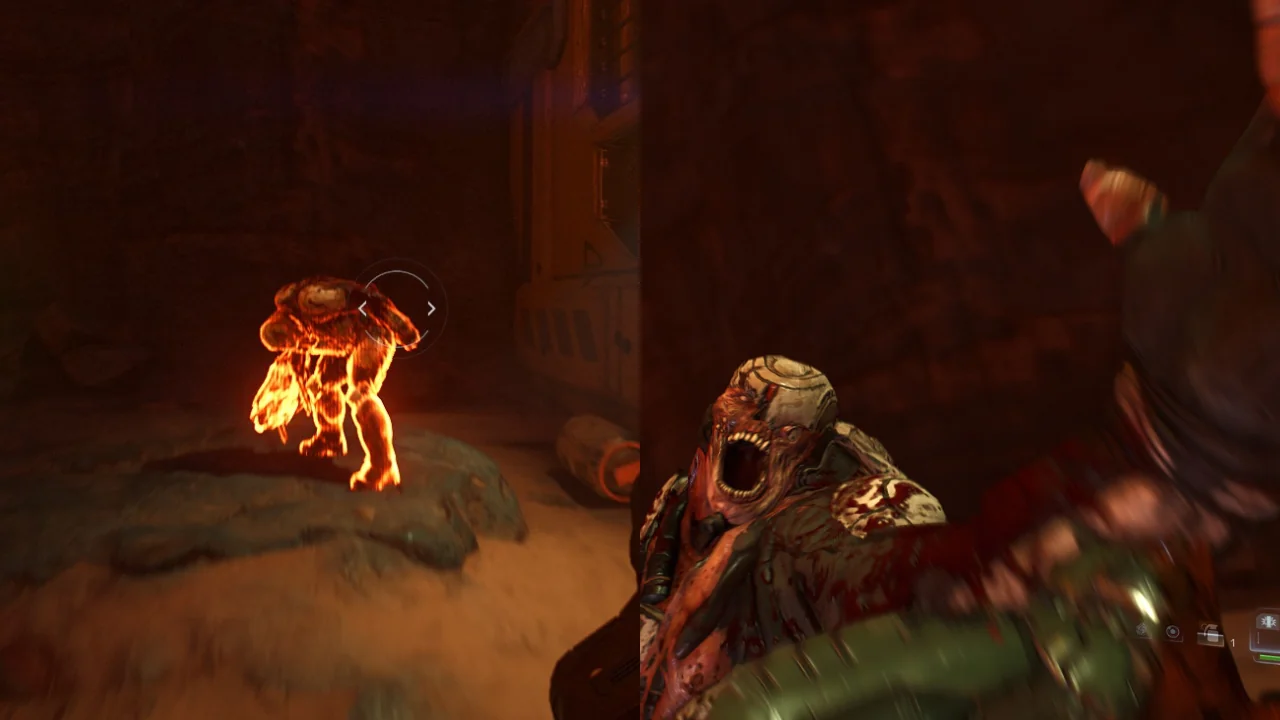
One of the main mechanics behind this rhythm is the Glory Kill system. After taking enough damage, enemies start flashing, allowing the Doom Slayer to execute them with violent finishing moves. These executions are not just visual effects; they are part of the combat design. Glory Kills drop health, which means the best way to survive is often to move toward enemies instead of running away from them.
This makes DOOM 2016 feel very different from many modern shooters. You are constantly switching weapons, dodging projectiles, using the chainsaw for ammo, performing Glory Kills for health, and managing the battlefield while demons attack from every direction. The game rewards quick decisions, precision, and aggressive movement.
The combat also has a strong sense of impact. Weapons feel heavy, demons react clearly to damage, and the animations make each fight look violent and satisfying. Even simple encounters can feel intense because the game rarely allows you to stay still for long. For me, performing Glory Kills was one of the most satisfying parts of the entire campaign.
Weapons, Equipment, and Upgrade System
DOOM 2016 has a stronger upgrade system than it may seem at first. The game is still fast, violent, and direct, but the weapon upgrades, Praetor Suit improvements, and runes give the campaign more depth. These systems also make exploration more rewarding, because many important upgrades are tied to hidden areas, challenges, and optional paths.
Weapon Mods and Arsenal Upgrades
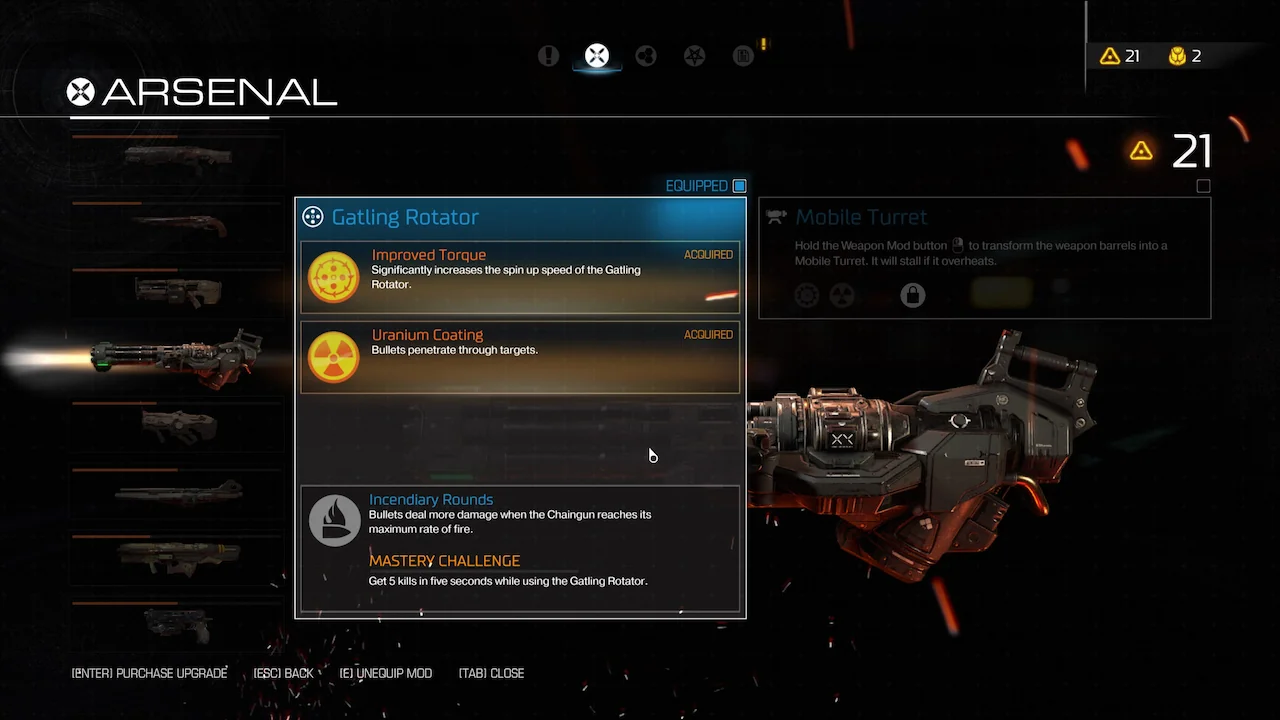
The weapon upgrade system is one of the most important parts of DOOM 2016. As you progress through the campaign, you can find Field Drones that unlock weapon mods. These mods change how each weapon works and give the player more options during combat.
The arsenal is not just about having more guns. Each weapon can become more flexible depending on the upgrades you choose. The Combat Shotgun can gain explosive shots, the Heavy Assault Rifle can use micro missiles, the Rocket Launcher can unlock remote detonation or lock-on burst, and the Chaingun can be upgraded with mods such as Gatling Rotator or Mobile Turret.
The Chaingun upgrade screen is a good example of how this system works. With the Gatling Rotator mod, upgrades like Improved Torque increase the spin-up speed, making the weapon ready to fire faster. Uranium Coating allows bullets to penetrate through targets, which makes the Chaingun more useful against groups of demons. These are not just minor bonuses; they directly change how the weapon performs during combat.
Weapon upgrade points are earned during the campaign and can be spent to improve each mod. After upgrading a mod enough, you can usually unlock a Mastery Challenge. Completing that challenge gives the mod a final upgrade, rewarding players who actually use the weapon instead of only collecting upgrades passively.
This system works well because DOOM 2016 constantly changes the pressure of each fight. Some enemies are better handled with precision weapons, while others require explosives, crowd control, or close-range damage. Because of that, upgrading different weapons gives you more flexibility and makes the arsenal feel more useful throughout the campaign.
Praetor Suit and Armor Upgrades
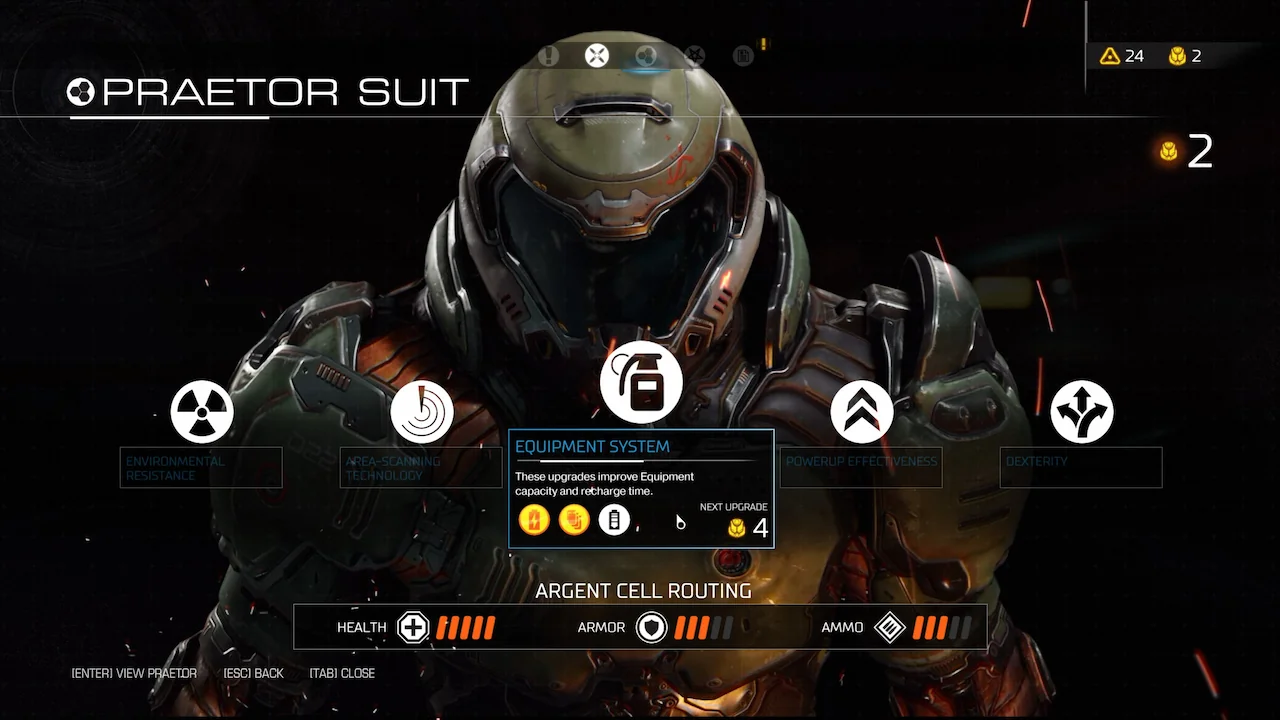
The Praetor Suit upgrade system improves the Doom Slayer’s armor and adds useful passive benefits. These upgrades are unlocked with Praetor Suit tokens, which are usually found by discovering fallen Elite Guards hidden throughout the levels.
The Praetor Suit menu includes different upgrade categories, such as Environmental Resistance, Area-Scanning Technology, Equipment System, Powerup Effectiveness, and Dexterity. Each category improves a specific part of the gameplay. Some upgrades help with environmental hazards, while others improve exploration, equipment use, power-up duration, or movement-related actions.
The Equipment System upgrades are especially useful during combat because they improve equipment capacity and recharge time. This matters in larger arenas, where grenades and other tools can help control groups of enemies or create space when demons are attacking from multiple directions.
The Area-Scanning Technology upgrades are more useful for exploration. They help reveal secrets, collectibles, Elite Guards, and other important items on the map. This is valuable because DOOM 2016 hides many upgrades inside its levels, and finding them can directly improve your performance in combat.
The Praetor Suit screen also includes Argent Cell routing, where you can upgrade Health, Armor, or Ammo capacity. This is one of the most important progression choices in the game. More health helps you survive longer, more armor gives extra protection, and more ammo lets you stay aggressive for longer before needing to rely on the chainsaw or pickups.
The armor upgrade system is not as flashy as the weapons, but it is still important. It makes the Doom Slayer more efficient, improves survivability, supports exploration, and gives the player more control over how prepared they are for harder combat arenas.
Runes and Passive Abilities
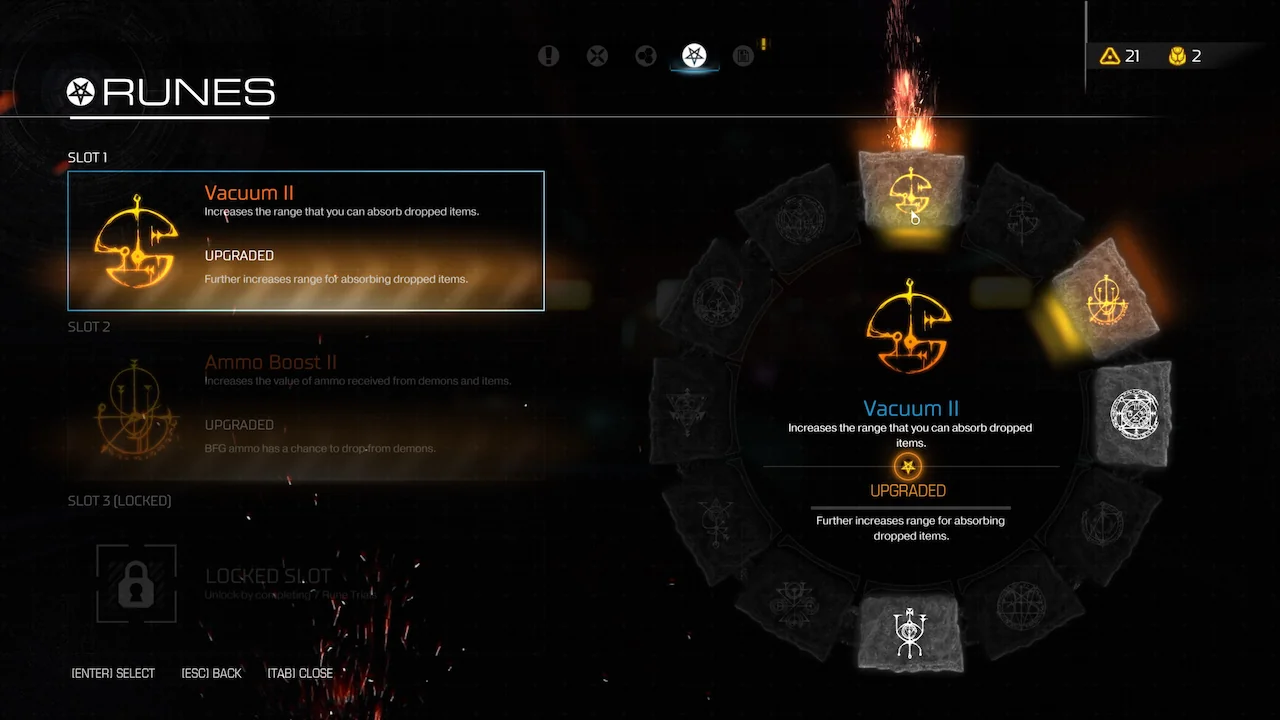
Runes add another layer to DOOM 2016’s progression system. They are unlocked by completing Rune Trials, which are short challenge rooms with specific objectives. After completing a trial, you unlock a rune that can be equipped to give the Doom Slayer a passive ability.
The rune menu shows how these bonuses can support different playstyles. For example, Vacuum increases the range at which you can absorb dropped items, making it easier to collect health, armor, and ammo during fast combat. Ammo Boost increases the amount of ammo received from demons and items, making resource management easier.
Other runes can improve Glory Kills, movement, survival, and combat efficiency. Seek and Destroy increases the range from which you can perform Glory Kills, Savagery makes Glory Kills faster, and Saving Throw can give you a second chance after taking fatal damage. These effects may seem small at first, but they can make combat smoother and more forgiving.
Runes can also be upgraded after completing specific conditions. This encourages you to keep using them during combat instead of treating them as passive bonuses you forget about. Once upgraded, runes become even more useful and can strongly affect how aggressive, safe, or resource-focused your playstyle feels.
This system works because it does not slow down the game. DOOM 2016 does not become a complicated RPG, but runes give the player more control over the Doom Slayer’s strengths. You can build around faster Glory Kills, better resource collection, stronger survival, or easier ammo management.
The best thing about DOOM 2016’s upgrade system is that every part of it supports the main combat loop. Weapon upgrades make the arsenal more flexible, Praetor Suit upgrades improve efficiency and survival, and runes let you adjust the Doom Slayer to your preferred style.
These systems also give you a real reason to explore. Secrets, Elite Guards, Rune Trials, Field Drones, and upgrade resources are not just collectibles for completionists. They directly improve your weapons, armor, and passive abilities, which makes exploration feel meaningful.
In my own playthrough, I focused heavily on health, since I completed the campaign on Nightmare difficulty. That choice made sense for me because surviving longer became more important as the fights grew more aggressive.
Overall, the weapon mods, Praetor Suit upgrades, and runes make DOOM 2016 feel more complete than a simple run-and-gun shooter. The game remains fast and brutal, but the upgrade system gives you more control, more reasons to explore, and more ways to survive the increasingly intense demon arenas.
Enemy Variety and Arena Design

Enemy variety is one of the main reasons why DOOM 2016’s combat stays interesting throughout the campaign. The game does not rely only on throwing more demons at the player. Instead, each enemy type has a different role during fights, forcing you to move, prioritize targets, and switch weapons constantly.
Basic demons are usually used to pressure the player and create opportunities for Glory Kills, health recovery, and ammo management. They are not always the biggest threat on their own, but they help keep the arenas active and prevent the player from standing still.
Stronger demons change the rhythm of the fight. Cacodemons can attack from the air, Revenants use rockets and mobility to pressure you from a distance, Mancubi deal heavy damage with powerful projectiles, and Pinkies force you to react quickly because of their aggressive charges. Each demon asks for a different response, which makes weapon choice and positioning more important.
This variety works especially well because of the arena design. Many combat areas are built with multiple levels, jump pads, platforms, corridors, pickups, and open spaces. These arenas are not just visual backgrounds; they are part of the combat system. You need to use the environment to escape pressure, find resources, avoid projectiles, and control the distance between you and the demons.
The best fights in DOOM 2016 happen when the game combines different enemy types inside the same arena. A flying demon can pressure you from above, a heavy enemy can control space from the ground, and smaller demons can surround you if you stop moving. This makes each fight feel chaotic, but not random. The game rewards players who understand the arena and react quickly.
The arena structure also supports the game’s aggressive design. Health, armor, ammo, and power-ups are placed around the environment, encouraging movement instead of defensive play. If you stay in one place for too long, you are usually punished. If you keep moving, using Glory Kills, chainsaw kills, and the right weapons, the combat becomes much more satisfying.
The Hell Knight was one of the hardest enemies I faced during my playthrough. What made it difficult was not only its health, but the way it constantly forced close-range pressure. Unlike enemies that mainly attack from a distance, the Hell Knight can close the gap quickly, jump toward the player, and deal heavy melee damage if you stop moving. Because of that, it forced me to pay more attention to positioning, dodging, and keeping enough space inside the arena.
Movement, Speed, and Level Flow
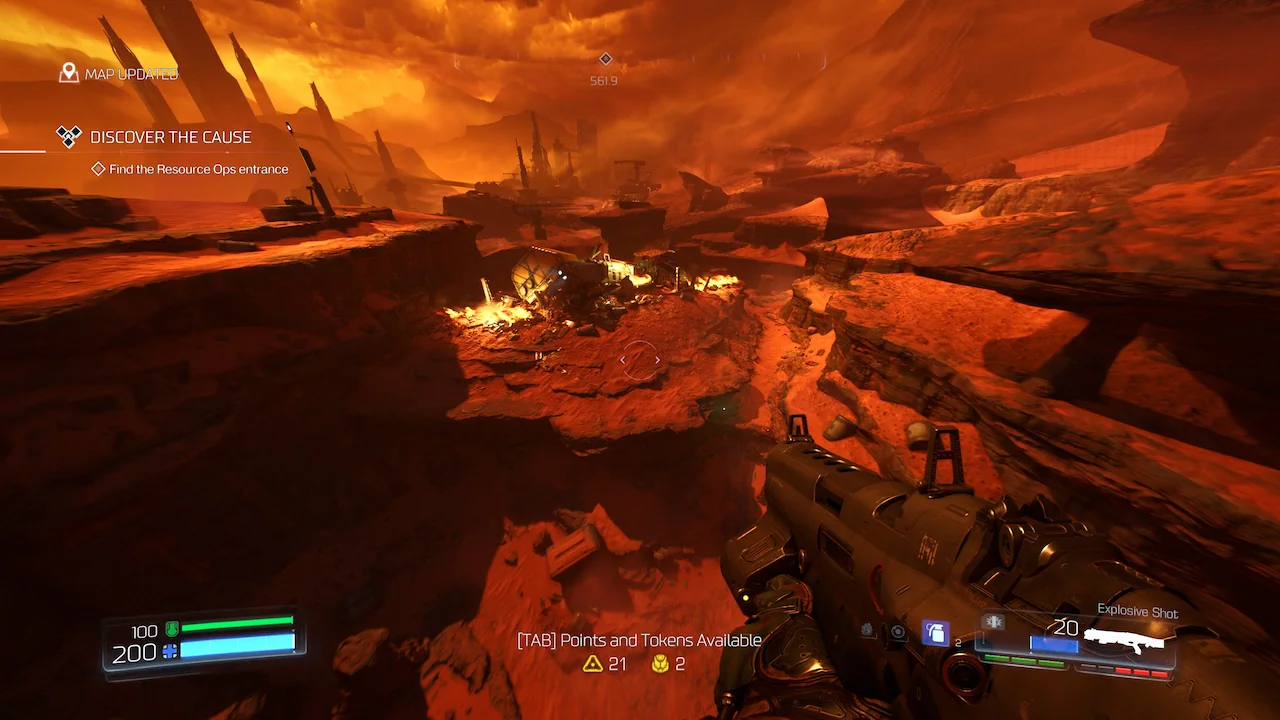
Movement is one of the most important parts of DOOM 2016. The game is not designed around hiding behind cover, waiting for health to regenerate, or slowly clearing rooms from a safe distance. Instead, it constantly pushes the player to move, dodge, jump, reposition, and stay aggressive during combat.
This speed is what makes the gameplay feel so intense. The Doom Slayer moves quickly, weapons can be switched during battle, enemies attack from different directions, and arenas are usually built to keep the player in motion. If you stop for too long, you are more likely to be surrounded, hit by projectiles, or pressured by stronger demons.
The level flow also supports this aggressive style. DOOM 2016 usually alternates between exploration sections, combat arenas, upgrade collection, and short story moments. This structure keeps the campaign moving without turning the game into a nonstop wave-based shooter. You have time to search for secrets, collect upgrades, and understand the level layout before the next major fight begins.
The best part is that movement is not only about escaping danger. It is also part of the resource system. You move toward weakened enemies to perform Glory Kills and recover health, use the chainsaw to get ammo, search the arena for armor and pickups, and reposition constantly to avoid being trapped. Because of that, movement becomes part of survival, not just a way to travel through the map.
The level flow works well because the game rarely feels slow. Even when you are not fighting, you are usually looking for secrets, checking the map, collecting upgrades, or preparing for the next arena. This helps maintain the rhythm of the campaign and makes the action feel more consistent.
Overall, DOOM 2016 succeeds because its movement, speed, and level flow all support the same idea: keep the player active. The game feels best when you are constantly moving, switching weapons, killing demons, collecting resources, and using the arena instead of standing still.
Level Design, Secrets, and Exploration
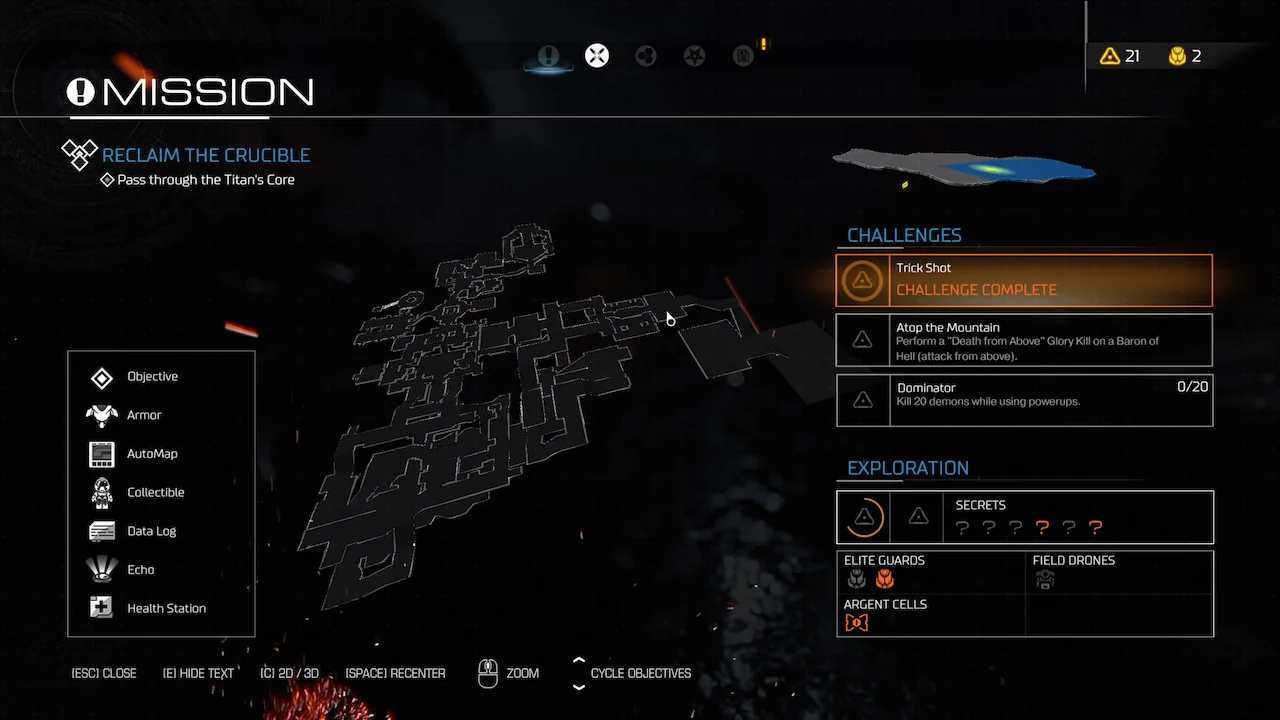
DOOM 2016 is not an open-world game, but its levels are more explorable than they may seem at first. Most missions have a clear main path, but they also include side areas, locked doors, hidden rooms, optional routes, collectibles, upgrade items, and secret passages that reward players who slow down and look around.
The level design works because it balances linear progression with exploration. You always know the general direction of the objective, but the game often gives you reasons to check corners, climb platforms, return to previous areas, or search for hidden switches. This makes the campaign feel more interesting than simply moving from one combat arena to the next.
Secrets are especially important because they are not just there for completionists. Exploring levels can lead to Praetor Suit tokens, Field Drones, Argent Cells, Rune Trials, collectible figures, codex entries, and classic DOOM-style secret areas. These rewards can directly improve your weapons, armor, health, ammo, and passive abilities, which makes exploration feel useful during combat.
The classic map secrets are a good example of how DOOM 2016 respects the older games in the franchise. Finding a hidden lever and opening a retro-style area creates a strong contrast between the modern visuals and the classic DOOM layout. It is a small detail, but it gives the game more personality and makes exploration feel more rewarding.
The map system also helps with this. Instead of forcing you to search blindly all the time, DOOM 2016 gives enough information for players who want to complete more of each level. With the right upgrades, it becomes easier to locate secrets and collectibles, which makes backtracking less frustrating.
The best part of the exploration is that it fits naturally into the campaign. The game does not stop being fast and aggressive, but it gives you moments between combat encounters to search the environment, collect upgrades, and prepare for the next fight. This helps the level flow feel more complete.
I admit I did not hunt down every secret and hidden passage, but the ones I found were fun to discover. They are not as trivial as secrets in many other games, which makes exploration feel more rewarding. For me, this was the second-best part of the campaign, behind the Glory Kills.
Graphics, Gore, and Visual Presentation
DOOM 2016 still looks very good today, especially because of its art direction, lighting, enemy design, and violent visual presentation. The game may not be the newest shooter anymore, but its visuals hold up well because everything is built around speed, impact, and atmosphere.
The Mars facilities have a strong industrial sci-fi style, with metallic corridors, laboratories, machinery, warning lights, and destroyed UAC structures. These areas help the game feel like a futuristic research base that has completely collapsed after the demonic invasion. When the campaign moves into Hell, the visual tone becomes much darker and more aggressive, with fire, blood, bones, demonic architecture, and hostile environments that fit the franchise perfectly.
Gore is also a major part of DOOM 2016’s identity. Glory Kills, demon damage, blood effects, and violent execution animations make the combat feel heavier and more satisfying. The violence is exaggerated, but it matches the tone of the game. DOOM is not trying to be subtle; it wants every shotgun blast, chainsaw kill, and melee execution to feel powerful.
Enemy design is another strong point. Demons such as Cacodemons, Revenants, Hell Knights, Mancubi, and other creatures are visually distinct, which helps during combat. You can often recognize the type of threat quickly just by looking at the enemy, and that matters in a game where fast reactions are important.
The visual effects also support the gameplay. Projectiles, explosions, blood, armor pickups, health drops, and power-ups are clear enough to read during intense fights. Even when the arena becomes chaotic, the game usually remains visually understandable, which is important for a shooter built around constant movement.
The heavily reddish environments also help mask some jagged edges in the graphics, but that is not a serious problem. For an older shooter, the visual presentation still holds up well.
Soundtrack and Sound Design
The soundtrack is one of the most memorable parts of DOOM 2016. The game uses a heavy, aggressive, industrial metal sound that fits perfectly with the speed and violence of the combat. Instead of feeling like background music, the soundtrack often feels like part of the action itself.
During combat arenas, the music helps increase the intensity. The heavy riffs, electronic elements, and fast rhythm make each encounter feel more brutal and energetic. This is important because DOOM 2016 is not a slow shooter. The soundtrack matches the constant movement, Glory Kills, explosions, and nonstop pressure from demons.
The music also respects the identity of the older DOOM games without simply depending on nostalgia. It brings back the same aggressive spirit of the classic games, but with a modern production style that makes the combat feel heavier and more cinematic. For fans of the franchise, this helps DOOM 2016 feel like a real return to form.
In my experience, the soundtrack was sensational, especially during combat. The heavy music adds a strong sense of adrenaline and works extremely well with the game’s rapid pacing. When the arena fills with demons and the music becomes more aggressive, the action feels even more intense and satisfying.
The sound design is also very strong. Weapons sound powerful, Glory Kills have a violent impact, demons make recognizable noises, and explosions help make the arenas feel chaotic without becoming confusing. Each weapon has a different sound, which helps the arsenal feel more distinct during combat.
Enemy audio is useful as well. Demons often have specific sounds when attacking, moving, or reacting to damage. In a fast game like this, that matters because you are not always looking directly at every enemy. Good sound cues can help you understand what is happening around you and react faster.
Performance and Technical Stability
DOOM 2016 ran extremely well during my playthrough. I did not experience crashes, major bugs, stuttering, or technical problems that affected the campaign. The game felt stable from beginning to end, which is important for a shooter that depends so much on speed, quick reactions, and constant movement.
On my PC, the performance was smooth using both Vulkan and OpenGL. I tested both graphics APIs, and the game ran without issues in either mode. The experience was consistent, and I did not feel that technical problems got in the way of the combat, exploration, or arena flow.
This matters because DOOM 2016 is a game where performance directly affects the gameplay. If the frame rate is unstable, the combat can feel worse because you need to dodge projectiles, switch weapons quickly, aim accurately, and react to demons attacking from different directions. In my case, the game felt responsive and reliable.
The PC version also holds up well because the visual quality is strong without feeling excessively heavy. The game has good lighting, detailed environments, blood effects, particles, and fast animations, but it still ran smoothly on my system. You can check the hardware I used on my My Setup page.
Overall, my experience with DOOM 2016’s performance was excellent. Whether using Vulkan or OpenGL, the game ran smoothly and gave me zero serious technical problems. For a fast-paced shooter built around aggressive combat, that level of stability makes the experience much better.
Game Modes and Extra Content
DOOM 2016 is mainly remembered for its campaign, but it also includes extra modes that give players more ways to experience its combat. The core of the package is still the single-player campaign, but Arcade Mode, multiplayer, and SnapMap add content beyond the main story.
Campaign Mode
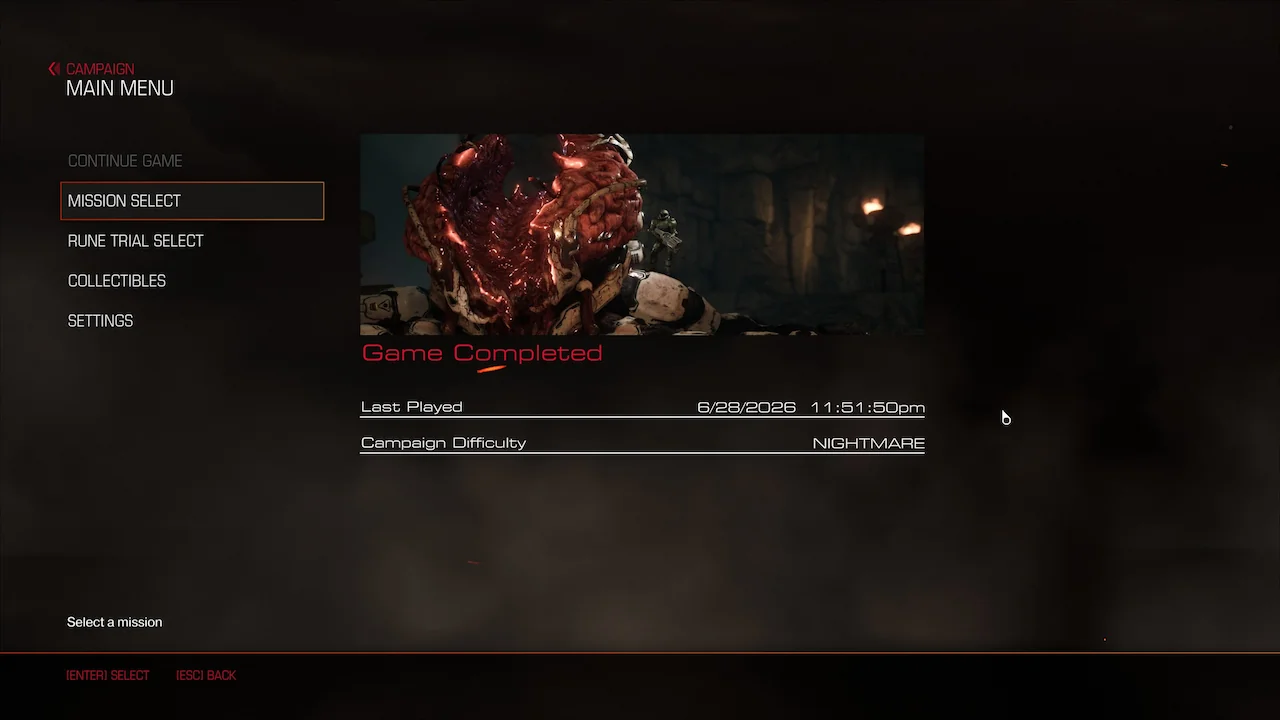
The campaign mode is the main reason to play DOOM 2016. It follows the Doom Slayer through Mars, UAC facilities, and Hell while focusing on fast combat, exploration, upgrades, secrets, and increasingly intense demon arenas.
This mode is where the game feels strongest. The combat system, weapon progression, Glory Kills, enemy variety, soundtrack, and level design all work together in the campaign. Even if you ignore the other modes, the single-player experience already gives DOOM 2016 most of its value.
Arcade Mode
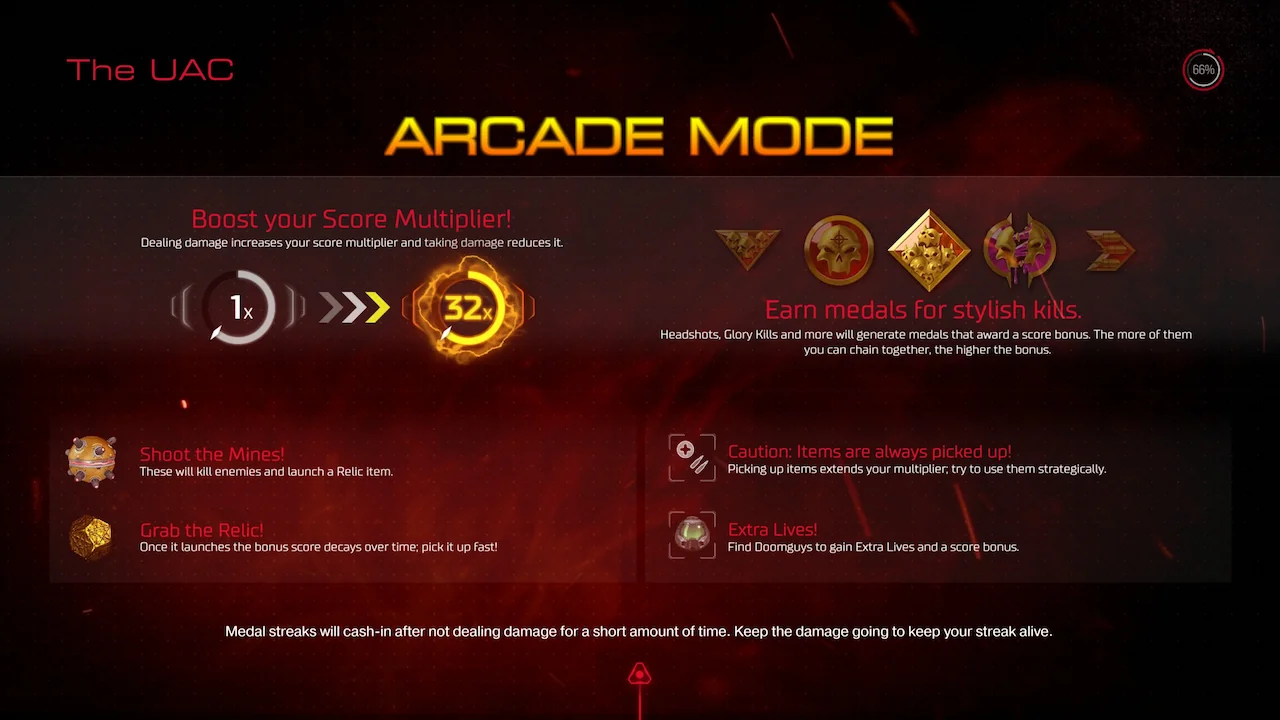
Arcade Mode is a score-focused version of the campaign. Instead of playing only to progress through the story, the goal is to perform well, kill demons efficiently, collect items, and finish levels with a higher score.
This mode works well for players who enjoy replaying missions and improving their performance. It gives the campaign more replay value because it encourages faster movement, better combat decisions, and cleaner runs through each level.
Multiplayer Mode
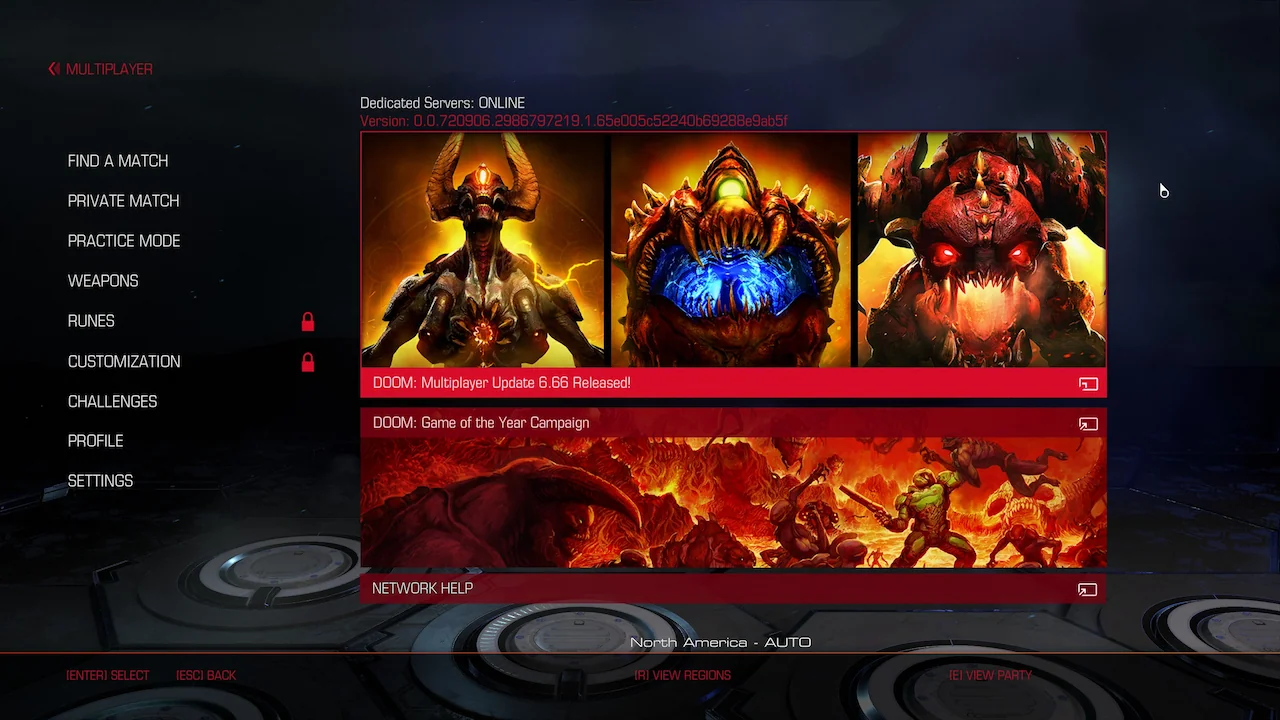
DOOM 2016 multiplayer includes competitive arena-based matches. It offers modes such as Team Deathmatch, Domination, Warpath, Freeze Tag, and Soul Harvest, giving players a more traditional online shooter experience.
That said, multiplayer is not the strongest reason to play DOOM 2016 today. The campaign is much more memorable and better represents what makes the game special. Multiplayer can still be an interesting extra, but the main appeal of the game is the single-player combat against demons.
SnapMap
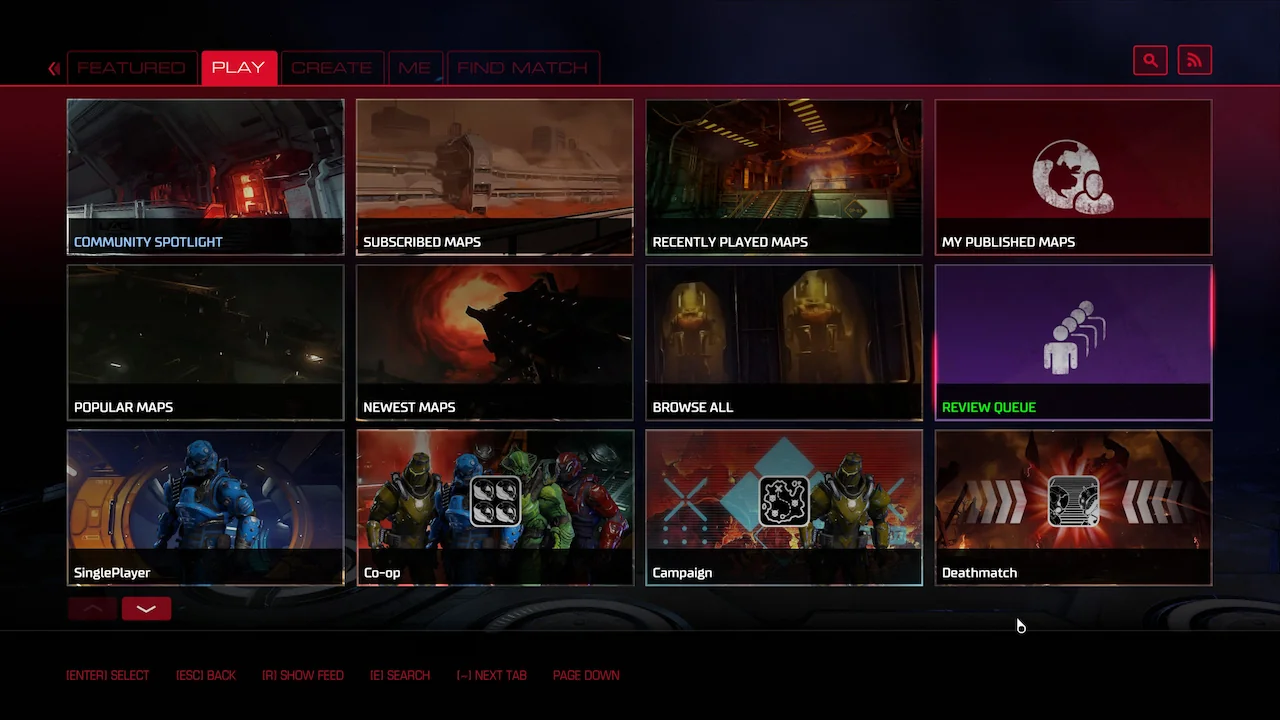
SnapMap is a creation mode that allows players to build, share, and play custom maps. It can be used to create combat arenas, challenge levels, survival-style encounters, and other user-made experiences.
This mode was a creative idea because it gave the community tools to make additional content beyond the official campaign. For players who like custom maps and experimental modes, SnapMap adds more variety and can extend the life of the game.
Besides the main modes, DOOM 2016 also includes collectibles, Rune Trials, classic map secrets, weapon upgrades, Praetor Suit upgrades, codex entries, and optional exploration objectives. These extras make the campaign feel more complete and give completionist players more reasons to revisit missions.
Disclaimer: During my playthrough, I only played the campaign mode. I did not personally test the multiplayer, SnapMap, or Arcade Mode, so the comments about these extra modes are based only on what the game offers, not on my direct experience with them.
Game Length and Replay Value
DOOM 2016 is not an extremely long game if you focus only on finishing the campaign, but its length can change a lot depending on how you play. If you move directly from one objective to another, the campaign is relatively straightforward. However, if you explore levels, search for secrets, complete Rune Trials, collect upgrades, and replay missions, the total playtime becomes much longer.
The campaign has a good pace because it does not feel bloated. Most missions include combat arenas, exploration sections, upgrades, secrets, and short story moments, but the game rarely wastes time. This makes DOOM 2016 feel direct without being too short.
Replay value is one of the stronger parts of the game. Each mission can be revisited through Mission Select, which is useful if you missed collectibles, Elite Guards, Field Drones, Argent Cells, Rune Trials, codex entries, or classic map secrets. Since many of these rewards improve your weapons, armor, ammo, health, or passive abilities, going back to older missions can feel useful instead of pointless.
The upgrade system also helps with replayability. If you did not fully upgrade a weapon mod, complete a mastery challenge, or unlock all Praetor Suit upgrades during your first run, replaying missions gives you a reason to keep progressing. Completionist players will probably spend extra time checking maps, finding hidden rooms, and finishing optional objectives.
Difficulty also adds replay value. DOOM 2016 can be replayed on higher difficulties if you want a more intense experience. Modes like Nightmare and Ultra-Nightmare make the combat much more punishing, especially because enemy damage, aggression, and survival pressure become much more noticeable. For players who enjoy mastering combat systems, this gives the game long-term value beyond simply seeing the ending once.
Arcade Mode can also extend the experience for players who like score-based challenges, although I did not personally test it during my playthrough. The idea of replaying levels for better scores, medals, multipliers, and cleaner combat performance gives DOOM 2016 another layer of replayability outside the regular campaign.
In my playthrough, the campaign took me almost 10 hours to complete. Part of that time came from exploration and learning the combat rhythm, but I also spent a good amount of time stuck in difficult fights and dying against some bosses. Because of that, the campaign felt longer and more intense than a simple straight run through the main objectives.
Overall, DOOM 2016 has strong replay value for players who enjoy secrets, upgrades, collectibles, higher difficulties, and improving combat performance. If you only care about finishing the story once, the game may not last extremely long. But if you want to complete missions properly and master the combat, there is a lot more to do after the credits.
Is DOOM 2016 Worth Playing Today?
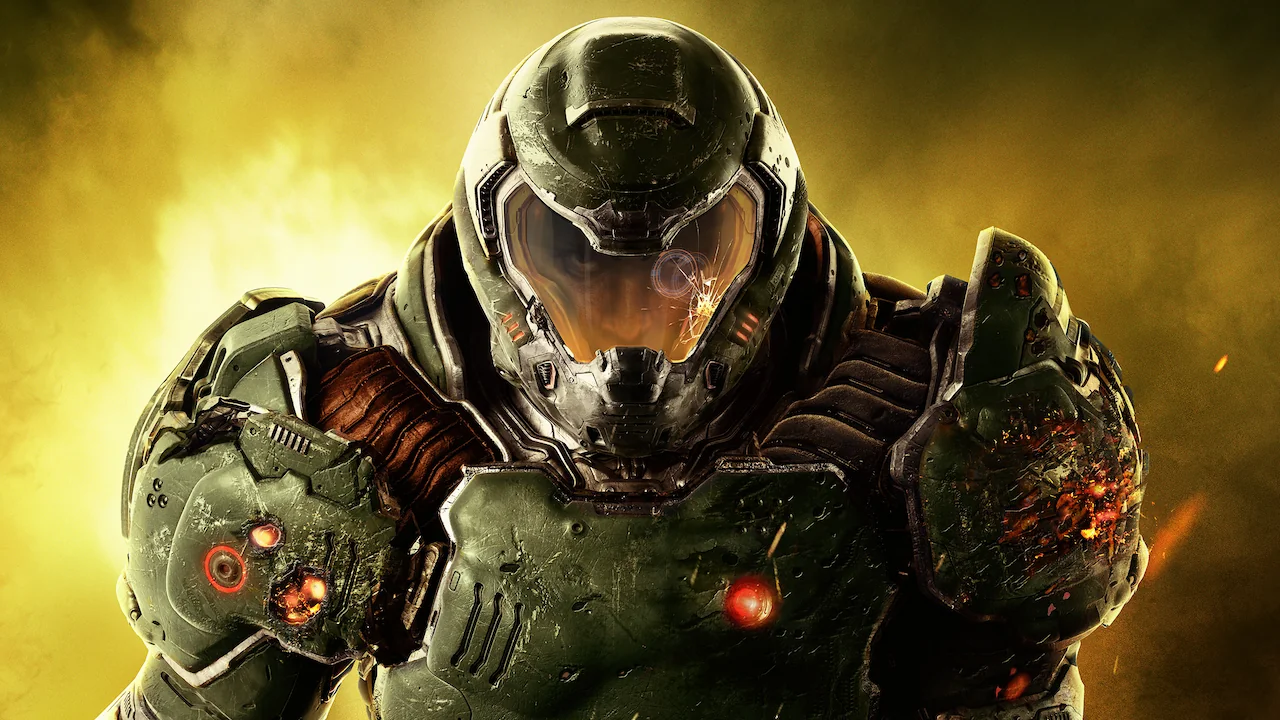
Yes, DOOM 2016 is still worth playing today, especially if you enjoy fast-paced first-person shooters, aggressive combat, heavy weapons, and games that focus more on gameplay than long story sequences. Even years after its release, the game still feels strong because its combat loop is simple, intense, and very well executed.
The biggest reason to play DOOM 2016 today is the combat. The game constantly pushes you to move, shoot, dodge, perform Glory Kills, use the chainsaw for ammo, and switch weapons depending on the situation. This makes the gameplay feel much more active than many slower shooters, where the player spends most of the time behind cover.
The campaign also holds up well because of its pacing. DOOM 2016 does not feel bloated, and most missions combine combat arenas, exploration, secrets, upgrades, and short story moments in a balanced way. The game gives you enough content to stay engaged without dragging the experience longer than necessary.
Another reason why DOOM 2016 is still worth playing is its technical quality. In my experience, the game ran extremely well on PC using both Vulkan and OpenGL, with no serious crashes, stuttering, or technical problems. For a shooter that depends so much on speed and precision, that level of stability makes a big difference.
I also think the soundtrack helps the game age well. The heavy music during combat adds a lot of adrenaline and makes the fast gameplay feel even more intense. When the arena fills with demons and the soundtrack becomes more aggressive, DOOM 2016 feels exactly like it should: brutal, fast, and satisfying.
That said, DOOM 2016 may not be for everyone. If you prefer story-heavy games, tactical shooters, stealth, or slower combat, the game may feel too direct. The story is simple, and the main appeal is clearly the combat, upgrades, enemy variety, and arena design.
In my opinion, DOOM 2016 is still a great game to play today. I completed the campaign on Nightmare difficulty, and even though I got stuck in some difficult fights and died against some bosses, the experience was still rewarding. If you want a violent, fast, polished, and aggressive shooter, DOOM 2016 remains an easy recommendation.
Where to Buy DOOM 2016
If you want to play DOOM 2016 on PC, you can check the stores below. Availability, discounts, and regional pricing may change over time, so I recommend checking the current price before buying.
Links to buy DOOM 2016 for PC/Steam:
Disclosure: Some of the links or product offers below may be affiliate links. If you buy through them, I may earn a small commission at no extra cost to you. This helps support Games Catalogue and allows me to keep creating more reviews.

Conclusion
DOOM 2016 is still one of the strongest modern entries in the franchise. It respects the classic identity of DOOM while updating the formula with fast movement, brutal Glory Kills, heavy weapons, intense arenas, and a soundtrack that makes combat feel even more aggressive.
For longtime DOOM fans, the game delivers what the franchise is known for: speed, violence, demons, secrets, and pure first-person shooter action. It does not try to turn DOOM into a slow or overly cinematic experience. Instead, it focuses on what matters most: killing demons, surviving chaotic arenas, and constantly moving forward.
For more casual players like me, who played DOOM I and completed both DOOM Eternal and DOOM 2016, this game was still a great experience. I completed the campaign on Nightmare difficulty, and even though I got stuck in some difficult fights and died against some bosses, the combat remained rewarding and satisfying.
Overall, DOOM 2016 is easy to recommend if you enjoy fast shooters, heavy music, quick reflexes, and violent gameplay. The story is simple, but the combat, performance, enemy variety, upgrades, and level design make the game worth playing even today.
If you want to watch specific parts of the game, you can access my full YouTube playlist.
Is DOOM 2016 on Game Pass?
Yes. DOOM 2016 is listed on Xbox as cloud playable with Xbox Game Pass Premium and Ultimate. Game Pass availability can change, so it is still worth checking the Xbox store before playing.
Is DOOM 2016 crossplay?
No. DOOM 2016 does not support cross-platform multiplayer. If you want to play online with friends, you need to be on the same platform.
Is DOOM 2016 on PC?
Yes. DOOM 2016 is available on PC, including Steam. The Steam version includes the premium DLC packs, maps, modes, weapons, Arcade Mode, Photo Mode, and multiplayer updates.
Is DOOM 2016 on Nintendo Switch?
Yes. DOOM 2016 is available on Nintendo Switch. The Switch version includes the single-player campaign and online multiplayer support.
Is DOOM 2016 on Xbox 360?
No. DOOM 2016 was not released for Xbox 360. On Xbox, the official store lists it for Xbox One, Xbox Series X|S, and Xbox Cloud Gaming.
Is DOOM 2016 on Xbox PC?
No. The Xbox store listing currently focuses on Xbox console and cloud access, while PC players can buy the game through Steam.
Is DOOM 2016 on GOG?
Yes. DOOM 2016 is available on GOG, but the DRM-free version is single-player only. Multiplayer and SnapMap are not included in that version.
Is DOOM 2016 a reboot?
Yes. DOOM 2016 is generally considered a modern reboot of the franchise. It brings back the fast combat, demons, secrets, heavy weapons, and aggressive style of classic DOOM while updating the gameplay for modern systems.
Is DOOM 2016 good?
Yes. DOOM 2016 is a great first-person shooter, especially if you enjoy fast movement, heavy weapons, Glory Kills, intense arenas, and aggressive combat. It is not very story-focused, but its gameplay, soundtrack, performance, and replay value still hold up well today.