


Table of Contents
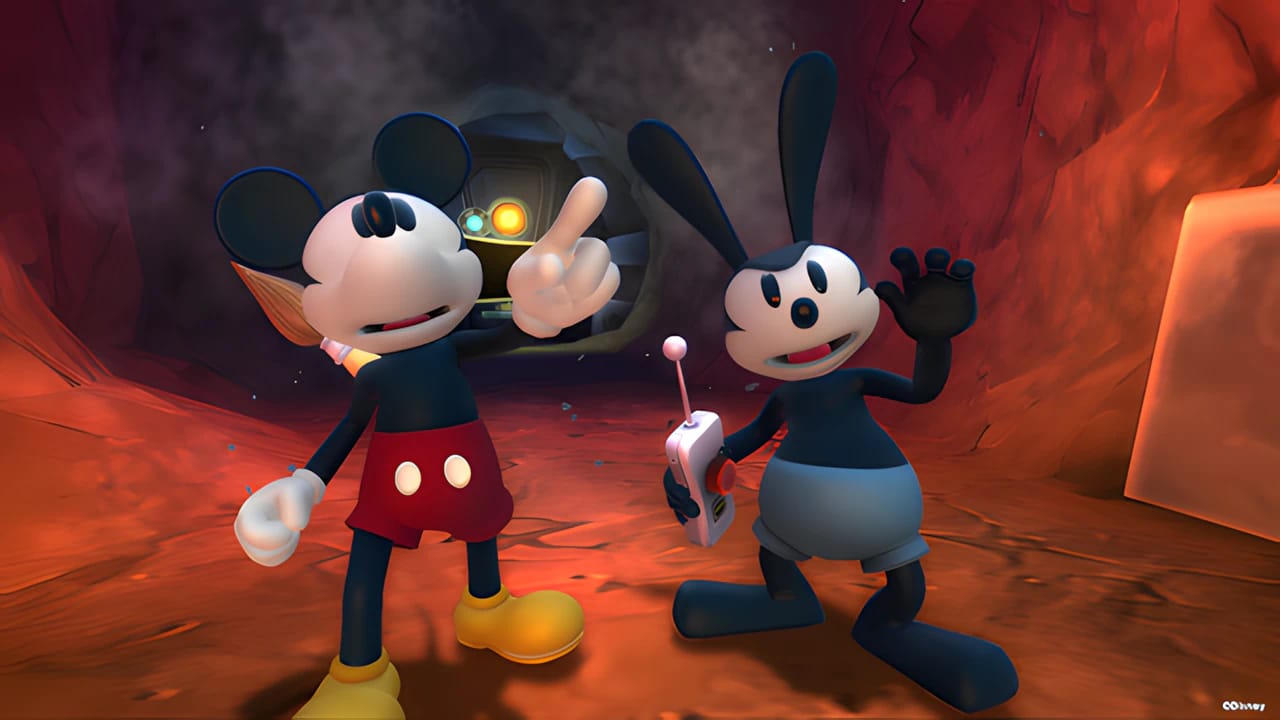
Epic Mickey 2: The Power of Two is a Disney platformer and action-adventure game developed by Junction Point and published by Disney Interactive Studios. The game brings Mickey Mouse and Oswald the Lucky Rabbit back to Wasteland, a strange world filled with forgotten Disney characters, damaged cartoon environments, old animation references, and mechanical threats.
What makes the game different from a standard licensed platformer is its focus on cooperation and environmental interaction. Mickey uses his magic paintbrush to restore or erase parts of the world, while Oswald uses his remote control and electrical abilities to activate machines, solve puzzles, and help reach new areas. The game also includes sketches, collectibles, side missions, and light exploration, giving players more to do than simply move from one level to another.
This review covers the story, gameplay mechanics, Mickey and Oswald’s abilities, sketch tools, co-op structure, visual design, performance, difficulty, replay value, and whether Epic Mickey 2: The Power of Two is still worth playing today.
Story and Wasteland Setting
Epic Mickey 2: The Power of Two takes place in Wasteland, a world inhabited by forgotten Disney characters and damaged pieces of old cartoon history. After a major earthquake affects the region, Mickey Mouse and Oswald the Lucky Rabbit are brought together to investigate what happened and help restore balance to the world.
The story brings back the Mad Doctor, who claims that he wants to help Wasteland after the disaster. However, the game quickly creates doubt around his real intentions, making the adventure more about discovering what is really happening while dealing with enemies, broken areas, and strange mechanical threats.
The narrative itself is not extremely complex, but it works well for a Disney platformer. The strongest part is not the plot, but the setting. Wasteland gives the game a unique identity by mixing colorful Disney elements with abandoned locations, old cartoon references, damaged attractions, and a slightly darker tone than many traditional Mickey Mouse games.
For players who enjoy Disney history, forgotten characters, or the idea of exploring a broken cartoon world, the setting is one of the most interesting parts of Epic Mickey 2. It gives the game a sense of personality that helps separate it from more generic licensed platformers.
Gameplay Mechanics and Paintbrush System
Epic Mickey 2: The Power of Two is mainly built around platforming, exploration, simple puzzles, and light combat. The central mechanic is Mickey’s magic paintbrush, which allows him to use paint and thinner to interact with the world. Paint can restore certain objects, platforms, and parts of the environment, while thinner can erase specific elements and reveal new paths.
This system gives the game its clearest identity. Instead of simply jumping through levels and defeating enemies, you often need to observe the environment and decide how to use the paintbrush to progress. Some areas require you to rebuild platforms, remove obstacles, activate routes, or uncover hidden sections.
The combat is simple, but functional. Mickey can use paint or thinner against enemies, depending on the situation. It is not a deep combat system, and most enemies do not require complex strategies, but it fits the game’s accessible Disney style. The focus is less on difficulty and more on interacting with the world in creative ways.
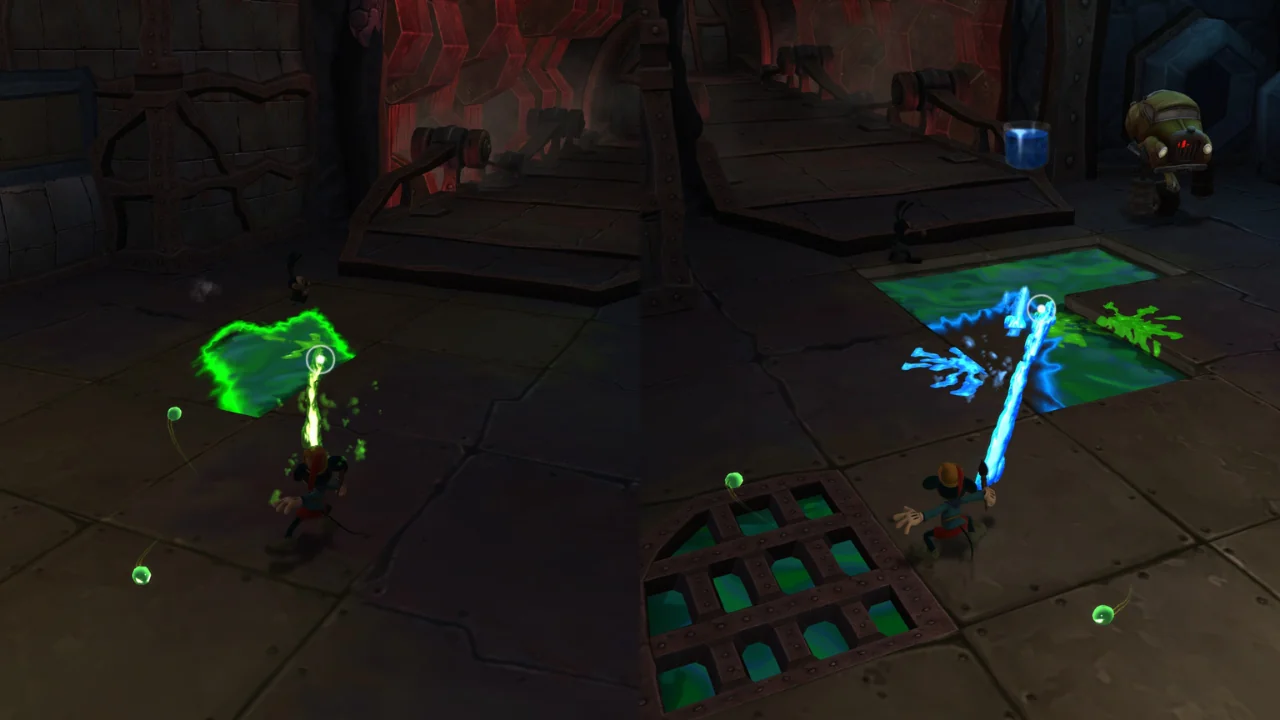
The paintbrush also helps with exploration. Some secret areas and optional paths can be found by using paint or thinner in the right places, which encourages the player to look around instead of only following the main objective. This makes the gameplay more interesting than a basic licensed platformer.
That said, the mechanics are not always perfect. The movement, camera, and some interactions can feel dated, especially compared to more polished platformers. Still, the paintbrush system remains one of the game’s best ideas and gives Epic Mickey 2 a clear personality.
Mickey and Oswald Ability Design
One of the main ideas of Epic Mickey 2: The Power of Two is the partnership between Mickey and Oswald. Mickey uses the paintbrush to restore or erase parts of the environment, while Oswald uses his remote control to activate machines, control electronic devices, and open paths that Mickey cannot access alone.
This gives each character a clear role. Mickey is more connected to the paint and thinner system, changing the world around him and dealing with enemies directly. Oswald works more as a support character, interacting with technology, stunning enemies, and using his ears to glide across certain areas.
When the game uses both characters properly, the level design becomes more interesting. Some sections require Mickey to reveal or restore a path, while Oswald needs to activate a machine or help with traversal. These moments show the strength of the Power of Two concept, because progress depends on both characters instead of only one main hero.
The problem is that this design works better in theory than in some solo moments. If you are playing alone, Oswald is controlled by the AI, and there are sections where he can take too long to reach the correct place or fail to perform the action you need. This can interrupt the pacing and make simple puzzles feel more frustrating than they should.
Still, the character ability design is one of the most creative parts of the game. Mickey and Oswald feel different enough to justify the cooperative structure, and the best moments happen when the game makes you use both characters together to solve environmental problems.
Sketches and Environmental Tools
Besides Mickey’s paintbrush and Oswald’s remote control, Epic Mickey 2: The Power of Two also includes a sketch system that gives Mickey extra tools to interact with the world. These sketches work like temporary cartoon objects or effects that can help during puzzles, exploration, combat, and environmental interactions.
The four main sketches in Epic Mickey 2 are the Fairy Sketch, TV Sketch, Anvil Sketch, and Watch Sketch. They are not as central as the paintbrush, but they add variety to the gameplay and give Mickey more ways to solve problems beyond simply using paint or thinner.
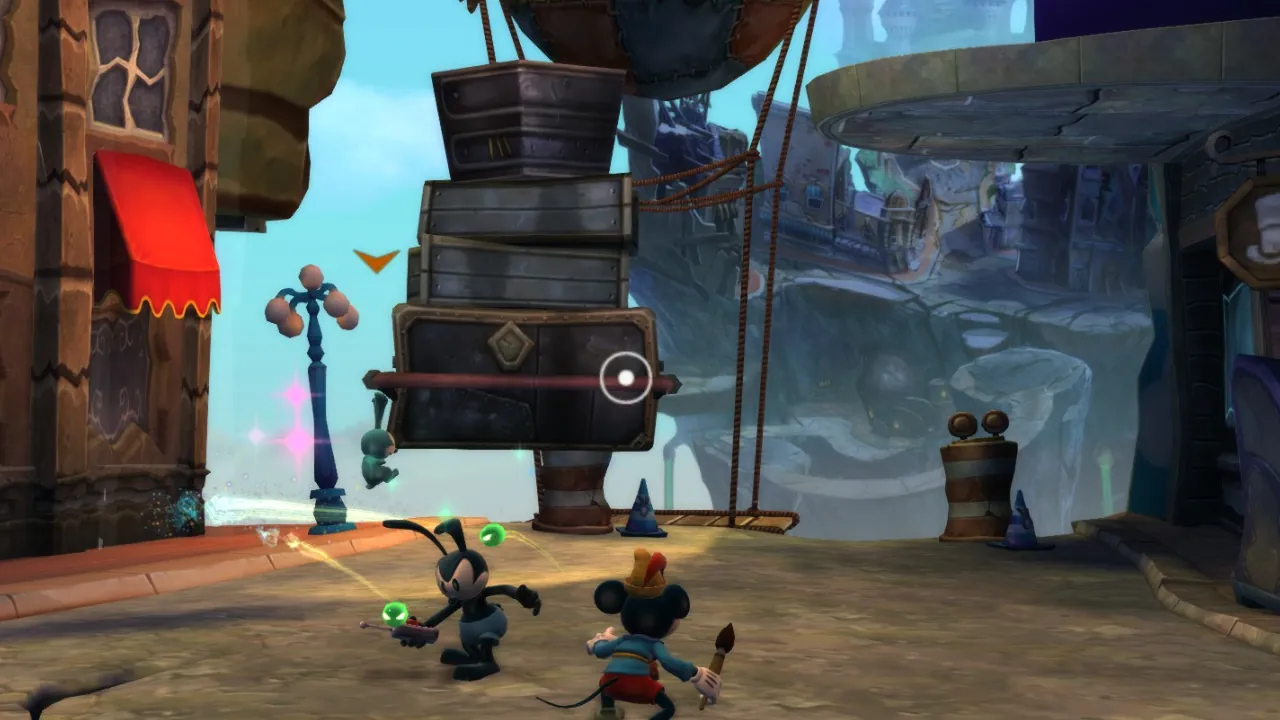
The Fairy Sketch is useful for making certain objects lighter or easier to move. It can help with specific puzzles and environmental situations where the player needs to manipulate the weight or behavior of an object. In practice, it works more like a support tool than a combat ability, but it fits well with the game’s cartoon logic.
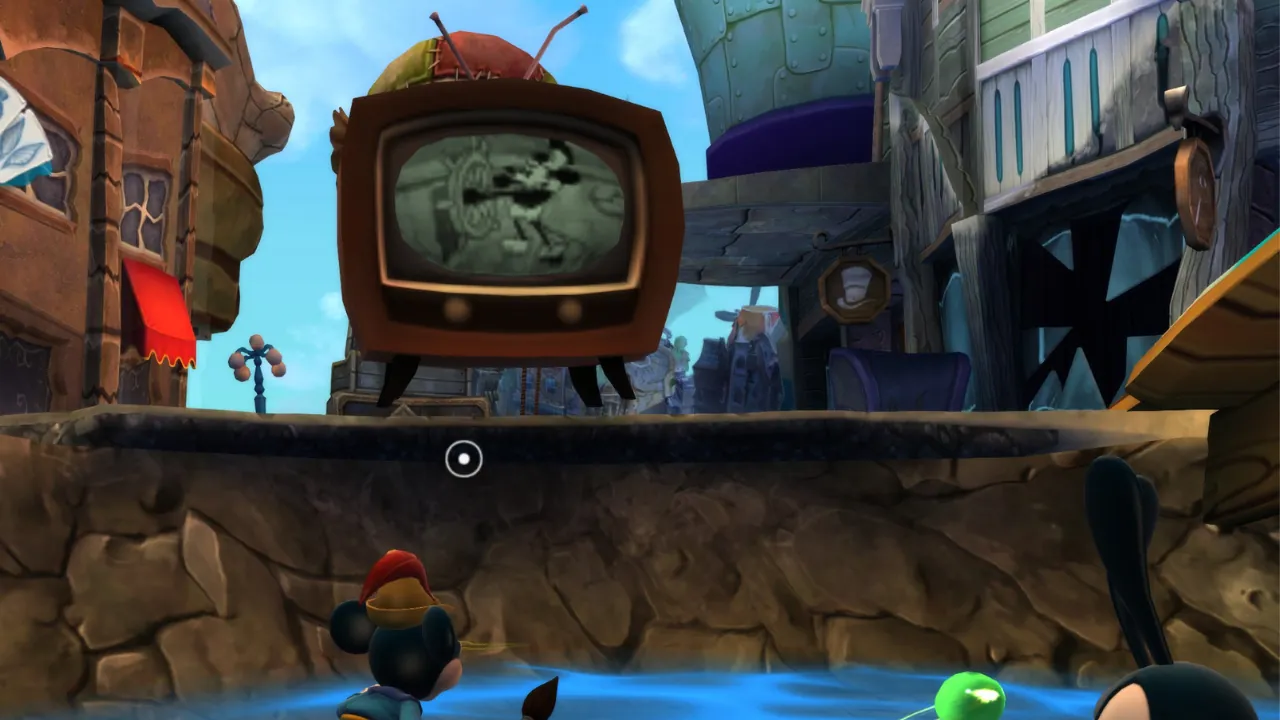
The TV Sketch creates a temporary television in the world. Its main use is to distract enemies or attract certain characters toward it. This can be helpful when you want to avoid direct combat, control enemy behavior, or solve puzzles that require someone to move toward a specific place. It is a simple idea, but it gives the player another way to interact with enemies beyond attacking them directly.
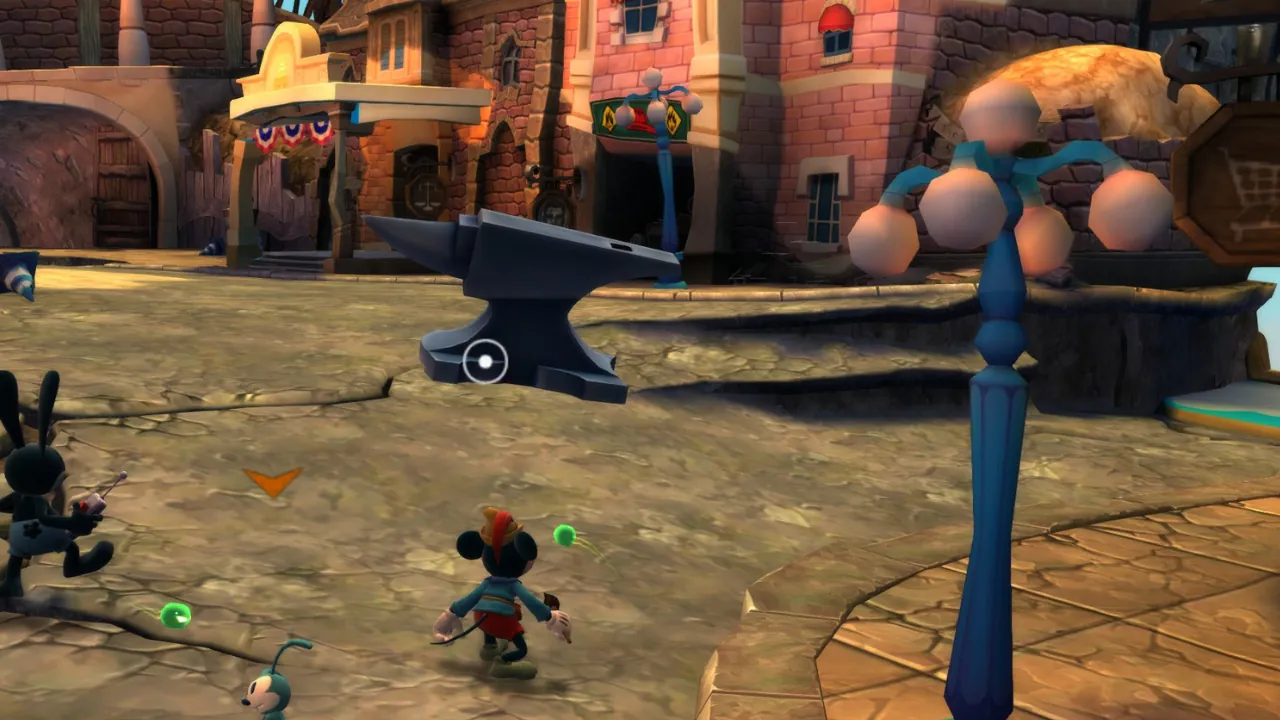
The Anvil Sketch allows Mickey to drop an anvil into the environment. This is one of the most recognizable sketches because it feels like a classic cartoon gag. It can be used to crush enemies, break certain objects, activate pressure-based mechanisms, or help with puzzles that require weight. Because of that, it works both as an offensive tool and as an environmental puzzle tool.
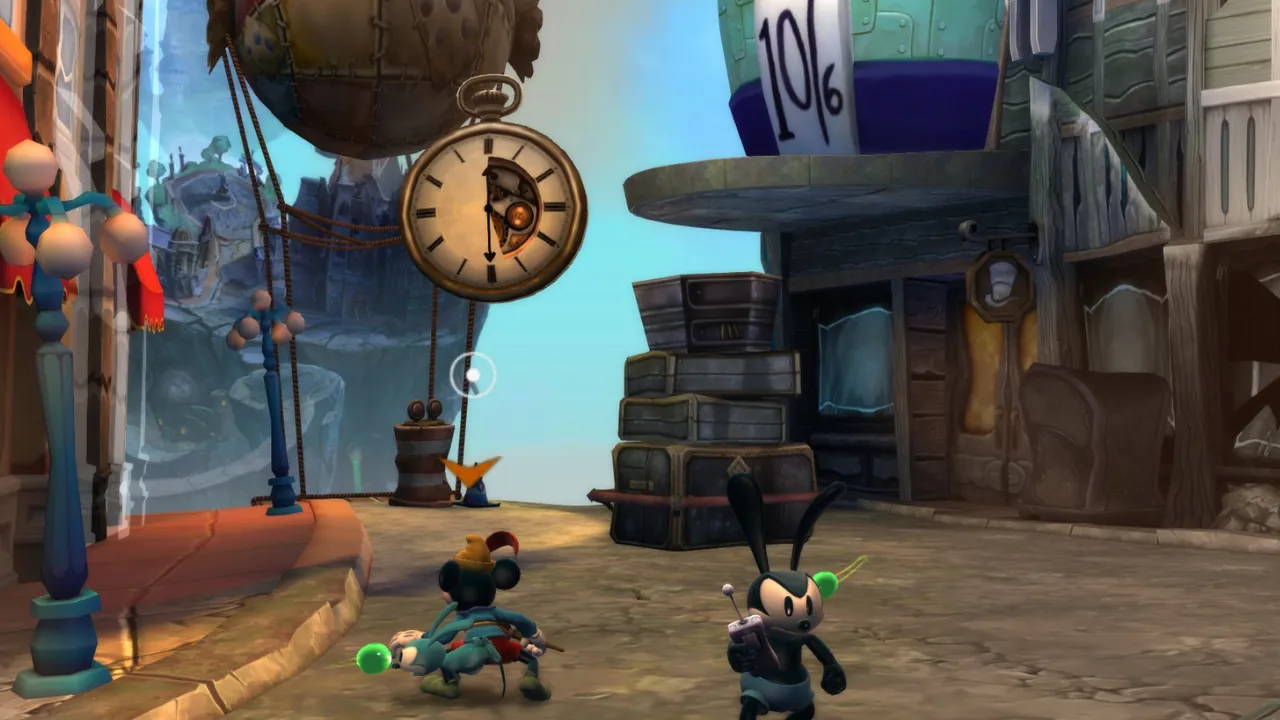
The Watch Sketch affects time. When used, it can slow down enemies or give Mickey more control during certain moments. This is useful in combat because it gives the player more time to react, attack, paint, use thinner, or reposition. It can also help in situations where timing matters, making some sections easier to handle.
What I like about the sketch system is that it fits perfectly with the Disney cartoon style. Dropping an anvil, distracting enemies with a TV, slowing time with a watch, or using a fairy effect all feel natural inside a world inspired by old animation. These tools make the game feel more playful and creative instead of relying only on standard platforming mechanics.
At the same time, sketches are more of a secondary system than the main focus. The paintbrush remains the most important mechanic, while these extra tools make certain moments more interesting. They are especially useful when the game combines them with puzzles, hidden paths, or enemy encounters.
Overall, the sketch system adds personality to Epic Mickey 2. It gives Mickey more creative options, reinforces the cartoon atmosphere, and makes Wasteland feel more interactive. Even if not every sketch is equally important, all of them help make the gameplay more varied.
Co-op Experience and Platform Differences
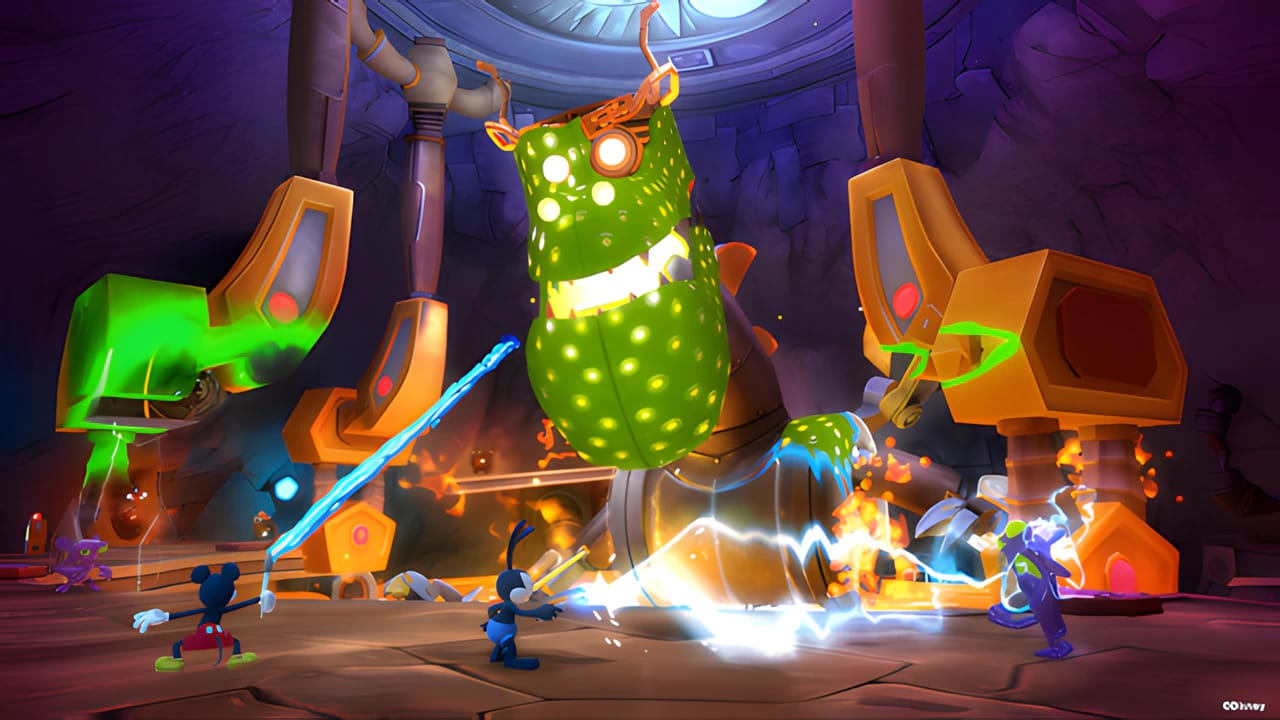
Epic Mickey 2: The Power of Two was clearly designed around cooperation between Mickey and Oswald. Mickey uses paint and thinner to change parts of the world, while Oswald uses his remote control and electrical abilities to activate machines, stun enemies, and help solve puzzles. Because of this, many areas feel like they were built with two-player interaction in mind.
When the co-op works properly, the idea is good. One player can focus on Mickey’s paintbrush mechanics while the other controls Oswald’s support abilities. This makes puzzles and exploration feel more natural, because both characters have a clear function and need to work together to progress.
However, the experience depends a lot on the version you are playing. In my case, I played the PC/Steam version solo, and this made Oswald’s AI much more noticeable. Since I was not controlling him directly, there were moments where I had to wait for him to reach the correct place or repeat an action until he finally did what was necessary.
This is one of the main issues with playing Epic Mickey 2 alone. The game’s co-op design is interesting, but when Oswald is controlled by AI, the pacing can become slower and more frustrating. It does not ruin the entire game, but it does make some sections feel less polished than they should.
Because of that, if you are interested in Epic Mickey 2 co-op, it is important to check the version you plan to play before buying. The concept works better when both characters can be controlled properly, but the solo experience can expose the limitations of Oswald’s AI.
Puzzles, Exploration, and Side Content
Epic Mickey 2: The Power of Two includes puzzles that usually depend on the combined abilities of Mickey and Oswald. Mickey uses paint and thinner to restore or erase parts of the environment, while Oswald interacts with machines, electricity, and electronic devices. Most puzzles are not extremely difficult, but they often require you to observe the area and understand which character ability should be used.
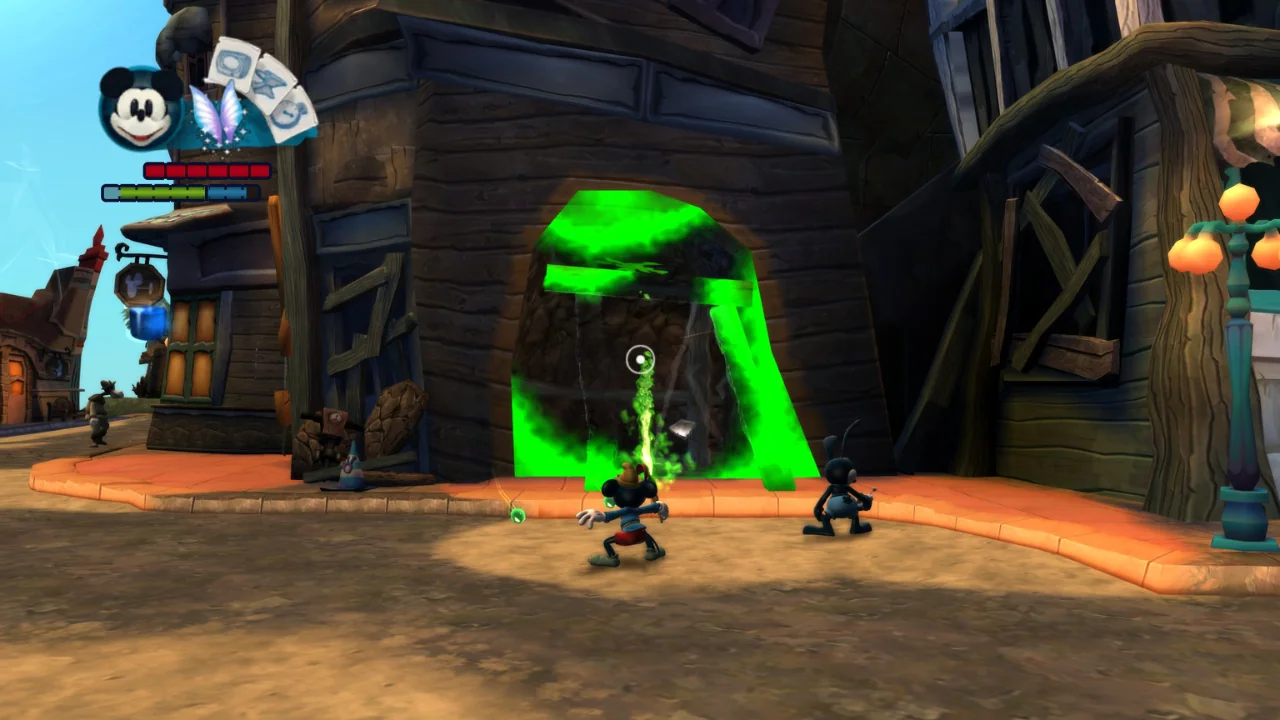
Exploration is one of the better parts of the game. Wasteland has hidden paths, optional areas, collectibles, and places that can only be accessed by using paint or thinner correctly. This encourages you to look around instead of simply following the main objective from one point to another.
The game also includes side missions, which help make the world feel less empty. These optional objectives are not always deep, but they give you more reasons to interact with characters, revisit areas, and explore the environment more carefully.
Collectibles also add some replay value. The game includes pins and other items that reward players who like to search every corner of the map. For completionist players, this can make the experience last longer than the main story alone.
That said, the side content is more enjoyable if you already like the Disney theme and the world of Wasteland. If you are only interested in finishing the campaign, the optional content may not be enough to completely change your opinion of the game. But for Disney fans and players who enjoy light exploration, it gives Epic Mickey 2 more personality and value.
Visual Design and Disney Atmosphere
The visual design is one of the strongest parts of Epic Mickey 2: The Power of Two. The game has a cartoon-like style inspired by classic Disney animation, old films, forgotten characters, and theme park imagery. Even though the graphics are not impressive by modern standards, the art direction gives the game a clear identity.
Wasteland is not just a colorful Disney world. Many areas look broken, abandoned, corrupted, or rebuilt from forgotten pieces of Disney history. This creates a different atmosphere compared to more traditional Mickey Mouse games, mixing charm with a slightly darker and more mysterious tone.
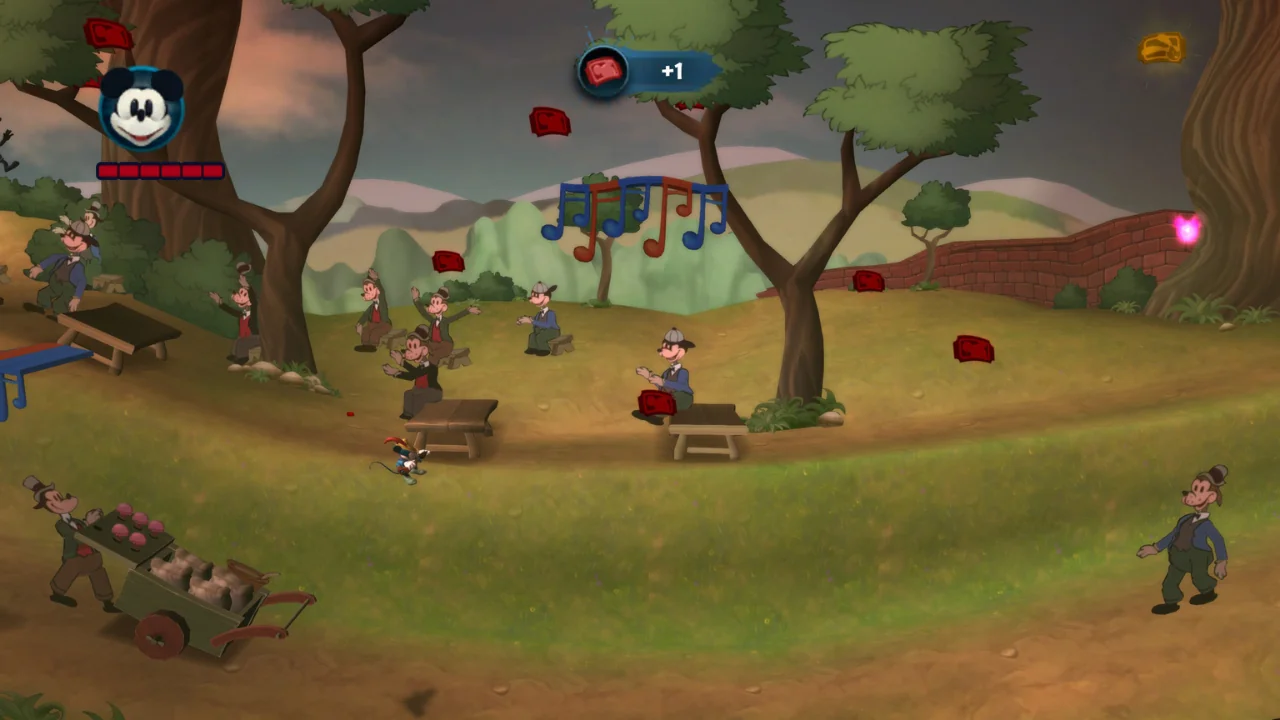
While playing, I was constantly reminded of Disney animated movies and specials, especially older Mickey Mouse productions. The game gave me a similar feeling to movies like Mickey, Donald, Goofy: The Three Musketeers, where Mickey, Donald, and Goofy go on a classic adventure with a strong cartoon atmosphere, expressive characters, and a very Disney-like sense of humor.
The environments also help make exploration more interesting. You can see references to old cartoons, damaged attractions, strange machines, and areas that feel like distorted versions of familiar Disney ideas. This gives the game personality and makes the world feel more creative than a generic platformer setting.
Mickey and Oswald also fit well into this visual style. Mickey brings the classic Disney identity, while Oswald gives the game a stronger connection to forgotten animation history. Their designs work well together and reinforce the idea that Epic Mickey 2 is not only about adventure, but also about revisiting older parts of Disney’s legacy.
For Disney fans, the atmosphere is probably one of the biggest reasons to play the game. Even when the gameplay feels simple or dated, the visual style and Wasteland setting help keep the experience charming and memorable.
Performance, Stability, and Oswald AI Issues
Epic Mickey 2: The Power of Two was mostly stable during my playthrough. I did not experience constant crashes, major bugs, or technical problems that made the game unplayable. In general, the game worked well enough for me to complete the campaign without serious performance issues.
The main problem I noticed was related to Oswald’s AI when playing solo. Since Oswald is important for several puzzles and progression moments, the game can become frustrating when he does not immediately go where he needs to go or fails to perform the required action.
There were moments where I had to wait for Oswald to reach the correct place before continuing. In one specific section, he failed to do what was necessary, and I had to try several times until the game finally progressed. This did not completely ruin the experience, but it made some parts slower and less polished than they should be.
Because of that, my recommendation for solo players is to be patient with Oswald. Sometimes it is better to wait for him to position himself correctly instead of trying to force the next step too quickly. The game usually resolves the situation eventually, but the AI can interrupt the pacing.
This is one of the clearest weaknesses of Epic Mickey 2, especially on the PC version if you are playing alone. The game’s cooperative design is interesting, but when Oswald is controlled by AI, some puzzles and interactions feel more unreliable than they should.
Difficulty and Accessibility
Epic Mickey 2: The Power of Two is a very easy game overall. It does not offer selectable difficulty levels, and most of the experience is clearly designed to be accessible for younger players, casual audiences, and Disney fans who want a relaxed adventure rather than a demanding platformer.
The combat is simple, the enemies are not very difficult to defeat, and most puzzles are easy to understand after observing the environment for a short time. Even when the game asks you to use Mickey’s paintbrush, Oswald’s remote control, or the sketch tools, the solutions are usually straightforward.
The only moments that may create some difficulty are not really about skill. They usually come from the camera, movement, or Oswald’s AI taking too long to perform an action when playing solo. Because of that, some sections can feel slightly annoying, but not truly hard.
For experienced players, Epic Mickey 2 may feel too easy. However, this also makes it a good option for players who want a light Disney platformer, younger audiences, or anyone looking for a simple game to complete without much frustration.
Game Length and Replay Value
Epic Mickey 2: The Power of Two is not a very long game if you focus mainly on the story. The main campaign can be completed in a relatively short time, especially if you already understand the platforming, puzzle structure, and how Mickey and Oswald’s abilities work together. It is not the kind of game that demands dozens of hours just to reach the ending.
However, the total length can increase quite a bit if you decide to explore Wasteland more carefully. The game has side missions, hidden areas, collectible pins, optional objectives, and different paths that encourage you to slow down instead of only following the main story. Because of this, the experience feels more valuable when you play it as an exploration-focused platformer rather than just rushing from one objective to the next.
The replay value depends mostly on how much you enjoy collecting and completing optional content. If you are the type of player who likes to return to areas, search for secrets, complete side quests, collect pins, and gather as much money as possible, there is a decent reason to keep playing after finishing the story.
Money is also part of the game’s progression and exploration loop. By collecting it, you can buy items, unlock useful extras, and make the experience feel more rewarding for players who like to fully explore each area. It is not a deep economy system, but it gives you one more reason to revisit locations and pay attention to hidden spots.
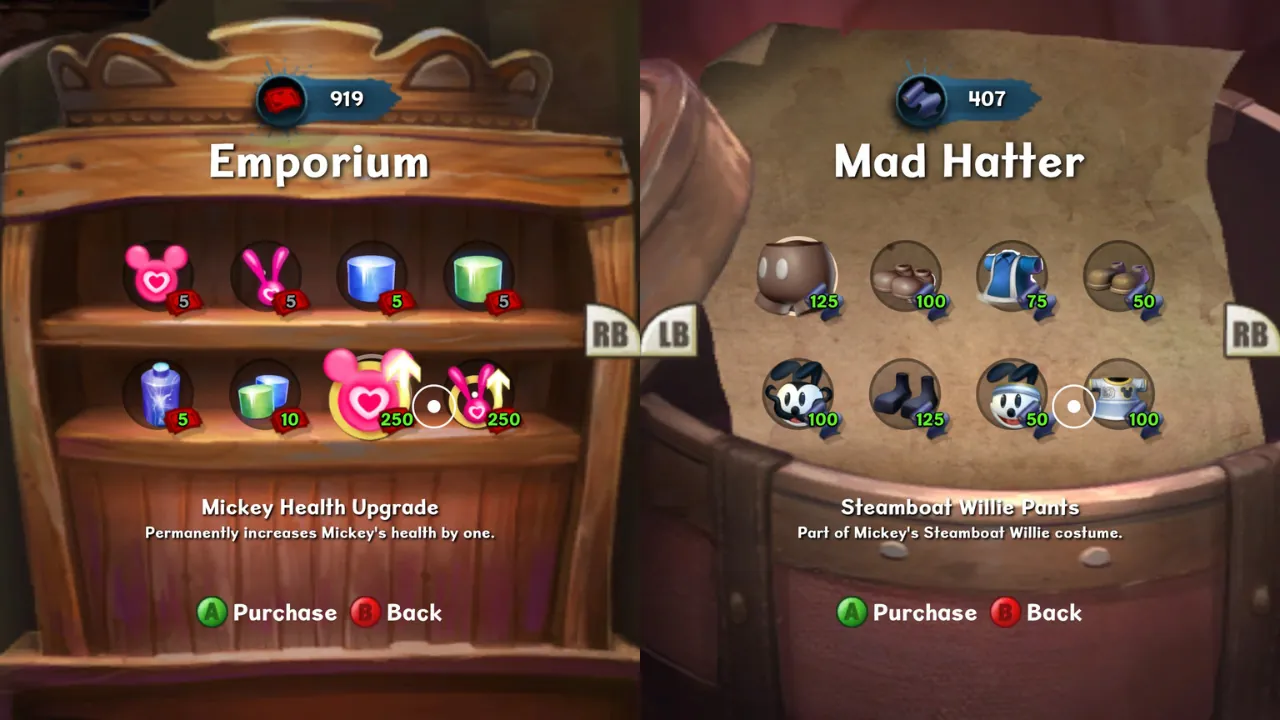
That said, I would not say the replay value is strong for everyone. If you only care about finishing the main story, you may not feel a big reason to return after the credits. But if you enjoy Disney-themed worlds, collectibles, side missions, and finding everything the game has to offer, going back to collect money and complete more content can be worth it.
Is Epic Mickey 2: The Power of Two Worth Playing Today?
Epic Mickey 2: The Power of Two is still worth playing today mainly if you are a Disney fan, a Mickey Mouse fan, or someone who enjoys light platformers with a strong cartoon atmosphere. The game is not perfect, but it has enough personality to stand out from many licensed games, especially because of Wasteland, Oswald, the paintbrush system, and the references to older Disney animation.
The best part of the experience is the world itself. Wasteland feels creative, strange, and full of Disney identity. If you like old Mickey cartoons, forgotten characters, classic animation references, and colorful environments with a slightly darker tone, the game can still be charming even today.
However, if you are looking for a highly polished modern platformer, Epic Mickey 2 may feel limited. The combat is simple, the game is very easy, some mechanics feel dated, and Oswald’s AI can be annoying when playing solo. These problems do not make the game bad, but they do make it harder to recommend to everyone.
In my opinion, Epic Mickey 2 is worth it if you know what you are buying. It is not a deep or challenging platformer, but it is a creative Disney adventure with a unique atmosphere, fun exploration, and some interesting mechanics, similar to Toy Story 3: The Game. If you are not a Disney fan, I would recommend waiting for a discount or doing more research before buying.
Conclusion
Epic Mickey 2: The Power of Two is a creative Disney platformer with a strong visual identity, a charming Wasteland setting, and interesting gameplay ideas built around Mickey’s paintbrush, Oswald’s remote control, and the sketch tools. The game is not very difficult, but it has personality, especially for players who enjoy Disney history, old Mickey cartoons, and environments filled with references to classic animation.
The strongest parts of the game are its atmosphere, exploration, and creativity. Using paint, thinner, sketches, and Oswald’s abilities to solve puzzles gives it a different feeling from a standard licensed platformer. Wasteland also helps the experience stand out, mixing colorful Disney charm with broken, forgotten, and slightly darker areas.
However, Epic Mickey 2 also has clear limitations. The combat is simple, the game is very easy, and some mechanics can feel dated. The biggest issue for me was Oswald’s AI during solo play, since there were moments where I had to wait for him or repeat actions until he finally did what was needed to progress.
Overall, I think Epic Mickey 2: The Power of Two is worth considering if you are a Disney fan or if you want a light platformer with a unique cartoon atmosphere. It is not a deep or challenging game, but it can still be fun if you know what to expect. If you are not especially interested in Disney, I would recommend waiting for a discount or doing more research before buying.
If you are interested in watching specific parts of the game, you can access my full YouTube playlist.
