Table of Contents
Unravel Review takes a closer look at a platform-puzzle game built around a simple but distinctive idea: controlling a small character made entirely of yarn and using that yarn to explore, solve puzzles, and move through the environment.
Developed by Coldwood Interactive and published by Electronic Arts, Unravel follows Yarny, a small red creature whose body gradually unravels as he travels through the world. His yarn is not only part of the character design but also the foundation of the gameplay, allowing him to swing between objects, create bridges, pull items, and reach areas that would otherwise be inaccessible.
Behind those mechanics is a more emotional journey. Each level represents an important memory connected to a family, with the story exploring themes such as love, nostalgia, loss, and connection. The narrative is presented alongside environments that range from forests and open fields to more urban and interior locations.
The visual direction is also an important part of the experience. Unravel combines a highly detailed, realistic environment with the small and stylized appearance of Yarny, making ordinary objects and natural landscapes feel much larger from his perspective.
Rather than relying on combat, the game focuses on platforming, physics-based puzzles, exploration, and environmental interaction, creating a slower and more relaxed type of experience.
Throughout this review, I will look at Unravel’s story, yarn mechanics, puzzle design, difficulty, level variety, visuals, collectibles, game length, replay value, and whether it is still worth playing today.
Story and Emotional Themes
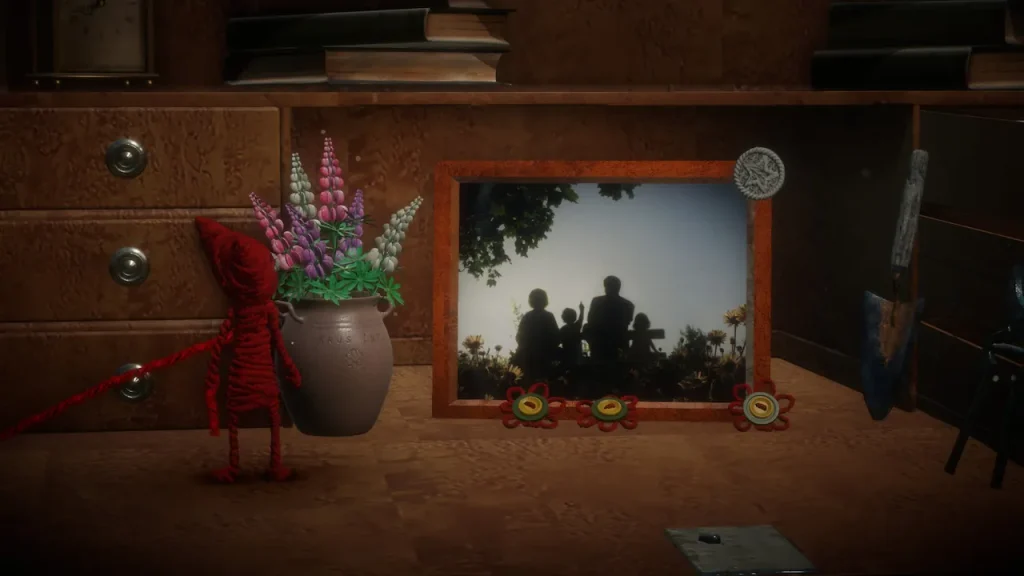
The story of Unravel is built around Yarny’s journey through a series of memories connected to a family. Rather than telling its story through long conversations or traditional cutscenes, the game uses environments, objects, and visual moments to gradually reveal the emotional meaning behind each level.
Each stage represents an important memory, which gives the environments more purpose than simply serving as puzzle areas. Forests, gardens, houses, fields, and other locations feel connected to moments from the family’s past, reinforcing the idea that Yarny is moving through fragments of a life rather than unrelated levels.
The main themes revolve around love, family, nostalgia, longing, and connection. Yarny himself fits naturally into those themes because the red yarn physically links him to the world around him, making the central gameplay mechanic also work as a visual symbol for relationships and memories.
The story is intentionally simple and understated. Unravel does not rely on constant exposition, allowing the player to interpret much of its emotional meaning through the scenery and the situations presented during the journey.
This approach gives the game a more reflective tone. Even when the player is focused on platforming or solving puzzles, the environments continue to communicate something about the family and the memories Yarny is trying to recover.
Because of this, Unravel works as more than a traditional puzzle-platformer. Its story and mechanics are closely connected, with Yarny’s journey giving emotional context to the exploration and puzzle solving throughout the campaign.
In Unravel, the story revolves around Yarny, a small creature made of yarn who embarks on an emotional journey to restore a family’s lost memories. Each level represents a significant memory, exploring themes of love, longing, and connection.
Gameplay and Yarn Mechanics
The core gameplay of Unravel is built around Yarny’s body and the yarn that connects him to the environment. Instead of relying on traditional platforming alone, the game constantly asks the player to use the yarn as a tool for movement, navigation, and puzzle solving.
Yarny can throw the yarn toward certain objects to create anchor points, allowing him to swing across gaps or reach areas that would otherwise be inaccessible. This gives the platforming a more physics-driven feel, since movement often depends on understanding how Yarny can interact with nearby objects rather than simply jumping from one platform to another.
The yarn can also be used to create bridges between two points. These bridges are useful both for crossing gaps and for interacting with objects in the environment, adding another layer to the puzzle design.

Another important mechanic is pulling objects. Yarny can use the yarn to move items, clear paths, or reposition objects needed to progress through a level. This makes environmental interaction a constant part of the gameplay rather than something limited to occasional puzzle sections.
The most distinctive limitation is that Yarny’s supply of yarn is not unlimited. As he moves farther from the starting point of a section, his body gradually unravels, which means the player has to think carefully about how much yarn is being used and where it is being anchored.
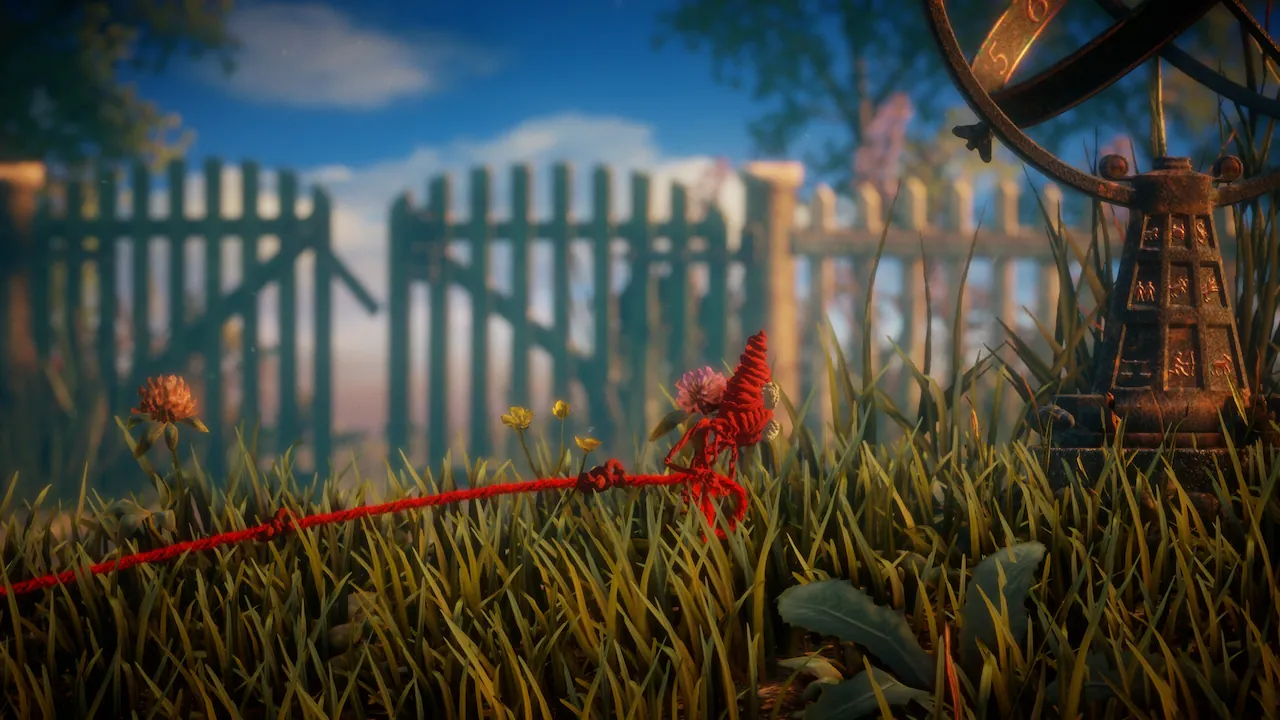
This creates a simple but effective form of resource management. The challenge is not only reaching the next platform but also finding an efficient route that avoids wasting too much yarn along the way.
Because the same mechanic is used for movement, puzzles, and environmental interaction, Unravel keeps its gameplay identity consistent throughout the campaign. The yarn is not a secondary feature; it is the system that connects nearly every major part of the platforming experience.
Puzzle Design and Difficulty
The puzzles in Unravel are closely connected to the game’s physics and yarn mechanics. Instead of separating puzzle solving from platforming, most challenges require the player to observe the environment and understand how Yarny can use nearby objects, anchor points, and his own yarn to create a path forward.
Many puzzles involve moving objects, creating yarn bridges, swinging between points, or finding the correct sequence of interactions needed to reach another part of the level. Because these mechanics are introduced through the environment, the puzzles generally feel like a natural part of exploration rather than isolated challenges.
The overall difficulty is accessible, but that does not mean every puzzle is immediately obvious. Some solutions require careful observation and experimentation, especially when several environmental elements need to be combined in the correct way.
The game rarely depends on complicated controls. Most of the challenge comes from understanding what the environment is asking you to do and then executing the solution with Yarny’s relatively simple set of abilities.
This creates a good balance between accessibility and problem solving. Players who are familiar with puzzle-platformers may progress through many sections quickly, while others can spend considerably more time trying different approaches before discovering the intended solution.
That was also reflected in my own playthrough. While the average completion time is much shorter, it took me around 14 hours to finish Unravel, partly because some of the puzzles made me stop and think for much longer than expected.
Because of this, I would not describe Unravel as a difficult game in the traditional sense. Its challenge comes more from observation, logic, and environmental interaction than from demanding reflexes or punishing gameplay.
Level Design and Environmental Variety

One of the stronger aspects of Unravel is the variety of its environments. The game does not remain in a single type of location for long, moving through forests, open fields, gardens, urban areas, interiors, and other settings as Yarny progresses through the story.
This variety helps each level feel connected to a different memory rather than simply functioning as another puzzle stage. The visual changes also make progression easier to notice, since the environments have their own atmosphere, layout, and identity.
The level design also makes frequent use of Yarny’s small scale. Ordinary objects such as fences, branches, household items, machinery, and pieces of furniture can become obstacles, platforms, or puzzle elements when viewed from his perspective.
Because of this, the environment is not just decorative. It is constantly used as part of the gameplay, whether Yarny is climbing through natural terrain, crossing a gap, manipulating an object, or using nearby structures as anchor points for his yarn.
The changes in scenery also help prevent the campaign from feeling visually repetitive. Even though the core mechanics remain consistent, different locations introduce new ways to use familiar abilities and give each stage its own visual character.
This combination of environmental variety and interactive level design is one of the reasons Unravel feels more distinctive than a straightforward platformer. The world itself becomes an important part of both the puzzle design and the emotional tone of the journey.
Graphics, Art Direction, and Atmosphere

The visual presentation of Unravel is one of the game’s strongest qualities. Its environments use a highly detailed and realistic style, while Yarny’s small, handmade appearance creates a strong contrast with the world around him.
Natural locations such as forests, rivers, gardens, and open landscapes are especially important to the game’s identity. These areas are not only visually attractive but also help reinforce the calm, nostalgic tone that runs through much of the journey.
Yarny’s size also changes how these environments are perceived. Grass, branches, household objects, fences, and other ordinary elements can appear enormous from his perspective, helping the game make familiar locations feel more adventurous without relying on fantasy environments.
The art direction works closely with the story as well. Since each level represents a memory, changes in lighting, weather, scenery, and environmental detail help establish a different mood from one stage to another.
This visual variety prevents the game from feeling repetitive. Snow-covered areas can feel colder and more isolated, while gardens and brighter outdoor locations create a warmer and more peaceful atmosphere. The different environments therefore contribute to both gameplay variety and emotional tone.
Even though Unravel focuses heavily on puzzle solving, its presentation gives the game a slower and more reflective feeling. The environments encourage the player to pay attention to small details rather than simply rushing toward the next objective.
The combination of realistic scenery, strong environmental detail, and Yarny’s distinctive design gives Unravel a visual identity that remains one of the most memorable parts of the experience.
Collectibles and Exploration
Exploration in Unravel is closely tied to its collectible system. While the game follows a mostly linear structure, each level contains optional areas and hidden paths that reward players who take the time to look beyond the most obvious route.
The main collectibles are hidden buttons scattered throughout the levels. These are often placed in harder-to-reach locations or behind small optional challenges, encouraging players to experiment with Yarny’s movement and yarn mechanics instead of simply progressing toward the end of each stage.
Finding these collectibles can involve climbing to an unusual part of the environment, discovering a secondary path, or solving an additional puzzle that is not required to complete the level. Because of this, exploration becomes more than simply looking around for decorative items.
The collectible system also gives players a reason to pay closer attention to the level design. Objects that initially appear to be part of the background can sometimes indicate another route or an opportunity to use Yarny’s abilities in a different way.
These optional objectives also contribute to replay value. After completing the campaign, players can return to individual levels to search for buttons they missed during the first playthrough, providing an additional challenge without requiring them to restart the entire game.
For players who enjoy completion and environmental exploration, the hidden buttons add another layer to Unravel’s puzzle-platforming structure. They are not necessary to understand the story, but they reward curiosity and give players another reason to fully explore each environment.
Game Length and Replay Value
Unravel is a relatively short game if you focus only on the main path, but the total playtime can vary significantly depending on how quickly you solve the puzzles and how much time you spend exploring each level.
According to the estimate already referenced in the original review, the main campaign takes around 6 hours, while a playthrough that includes more optional content can reach approximately 8 hours.
My own playthrough was considerably longer. It took me around 14 hours to complete Unravel, mainly because some puzzles made me stop, experiment, and think through the solution for much longer than expected.
That difference shows how much the game’s length depends on the player. Someone familiar with puzzle-platformers may move through many sections quickly, while players who spend more time exploring or get stuck on certain environmental puzzles can easily extend the campaign.
Replay value mainly comes from returning to previously completed levels to search for hidden buttons and other missed collectibles. Since individual levels can be revisited after completion, players do not need to restart the entire game just to recover something they missed.
The variety of environments also helps make revisiting levels less repetitive. Different stages use distinct settings and layouts, giving players another opportunity to explore areas they may have rushed through during the first playthrough.
For players interested only in the story, one complete playthrough will likely be enough. However, those who enjoy collecting everything, revisiting puzzles, or exploring optional areas have more reason to return after finishing the campaign.
Strengths and Weaknesses
After completing Unravel, I think its strongest qualities come from the way its visual design, puzzle mechanics, and emotional tone work together. At the same time, its slower pace and relatively simple structure may not appeal equally to every player.
Strengths
- Distinctive yarn mechanics: Yarny’s body is directly connected to movement and puzzle solving, allowing the player to swing, create bridges, pull objects, and interact with the environment in ways that give the game a clear identity.
- Strong environmental variety: The campaign moves through forests, fields, urban areas, interiors, and other locations, which helps keep the journey visually varied.
- Beautiful art direction: The realistic environments contrast well with Yarny’s handmade appearance, giving ordinary locations a much larger sense of scale.
- Relaxing overall tone: Unravel generally favors exploration, platforming, and environmental puzzles over fast or stressful gameplay, which makes it well suited to a calmer gaming session.
- Accessible but thoughtful puzzles: Most challenges are easy to understand mechanically, but some can still require enough experimentation and observation to slow the player down. In my case, several puzzles contributed to a much longer playthrough than the average.
- Optional collectibles: Hidden buttons give players a reason to explore secondary paths and revisit completed levels.
- Emotional presentation: The journey through family memories gives the platforming and exploration more meaning than simply moving from one level to the next.
Weaknesses
- Some puzzles can slow the pacing considerably: Although most challenges are accessible, certain solutions may take much longer to understand, particularly for players who are less familiar with physics-based puzzle games.
- Core mechanics remain similar throughout the campaign: The environments change frequently, but most challenges continue to revolve around the same basic yarn, platforming, and environmental interaction systems.
- Limited replay value for story-focused players: Replaying levels is mainly useful for finding missed collectibles or revisiting puzzles rather than discovering major new content.
- Mostly linear progression: Exploration exists within individual stages, but Unravel is still a largely guided experience rather than a game built around open-ended exploration.
- Slow pace may not suit everyone: Players looking for constant action or highly demanding platforming may find the more relaxed structure less engaging.
For me, the strengths outweigh the weaknesses. The combination of detailed environments, creative yarn mechanics, puzzles, and a calm atmosphere gives Unravel a clear personality. Even though some puzzles significantly slowed my progress, that challenge was also part of what made the experience more memorable.
Is Unravel Worth Playing Today?
Unravel is still worth playing today, especially for players who enjoy puzzle-platformers, slower-paced games, and experiences that rely more on atmosphere and environmental interaction than combat.
Its strongest feature remains the yarn-based gameplay. Swinging between objects, creating bridges, pulling items, and managing Yarny’s limited thread supply give the game a clear mechanical identity that still feels distinctive.
The visual presentation also continues to work well. Detailed forests, gardens, fields, interiors, and other environments contrast with Yarny’s small handmade appearance, giving ordinary places a strong sense of scale and personality.
The puzzle design is accessible, but some sections can still require more thought than expected. That was noticeable in my own playthrough, which took around 14 hours, partly because I spent a considerable amount of time figuring out certain puzzles.
Its biggest limitation is that the core gameplay does not change dramatically over time. Most of the campaign continues to revolve around the same yarn mechanics, environmental puzzles, and platforming systems, even though the scenery and specific challenges vary between levels.
Replay value is also relatively limited for players who only care about the story. Returning to completed stages is mainly useful for finding hidden buttons, exploring missed areas, or replaying puzzles rather than discovering major new content.
However, that simplicity is also part of the appeal. Unravel offers a calm, focused experience with a strong visual identity, thoughtful environmental puzzles, and an emotional tone that distinguishes it from more action-heavy platformers.
For players looking for a relaxing puzzle-platformer with creative mechanics and beautiful environments, Unravel remains an easy game to recommend today.