

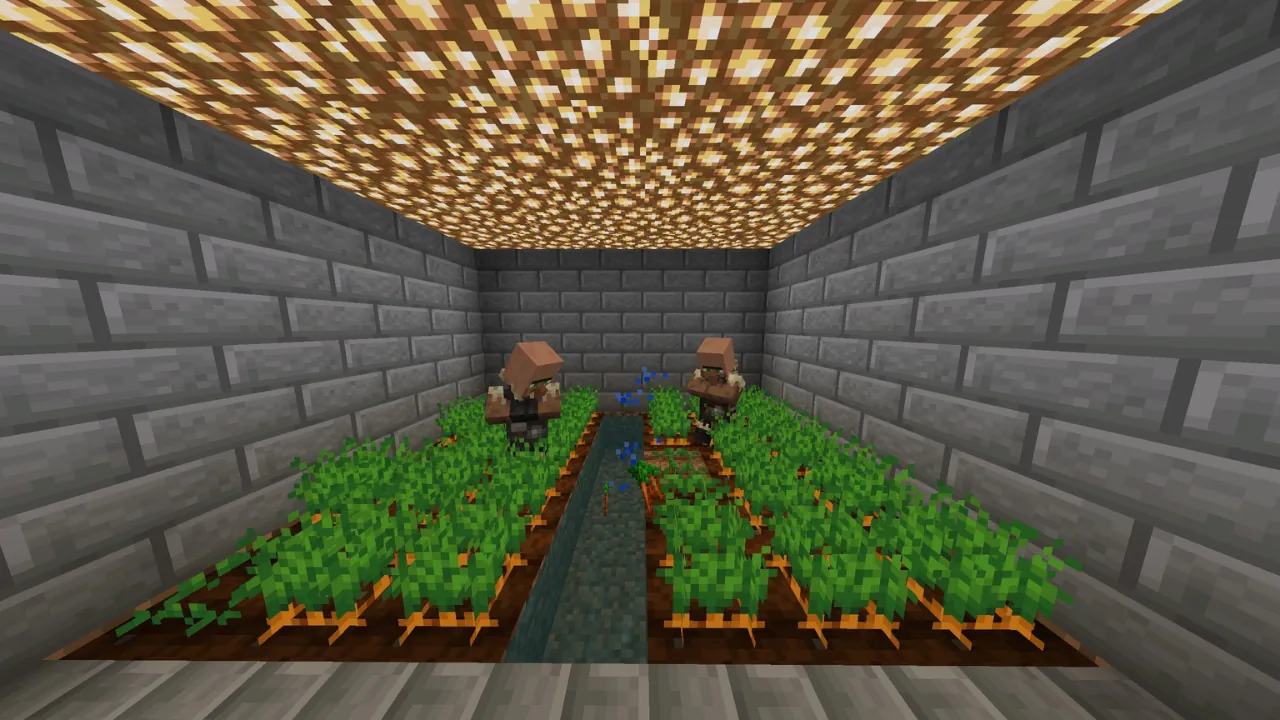
Table of Contents
Breeding villagers in Minecraft Bedrock is one of the most useful things you can do in a survival world. More villagers means more trades, more job options, easier access to enchanted books, and a stronger base economy over time.
However, villager breeding can feel confusing when nothing happens, even after placing beds and throwing food on the ground. In most cases, the problem comes down to one of three things: the villagers do not have enough food, the beds are not valid, or there is no extra bed available for the baby villager.
This guide explains how to breed villagers in Minecraft Bedrock, what food you need, how beds work, and the most common reasons why villagers refuse to breed.
Quick Answer: How to Breed Villagers in Minecraft Bedrock
To breed villagers in Minecraft Bedrock, you need at least two adult villagers, enough food, and at least three valid beds. Two beds are for the adult villagers, and one extra bed is for the baby villager.
The fastest basic setup is:
- Place two adult villagers in a safe area.
- Place at least three beds nearby.
- Make sure each bed has enough empty space above it.
- Give the villagers enough food.
- Wait for heart particles to appear.
If the conditions are correct, the villagers should breed and create a baby villager. The baby villager will grow into an adult after roughly 20 minutes.
What You Need to Breed Villagers
Before trying to breed villagers, make sure you have the right setup. You do not need doors, job blocks, bells, or a full village build. The core requirements are much simpler.
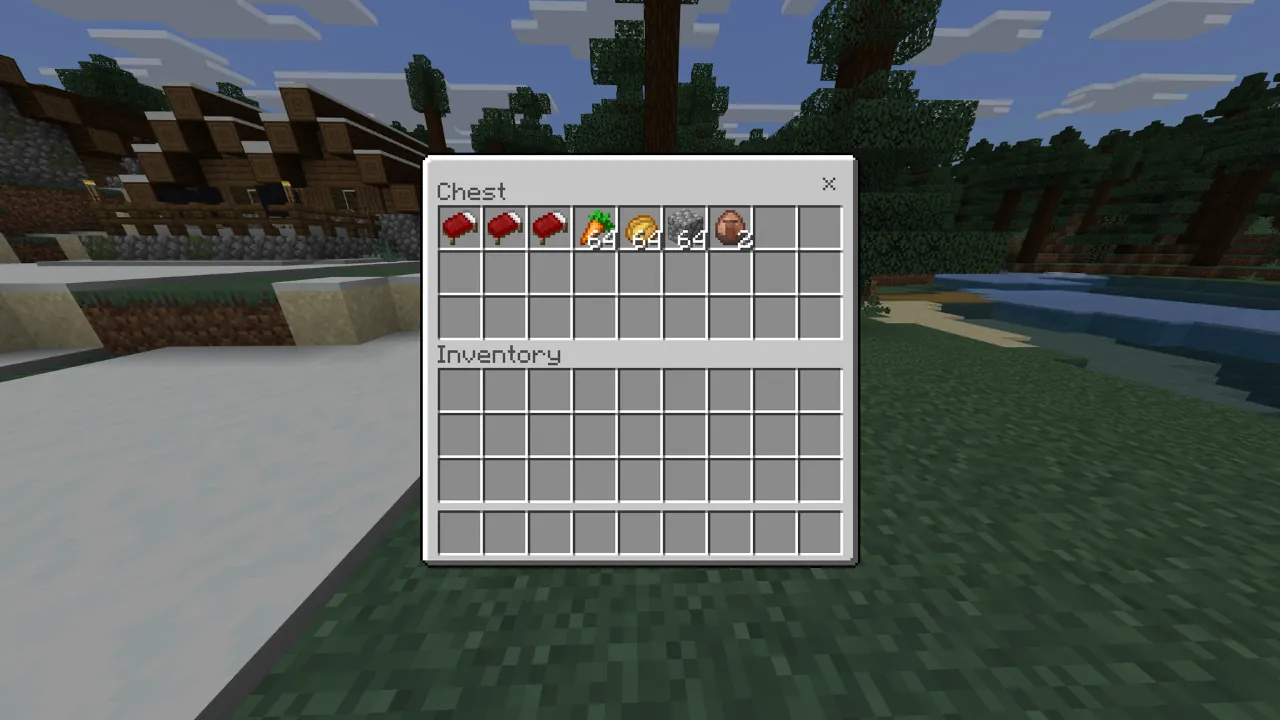
- 2 adult villagers
- 3 valid beds minimum
- Enough food
- A safe area
- Enough space for villagers to move and pathfind
The most common mistake is placing only two beds. If you want two villagers to create one baby villager, you need a third bed that the baby can claim.
How Many Beds Do You Need?
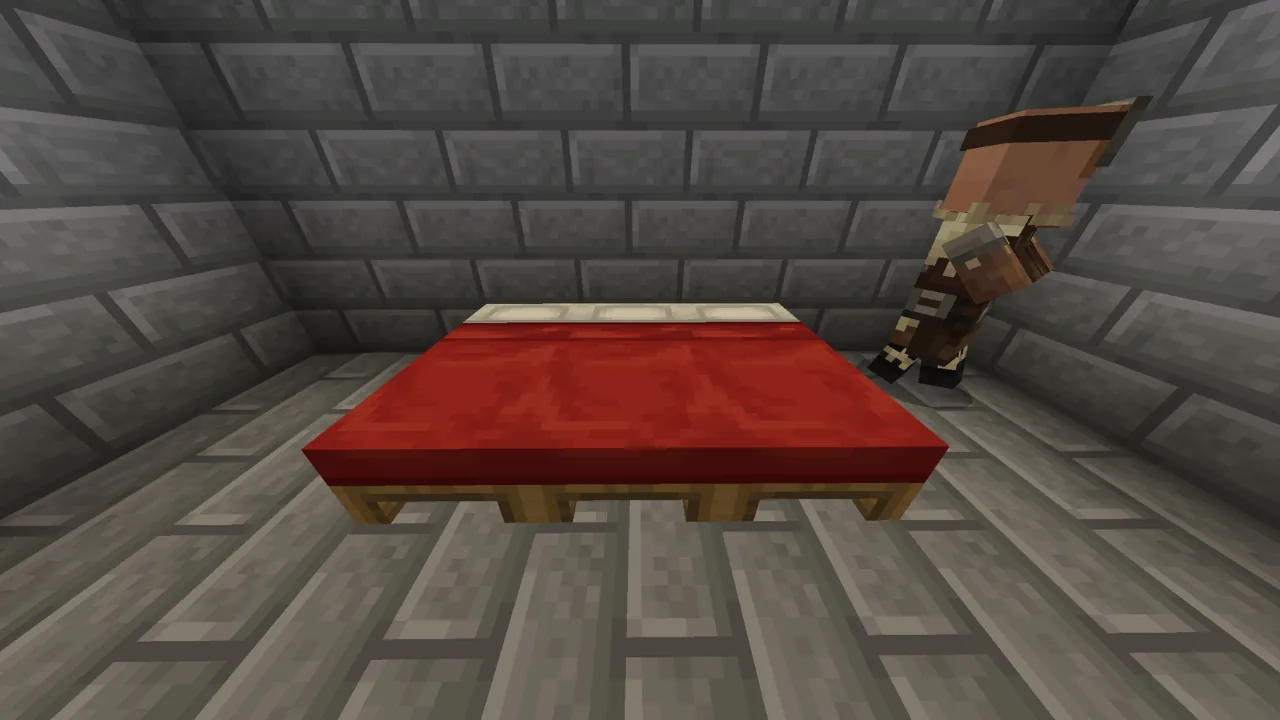
For the smallest villager breeding setup, you need three beds. One bed is for the first adult villager, one bed is for the second adult villager, and one extra bed is for the baby villager.
If you want more villagers, add more beds. As a simple rule, the number of villagers you can support depends on the number of valid beds available.
For example:
- 2 villagers + 3 beds = room for 1 baby villager
- 2 villagers + 5 beds = room for up to 3 baby villagers over time
- 4 villagers + 8 beds = room for more population growth
In Minecraft Bedrock, beds also need to be valid. That means villagers must be able to recognize and pathfind to them. If the beds are blocked, too far away, already claimed, or placed in a cramped space, breeding may fail.
How Much Food Do Villagers Need?
Villagers need food before they become willing to breed. You can throw food on the ground near them, and they should pick it up if the game rules and setup allow it.
Use one of these amounts per villager:
| Food | Amount Per Villager |
|---|---|
| Bread | 3 |
| Carrots | 12 |
| Potatoes | 12 |
| Beetroots | 12 |
Bread is usually the easiest option because you only need three pieces per villager. Carrots and potatoes are also good if you already have a farm.
If you are breeding two villagers, a safe starting amount is:
- 6 bread total, or
- 24 carrots total, or
- 24 potatoes total, or
- 24 beetroots total
You can give them more than the minimum if you want to avoid counting too carefully.
Step-by-Step: How to Breed Villagers in Minecraft Bedrock
1. Find Two Adult Villagers
First, you need two adult villagers. You can find them in a village or transport them to your base using boats, minecarts, or water paths.
Try to keep them in a controlled area. A small house, fenced room, or underground room works well as long as there is enough space and the beds are valid.
2. Build a Safe Breeding Area
The area does not need to be fancy. What matters is that the villagers are safe from zombies, skeletons, pillagers, and other threats.
A simple room with walls, a roof, torches, and enough space around the beds is enough. Avoid making the ceiling too low. Baby villagers need beds with enough empty space above them, so cramped rooms can break the setup.
3. Place at Least Three Beds
Place three beds inside or near the villager area. Make sure the beds are not blocked by slabs, trapdoors, solid blocks, or a ceiling placed too close above them.
For a reliable setup, leave at least two empty blocks above the beds. This helps prevent the bed from becoming invalid.
4. Give the Villagers Food
Throw food near the villagers. Bread, carrots, potatoes, and beetroots are the main options.
For two villagers, you can throw:
- 6 bread, or
- 24 carrots, or
- 24 potatoes, or
- 24 beetroots
The villagers should pick up the food. After they have enough, they can become willing to breed.
5. Wait for Heart Particles
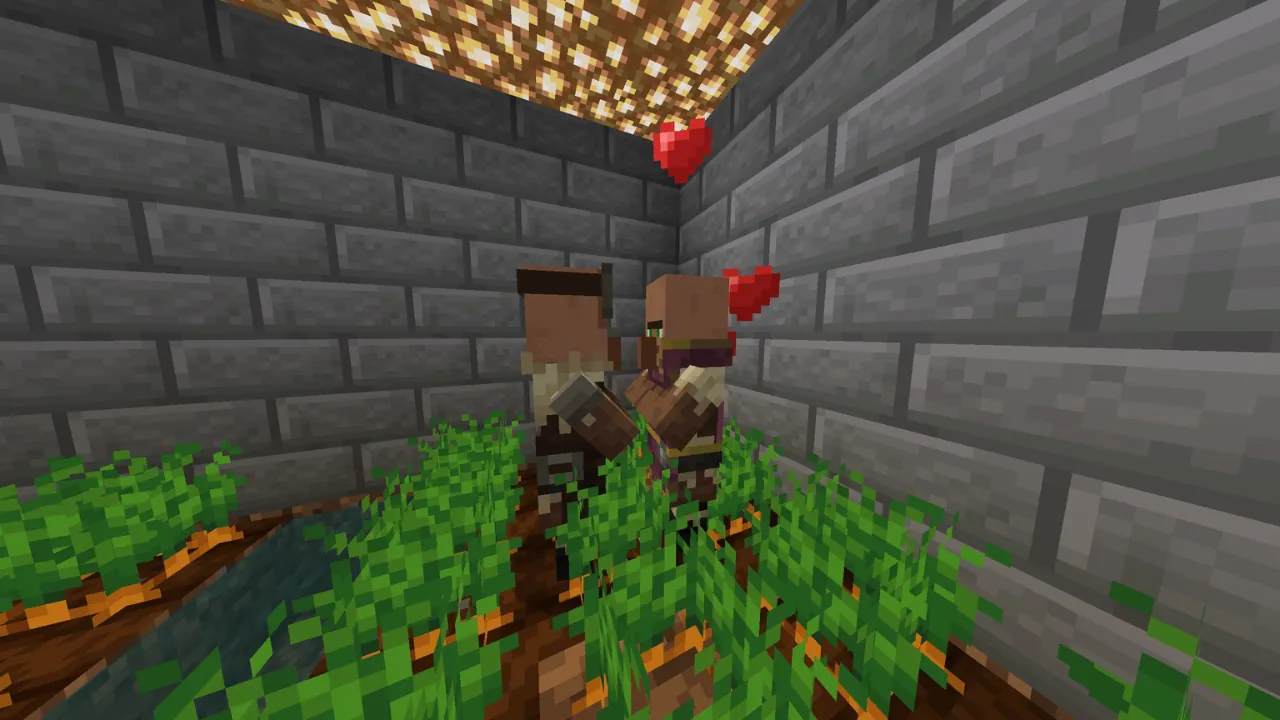
If everything is working, you should eventually see heart particles above the villagers. This means they are attempting to breed.
If heart particles appear and then the breeding fails, the problem is usually related to beds. There may not be an extra unclaimed bed, the bed may be blocked, or the villagers may not be able to pathfind to it.
6. Let the Baby Villager Grow
Once a baby villager appears, it will take around 20 minutes to grow into an adult. After that, you can give it a profession by placing a job site block nearby, such as a lectern for a librarian or a composter for a farmer.
Why Are My Villagers Not Breeding?
If your villagers are not breeding in Minecraft Bedrock, check these common problems first.
There Are Not Enough Beds
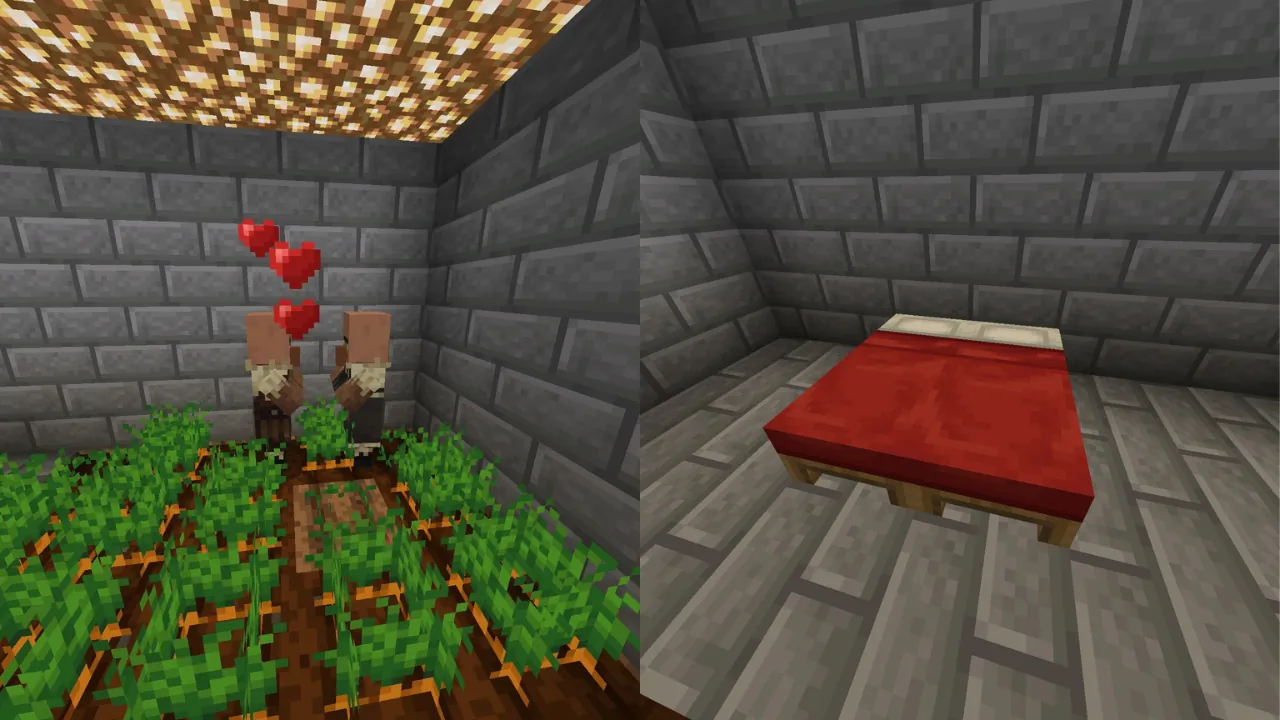
This is the most common issue. Two villagers need at least three beds to breed. The extra bed is for the baby villager.
If you only placed two beds, add another one and try again.
The Extra Bed Is Already Claimed
Nearby villagers can claim beds, even if they are outside your breeding room. If a bed is already claimed, it may not count as available for the baby villager.
To fix this, break and replace the beds inside your breeder. You can also move the breeder farther away from other villagers or villages.
The Beds Are Blocked
Beds need to be valid. If the ceiling is too low, blocks are placed above the bed, or villagers cannot pathfind to the bed, breeding can fail.
Leave clear space around the beds and at least two empty blocks above them.
The Villagers Do Not Have Enough Food
If you did not give enough food, the villagers may not become willing. Give each villager at least 3 bread, 12 carrots, 12 potatoes, or 12 beetroots.
When in doubt, throw extra food near them and wait.
The Villagers Are Not Picking Up Food
If villagers ignore food on the ground, check your world settings. If mob griefing is disabled, villagers may not pick up food or farm crops normally.
This can stop food-based breeding from working properly. In survival worlds, mob griefing is usually enabled by default, but it may be changed on servers or custom worlds.
The Room Is Too Small or Awkward
Villagers need enough space to move and detect the beds. If they are stuck in a tiny corner, blocked by trapdoors, or separated from the beds, the setup may not work.
Make the room slightly larger and keep the beds reachable.
The Villagers Are Too Far From the Beds
If the beds are too far away, the villagers may not connect to them properly. Keep the beds close to the villagers, especially in a basic breeder.
For a beginner setup, place the beds in the same room as the villagers.
You Are Too Far Away
If the area is unloaded, the villagers will not progress normally. Stay close enough for the chunk to remain loaded while waiting for the baby villager to appear and grow.
Do Villagers Need Jobs to Breed?
No, villagers do not need jobs to breed. A villager can breed even without a profession.
Job blocks are useful after breeding because they let you choose professions. For example, you can place a lectern to create a librarian, which is useful if you want enchanted books like Mending.
Do Villagers Need Doors to Breed?
No, villagers do not need doors to breed in modern Minecraft Bedrock. Older Minecraft village mechanics used doors, but current villager breeding is based mainly on beds, food, and villager willingness.
Do Villagers Need a Bell?
No, a bell is not required for villager breeding. Bells can help define village behavior in some situations, but you do not need one for a basic breeding setup.
Best Simple Villager Breeder Setup for Bedrock
For a simple manual setup, build a small room with two villagers, three beds, and good lighting. Keep the villagers inside, throw food on the ground, and wait.
A reliable beginner layout looks like this:
- One small house or fenced room
- Two adult villagers inside
- Three beds placed with clear space above them
- Torches to prevent hostile mobs
- A door, gate, or trapdoor so you can enter and leave safely
This is not the fastest automatic breeder, but it is easy to build and good enough for most survival worlds.
What to Do After Breeding Villagers
Once you have more villagers, you can start building a stronger trading system. The most useful professions are usually librarian, farmer, cleric, toolsmith, weaponsmith, and armorer.
If you want enchanted books, place a lectern near an unemployed adult villager to turn it into a librarian. If you do not like the first trades, break and replace the lectern before locking the trade.
Villager breeding is especially useful if you want:
- Mending books
- Emerald farming
- Diamond gear trades
- Golden carrots
- Enchanted tools and armor
- A larger custom village near your base
FAQ (Frequently Asked Questions)
How many villagers do you need to breed villagers?
You need at least two adult villagers to breed villagers in Minecraft Bedrock.
How many beds do villagers need to breed?
You need at least three beds for two villagers to breed: one for each adult villager and one extra bed for the baby villager.
What is the best food for breeding villagers?
Bread is usually the easiest food because each villager only needs 3 bread. Carrots and potatoes are also good if you have a farm.
Why do my villagers show hearts but not breed?
If villagers show hearts but do not create a baby, the problem is usually the beds. Add an extra bed, make sure it is unclaimed, and check that there is enough empty space above it.
Do villagers need workstations to breed?
No, villagers do not need workstations to breed. Workstations are only needed for professions and trades.
How long does it take for a baby villager to grow up?
A baby villager takes around 20 minutes to become an adult.
Conclusion
To breed villagers in Minecraft Bedrock, keep the setup simple: two adult villagers, enough food, and at least three valid beds. Most problems happen because the extra bed is missing, blocked, already claimed, or placed in a cramped area.
Once you understand how beds and food work, villager breeding becomes much easier. From there, you can build a trading hall, farm emeralds, unlock useful professions, and create a stronger survival base.