

Table of Contents
Rush: A Disney Pixar Adventure tries to recreate the magic of Pixar movies in a playable format — but whether it succeeds depends heavily on what you expect from the experience.
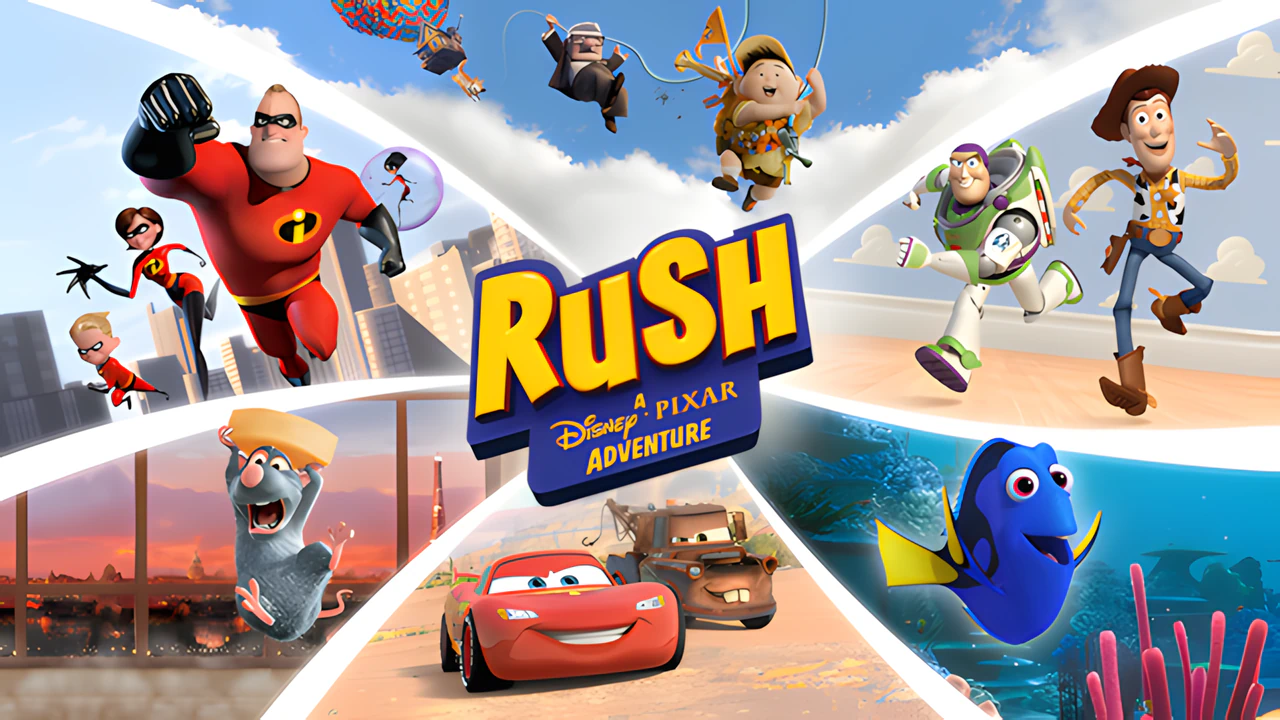
The game features worlds inspired by Toy Story, The Incredibles, Cars, Up, Ratatouille, and Finding Dory, where players interact with characters and complete simple objectives within each environment.
Instead of focusing on complex mechanics, the game prioritizes accessibility and familiarity, aiming to deliver a light and nostalgic experience.
What is Rush: A Disney Pixar Adventure?
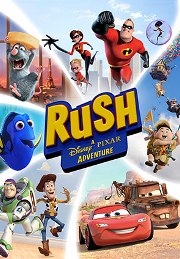
Rush: A Disney Pixar Adventure is a casual adventure game developed by Asobo Studio and published by Xbox Game Studios. The game allows players to explore worlds inspired by popular Pixar movies such as Toy Story, The Incredibles, Cars, Up, Ratatouille, and Finding Dory.
Each world recreates specific moments from these films, allowing players to interact with characters, complete objectives, and explore themed environments.
Gameplay and Core Mechanics
The gameplay structure in Rush: A Disney Pixar Adventure is built around simple and accessible mechanics, making it easy for any player to understand within minutes. Movement is limited to basic actions such as running, jumping, and interacting with objects, while objectives are straightforward and clearly guided.
Most levels follow a linear progression, where players move through the environment, complete small tasks, and collect coins scattered across the map. These coins act as the main progression requirement, unlocking new areas and allowing the player to continue advancing.
However, the game does not introduce new mechanics or meaningful variations over time, which makes the overall loop feel repetitive. Even though each world is visually different, the way you interact with the game remains almost unchanged from start to finish.
Because of this, the experience works well for casual play sessions, but may feel limited for players expecting more depth.
After spending some time with the game, it became clear that the experience feels more like an interactive cinematic journey rather than a traditional game, mainly due to its very low level of challenge.
My Experience Playing
I played the game mostly solo and completed it in a single session. At the beginning, the experience felt fun and nostalgic, especially due to the familiar Pixar environments and characters.
One moment that stood out was during the Toy Story junkyard section, where the game attempts to recreate a tense scene from the movie. However, due to the lack of difficulty and pressure, the moment did not feel as impactful as expected.
As I progressed, it became clear that the gameplay loop does not evolve. While each world looks different, the core mechanics remain the same, which made the experience feel repetitive after some time.
On the positive side, I did not encounter any bugs or technical issues, and the game ran smoothly throughout my playthrough.
Difficulty and Learning Curve
The game has almost no difficulty and virtually no learning curve. Even players with no prior gaming experience can quickly understand how it works.
This clearly shows that the game is designed for a younger and casual audience, rather than players looking for challenge.
Is the Game Repetitive?
Yes — and this ends up being one of its main drawbacks.
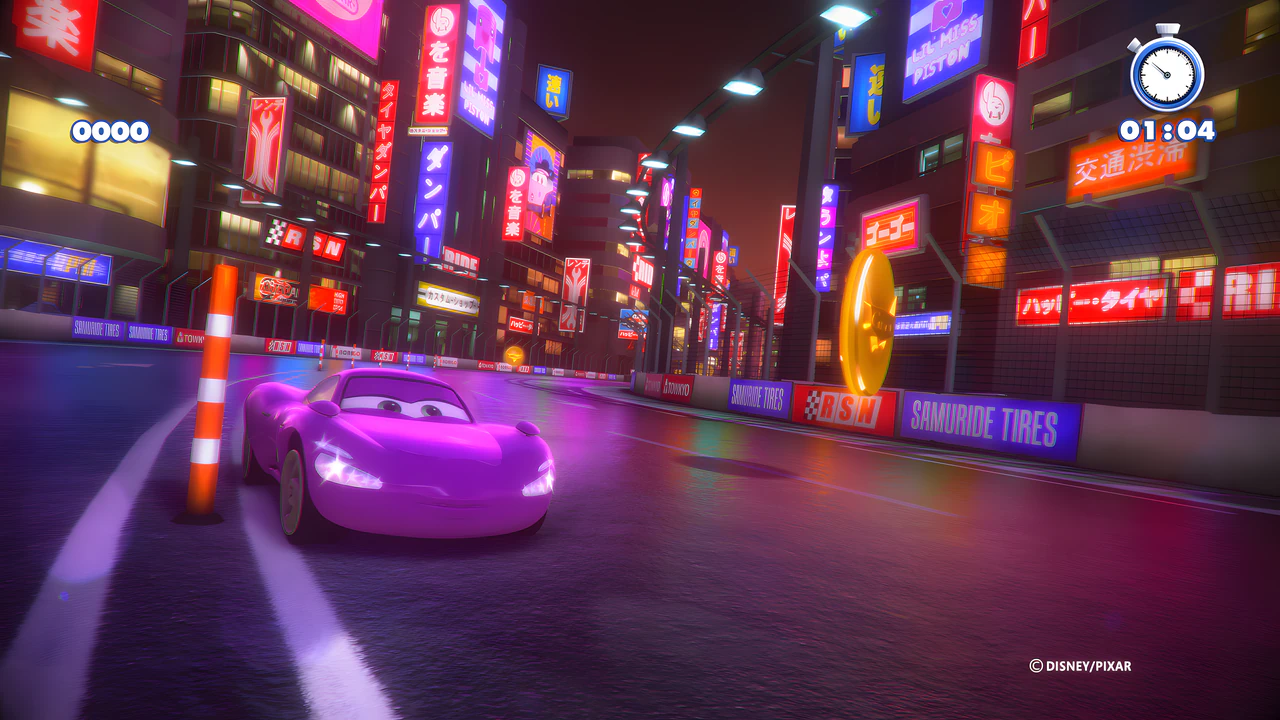
Although each world features a different Pixar theme, the core loop rarely evolves. Objectives remain very similar throughout, and there are almost no new elements introduced as you progress. This makes the structure feel repetitive after a relatively short time.
The issue goes beyond repetition itself — it’s the lack of progression in complexity. Most titles gradually expand their mechanics or introduce new challenges to keep things engaging. Here, everything stays almost the same from start to finish, which can reduce the sense of reward over time.
For shorter sessions or when playing with someone else, this may not be a major problem. However, for those expecting variety or increasing difficulty, this limitation becomes much more noticeable.
Graphics and Visual Style
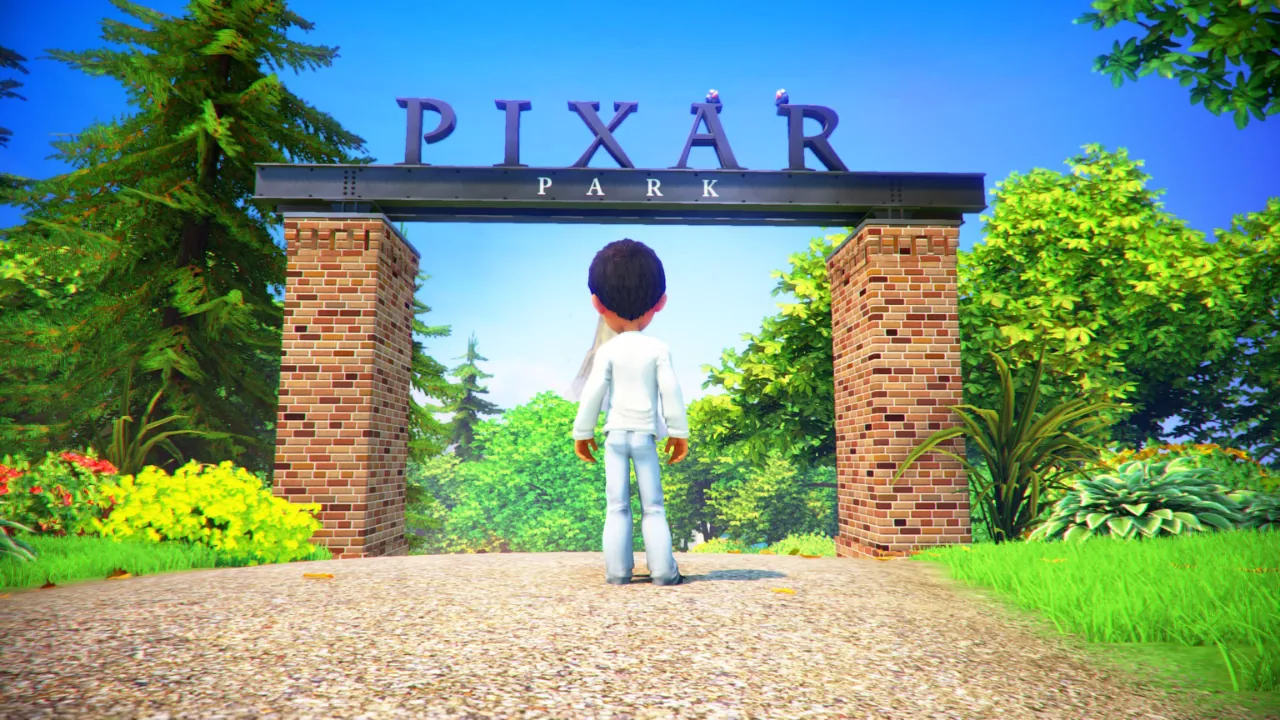
Visually, the game is where it shines the most — especially if you’re already familiar with Pixar movies. The environments are colorful, vibrant, and highly inspired by Pixar movies, which helps create a strong sense of immersion. The art style is cartoonish and faithful to the original films, making it especially appealing for fans.
Performance and Optimization
The game is very lightweight and well-optimized. It runs smoothly even on lower-end systems, and during my playthrough, I did not experience any frame drops, crashes, or performance issues.
Game Length and Content
The main campaign can be completed in approximately 2 to 4 hours, depending on how much time the player spends exploring and collecting coins.
While the game includes multiple Pixar-themed worlds, the overall amount of content is relatively limited. There are no significant side activities, alternative paths, or advanced systems that extend the experience beyond the main objectives.
Because of this, the game feels more like a short, one-time experience, rather than something designed for long-term engagement or replayability.
Progression System
The progression system in Rush: A Disney Pixar Adventure is entirely centered around coin collection. Coins are spread throughout each level and serve as the primary requirement to unlock new worlds and continue advancing in the game.
In addition to unlocking progression, coins also function as a basic scoring system, encouraging players to explore each area more carefully. However, this system remains very limited, as there are no upgrades, skill trees, or new abilities tied to progression.
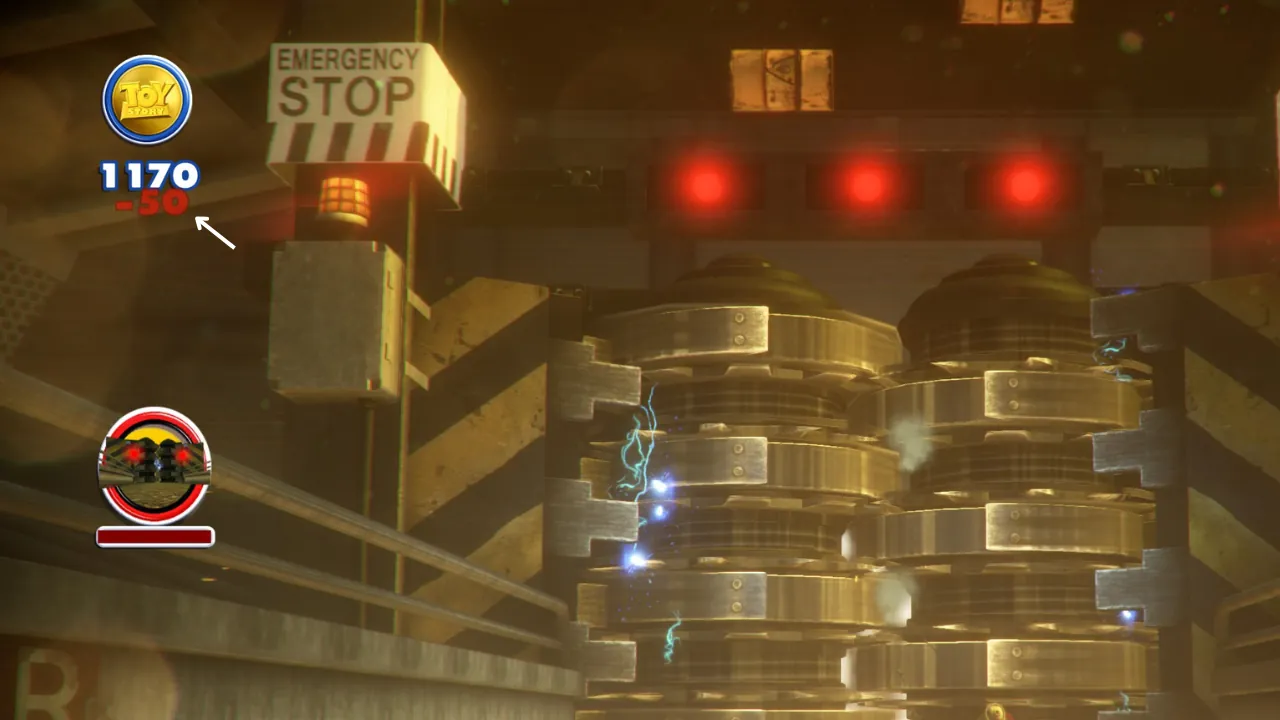
Another element is the penalty system: when taking damage, the player loses a portion of collected coins, which adds a small level of consequence. Despite that, due to the low difficulty, this mechanic rarely impacts the overall experience in a meaningful way.
As a result, progression feels functional but shallow, serving more as a gate between levels rather than a system that enhances gameplay over time.
Personally, I didn’t find the coin system particularly rewarding. While coins are required to unlock new areas, the game doesn’t clearly communicate their purpose beyond that, nor does it offer meaningful incentives for collecting more than the minimum required. Because of this, the system feels more like a basic progression gate rather than something engaging or satisfying.
Multiplayer / Co-op
The game offers a local co-op mode, allowing a second player to join on the same screen. While this does not introduce new mechanics, it significantly improves the overall experience.
Since the core gameplay is quite simple, playing alone can become repetitive over time. With another player, however, the experience feels more dynamic and engaging, especially for casual or family sessions.
It’s important to note that the game does not support online multiplayer or cross-platform play, limiting co-op strictly to local play or features like Steam Remote Play Together.
Story and Immersion
The game places players in key moments from Pixar movies.
For example, in Toy Story 3, you start in the junkyard sequence, recreating one of the film’s most intense scenes. While the game does not focus heavily on storytelling, it does a good job of recreating iconic moments from the movies.
How Does It Compare to Similar Games?
Compared to LEGO games, which offer more complex mechanics, longer gameplay, and greater variety, Rush feels much more simplified and limited.
While both target a casual audience, LEGO games tend to provide a more complete and engaging experience, especially for players looking for depth and replayability.
Pros and Cons
Pros:
- Strong nostalgia for Pixar fans
- Simple and accessible gameplay
- Beautiful and colorful visuals
- Fun in co-op mode
Cons:
- Very short gameplay
- Repetitive mechanics
- Lack of challenge
- Limited depth and progression system
Who Is This Game For?
This title is best suited for those looking for a light and accessible experience, especially:
- younger players
- families playing together
- fans of Pixar worlds
On the other hand, it may not appeal to players who:
- prefer challenging systems
- expect deeper mechanics
- want something with strong replay value
In practical terms, it works well as a short, casual experience, but not as something to invest many hours into.
My Honest Opinion
After playing Rush: A Disney Pixar Adventure, I can say that the game feels more like an interactive Pixar experience than a fully developed game.
What I liked the most was the nostalgia and the way each world recreates moments from the movies. However, I expected a bit more depth in the gameplay.
What disappointed me was the lack of progression and challenge, as the game mechanics remain almost the same from beginning to end.
In my opinion, the game works much better as a casual co-op experience with friends or family rather than a solo experience.
Where can I buy it?
Through my links below, you can buy the original PC/Steam version, and you will also be supporting my work here at no additional cost to you.
Final Verdict
Rush: A Disney Pixar Adventure delivers a charming and nostalgic experience, especially for fans of Pixar movies.
While its simple gameplay makes it accessible, it also limits its depth and long-term engagement. The game works best as a casual co-op experience, rather than a fully developed adventure.
Overall, it is worth playing — but ideally at a discounted price.
You can watch every part of the game via my YouTube playlist.
FAQ (Frequently Asked Questions)
Is Rush: A Disney Pixar Adventure multiplayer?
Yes, Rush: A Disney Pixar Adventure supports multiplayer, but only through local co-op mode. Two players can play together on the same system.
Is Rush: A Disney Pixar Adventure split-screen?
Yes, the game features split-screen co-op, allowing two players to play simultaneously on the same screen.
Is Rush: A Disney Pixar Adventure cross-platform?
No, Rush: A Disney Pixar Adventure does not support cross-platform play. Multiplayer is limited to local co-op on the same device.