


Table of Contents
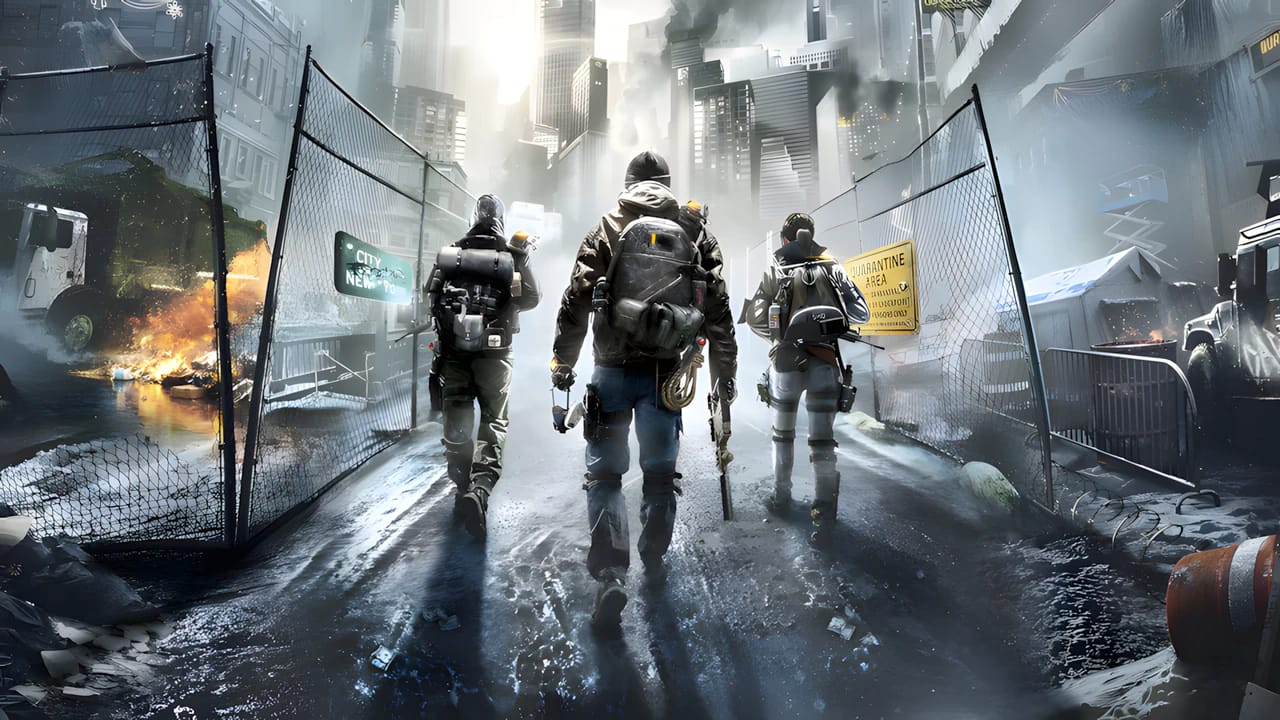
Tom Clancy’s The Division Review explores Ubisoft’s third-person shooter that combines tactical combat, RPG progression, and looter shooter mechanics in a post-apocalyptic version of New York City.
Set after the outbreak of a deadly virus, players take the role of an agent from the Strategic Homeland Division (SHD), an organization created to restore order and investigate the events that caused society to collapse. The title combines intense firefights, character customization, loot collection, and cooperative play, creating an experience focused on progression and teamwork.
A major strength of The Division is its interpretation of New York City. The abandoned streets, destroyed buildings, and atmosphere of a metropolis struggling to survive create a memorable setting that makes exploration feel meaningful. The environment is not just a backdrop for combat; it helps tell the story of the outbreak and its consequences.
One detail that caught my attention was the exploration and loot system. The famous “loot and shoot” formula reminded me of titles like Destiny 2, where players repeatedly complete activities, collect better equipment, and improve their characters over time. This progression loop is a defining element of the experience, encouraging you to explore, experiment with different builds, and search for more powerful gear.
Throughout this review, I will analyze Tom Clancy’s The Division’s setting, story, gameplay mechanics, progression system, missions, cooperative features, visuals, performance, replay value, and whether it is still worth playing today.
A Post-Apocalyptic New York City and Game Setting
A standout feature of Tom Clancy’s The Division is its representation of a post-apocalyptic New York City. Rather than presenting a completely destroyed world, the title shows a city that has recently collapsed, with abandoned streets, damaged buildings, emergency areas, and civilians trying to survive among the chaos.
The outbreak of the Green Poison virus creates a believable scenario where society falls apart in a short period of time. The surroundings are filled with details that tell the story of what happened, such as abandoned vehicles, improvised shelters, destroyed stores, and areas affected by the conflict between different factions.
The snowy setting also plays an important role in shaping the game’s identity. The winter atmosphere, combined with empty streets and limited visibility, reinforces the feeling of isolation and uncertainty while exploring Manhattan.
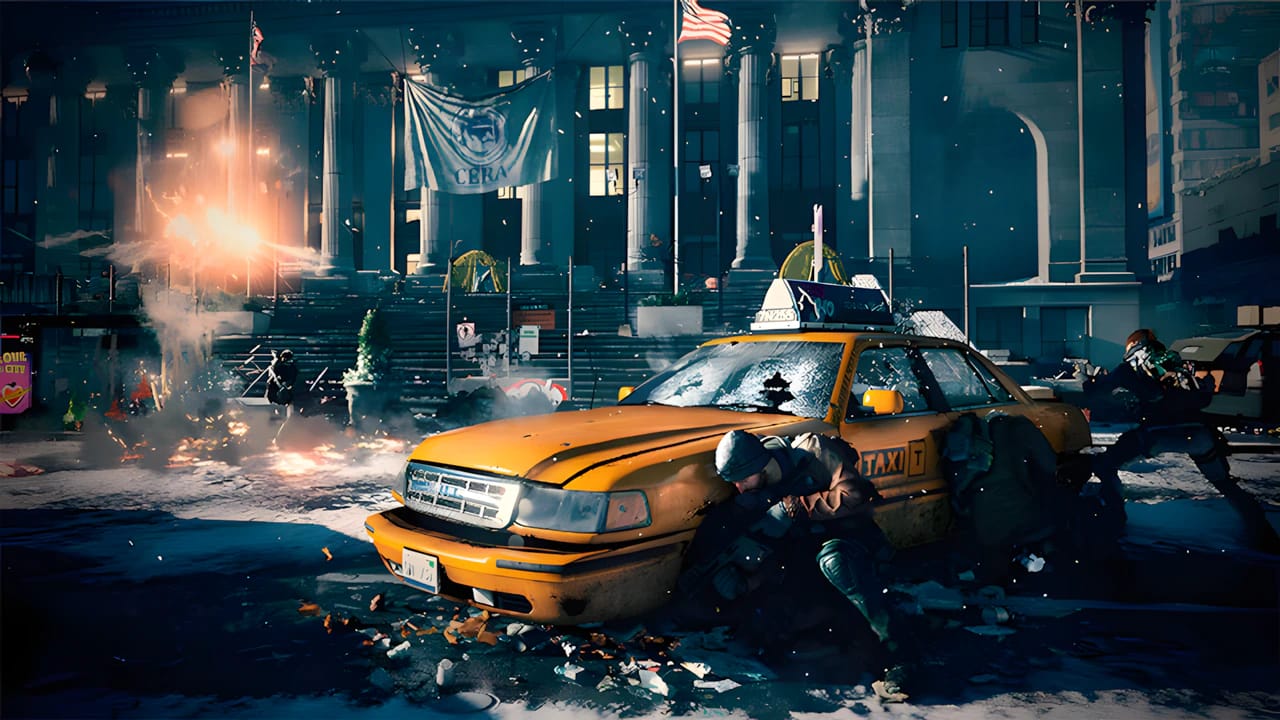
The world design encourages players to pay attention to their surroundings. Many locations contain small details that reveal the consequences of the outbreak, making the city feel more like a place that experienced a real disaster rather than just a simple battlefield.
Although the map follows the structure of an open-world looter shooter, the attention to environmental details helps The Division stand out. New York is not only the location where events happen; it becomes an important part of the experience.
The atmosphere of New York was one of the things that impressed me the most. Exploring streets covered in snow, abandoned buildings, and areas affected by the outbreak created a feeling of isolation that made the world more immersive.
Gameplay, Shooting Mechanics, and Cover System
The core gameplay of Tom Clancy’s The Division combines third-person shooting mechanics with tactical movement and RPG progression. Unlike traditional shooters where a few accurate shots can eliminate enemies, the title follows a looter shooter structure, where equipment, character level, and build choices directly influence combat effectiveness.
The shooting mechanics stand out as one of the production’s strongest aspects. Weapons have different characteristics, and each encounter requires players to manage positioning, ammunition, and abilities. Enemies are designed to encourage tactical thinking, especially on higher difficulties, where rushing into combat can quickly lead to failure.
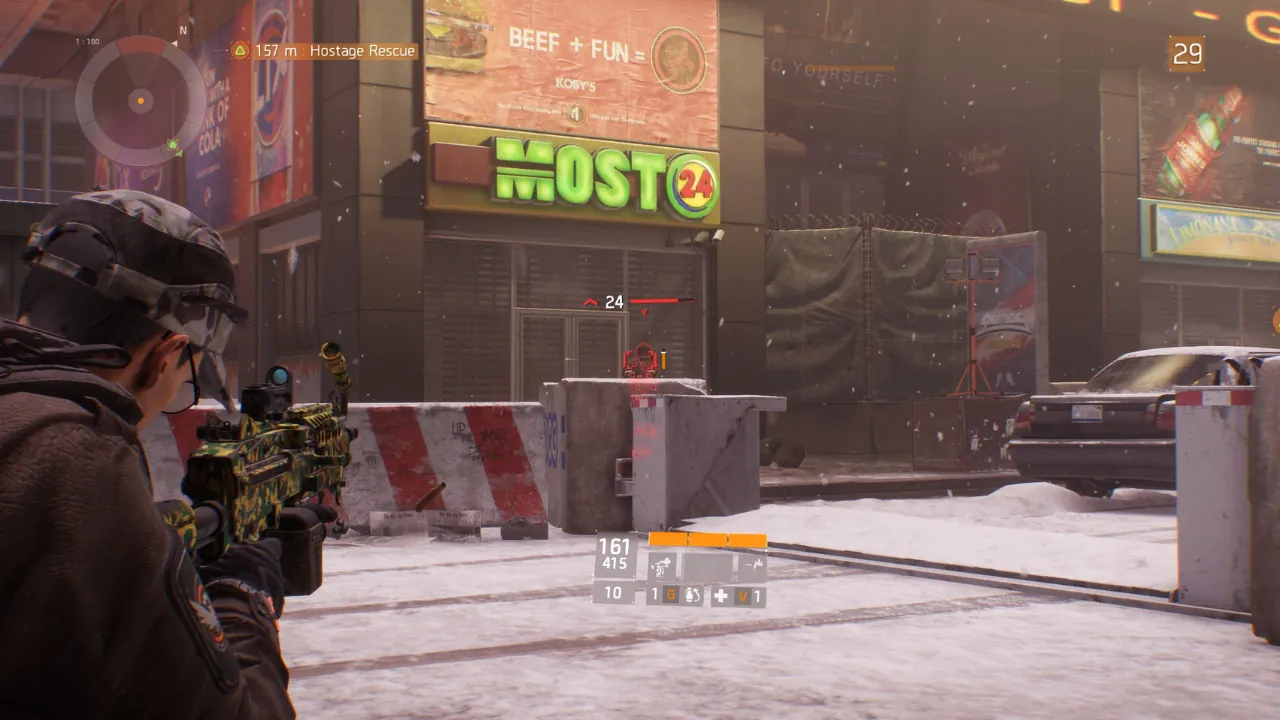
The cover system plays a central role in every battle. You can quickly move between walls, vehicles, and other objects by aiming toward a location and activating the cover action. This mechanic makes firefights more dynamic, letting you reposition yourself while avoiding enemy attacks.
Firefights also benefit from enemy variety and faction differences. Each group has distinct behaviors and approaches, forcing players to adapt instead of using the same strategy in every encounter.
That said, because of the RPG elements, some players may find the combat unusual at first. Enemies can absorb a large amount of damage depending on their level and equipment, creating a different experience from more realistic tactical shooters.
All in all, The Division’s gameplay successfully combines tactical shooting with RPG mechanics. The cover system feels responsive, and the combat encourages players to think about positioning, gear, and strategy rather than simply aiming and shooting.
I really enjoyed the combat system because it combines strategy with the satisfaction of improving your character. The cover mechanics work very well, and every fight feels more engaging when you need to think about your position instead of just running forward.
Character Progression, Loot, and RPG Elements
A defining trait of Tom Clancy’s The Division is its combination of third-person shooting with RPG progression and loot mechanics. Rather than simply completing missions and moving through a linear campaign, players are constantly encouraged to improve their character by finding better weapons, equipment, and abilities.
The progression system is based on gaining experience, increasing your level, and collecting stronger gear. As players advance through the title, they unlock new areas, face more challenging enemies, and obtain equipment with better attributes.
The loot system follows the classic “loot and shoot” formula, where almost every activity can reward you with new items. Weapons and gear have different rarities and statistics, encouraging you to compare equipment and create builds that match your preferred playstyle.
This system creates a gameplay loop similar to titles like Destiny 2, where players repeatedly complete activities to become stronger and search for better rewards. The constant improvement of the character is a major reason why they keep coming back after completing missions.
Still, this progression model may not appeal to everyone. Since stronger enemies require better equipment, some players may feel that repeating activities becomes necessary rather than optional. The focus on numbers, levels, and gear can also reduce the feeling of realism expected from a Tom Clancy title.
Despite these limitations, the RPG elements work well with the game’s structure. The ability to customize your agent and gradually become stronger gives a clear sense of progression and makes each new piece of equipment feel meaningful.
The progression system was one of the aspects that kept me playing. I enjoyed the feeling of improving my agent and finding better equipment, although repeating missions to obtain stronger gear can become tiring after a while. One thing that bothered me was that leveling up becomes increasingly slower as you progress, requiring more time and effort to reach the next tier.
Weapons, Skills, Talents, and Build Customization
Another highlight of Tom Clancy’s The Division is the amount of customization available for players who want to improve their agents. The title combines weapons, armor, skills, talents, and perks, allowing different approaches depending on each player’s preferred playstyle.
The weapon system is one of the foundations of the gameplay. Players can use different categories of firearms, such as assault rifles, submachine guns, shotguns, marksman rifles, and sniper rifles. Each weapon has its own statistics, including damage, accuracy, stability, and other attributes that influence combat performance.
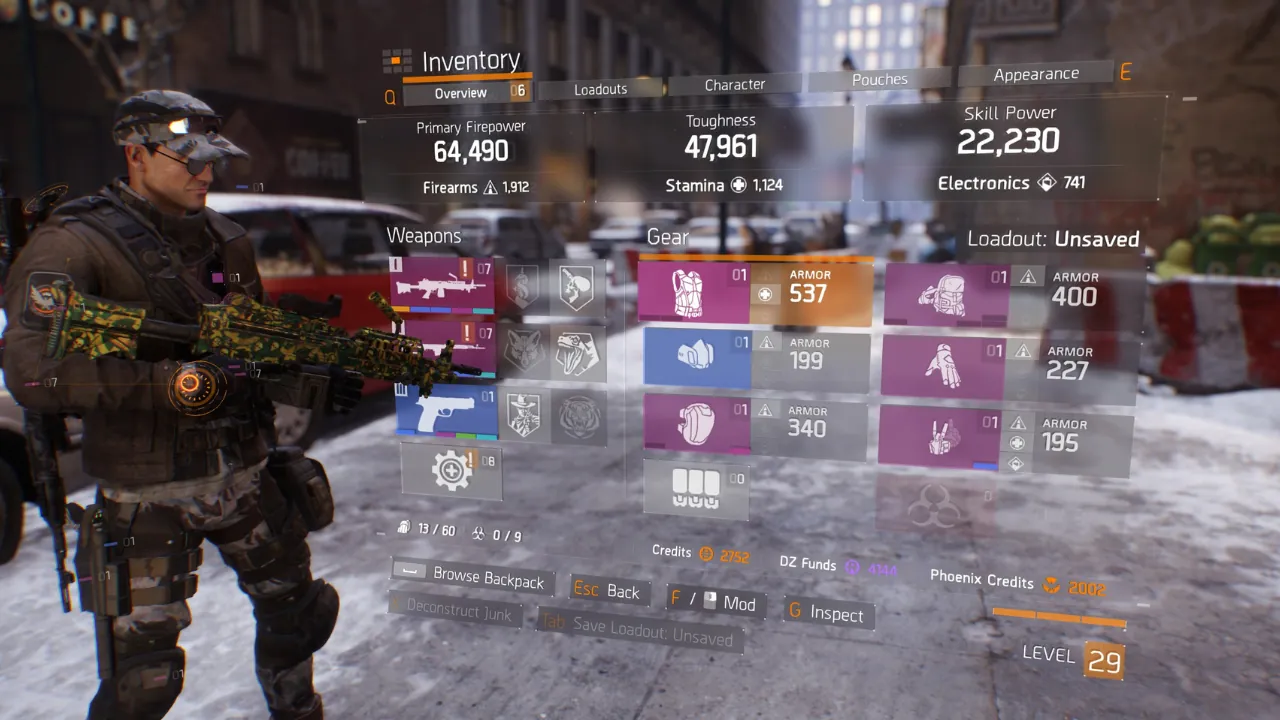
Weapons and armor pieces can also be upgraded through modifications and better attachments. As players progress, they find gear with higher values and different bonuses, encouraging them to constantly replace old equipment with stronger alternatives. This creates the constant search for better loot that defines the looter shooter genre.
The skill system adds more strategy to combat. Players can unlock abilities from different categories, such as:
- Medical Skills: focused on healing and support, helping agents recover health or assist teammates.
- Tech Skills: provide offensive tools, including devices like turrets and explosives that help control the battlefield.
- Security Skills: focus on protection and survival, giving players defensive options during difficult encounters.
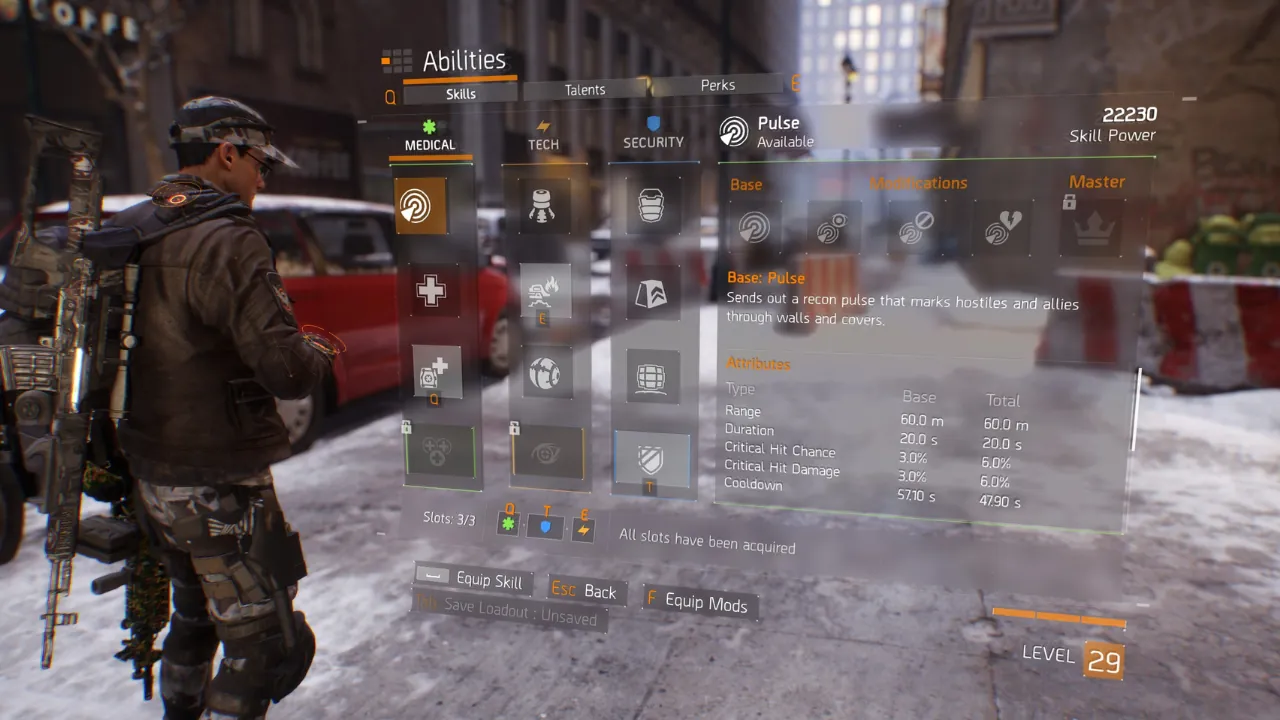
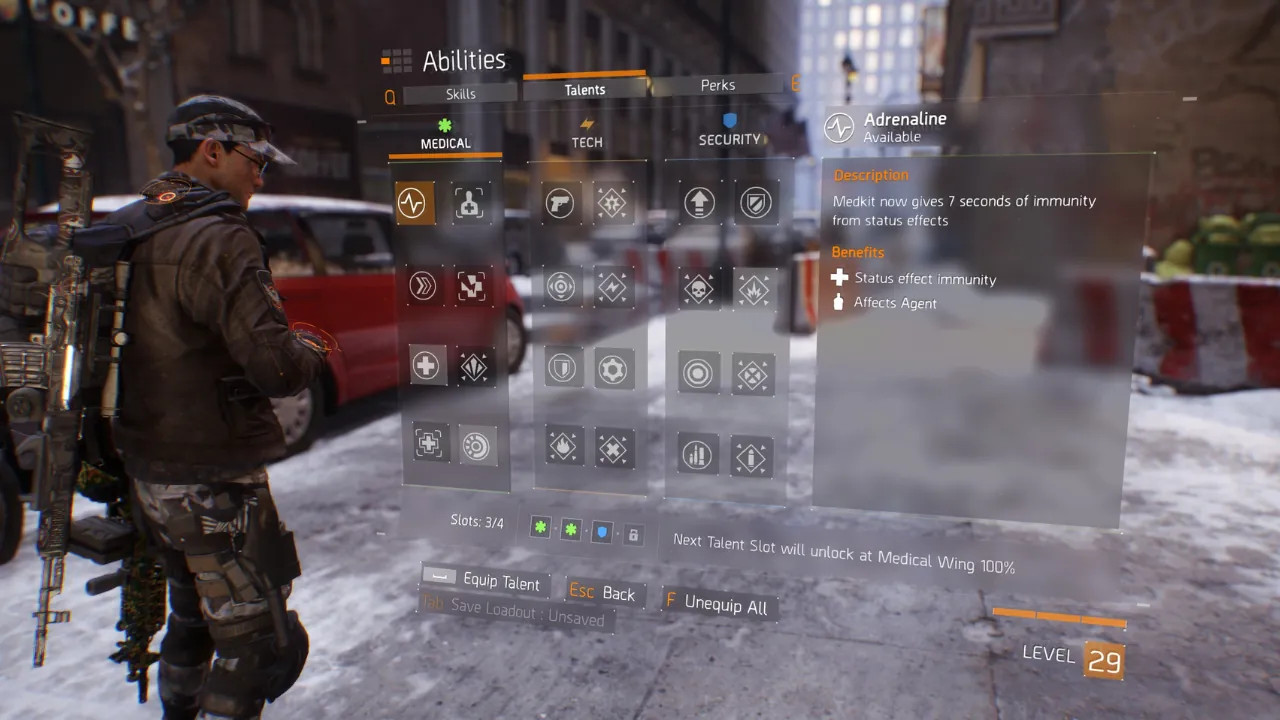
Besides skills, the title also includes talents, which provide additional bonuses and effects that activate under specific conditions. These talents can influence weapon performance, skill effectiveness, or defensive capabilities, making equipment choices more important when creating a build.
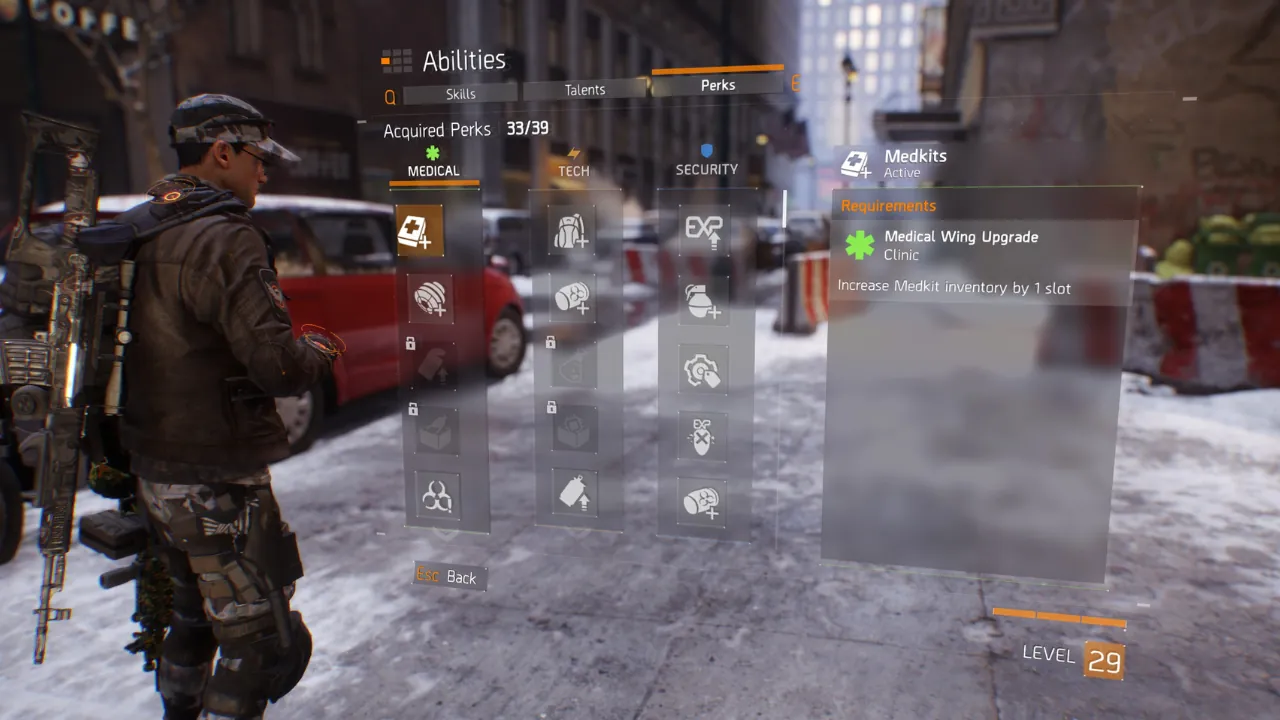
The perks system works as another layer of character development, unlocking passive improvements and bonuses that enhance the agent over time. Unlike skills, which are actively used during combat, perks provide permanent advantages that support progression.
Together, weapons, armor, skills, talents, and perks create a system where you can customize your agent according to your preferred strategy. One build might focus on dealing high damage, another on defense, and another on supporting teammates during cooperative missions.
On the downside, the amount of customization can be overwhelming at first. With many statistics, equipment attributes, and different combinations available, understanding which options are actually useful requires experimentation.
I enjoyed experimenting with different weapons, skills, and equipment combinations because they gave me more freedom to develop my own playstyle. The feeling of finding better gear and improving my agent was one of the reasons I kept playing, although understanding all the available options took some time.
Missions, Side Activities, and Content Variety
Tom Clancy’s The Division offers a variety of activities spread throughout its version of New York City, including main quests, side missions, encounters, and optional objectives. These activities are designed to encourage exploration while helping players gain experience, resources, and better equipment.
The main missions are the highlight of the campaign, usually featuring larger areas, stronger enemies, and more structured objectives. They help advance the plot while introducing different combat situations, requiring players to use their weapons, skills, and positioning effectively.
That said, the side activities are where the title starts to show some limitations. Many optional tasks follow similar structures, such as rescuing civilians, eliminating enemies, or defending specific locations. Although they help with progression and provide additional rewards, they can become repetitive after several hours.
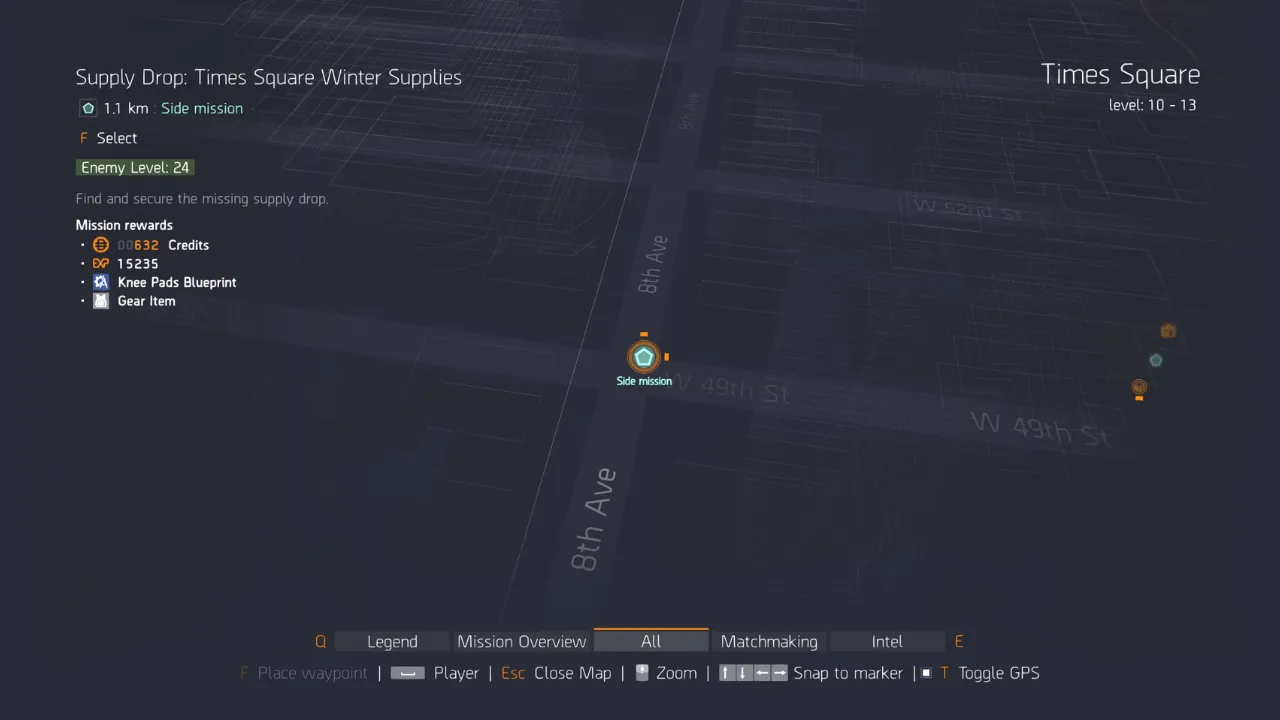
This repetition is partly connected to the title’s looter shooter formula. Since players are constantly searching for better equipment and experience points, repeating activities is expected. Even so, the lack of significant variety can make some moments feel more like a grind rather than a new challenge.
The production also includes different enemy factions, which helps add some variation to encounters. Each group has its own characteristics and behaviors, making encounters slightly different depending on the situation.
All in all, The Division’s mission structure works well during the main campaign, but the side content could have offered more variety. It provides enough activities to keep players busy, although repetition becomes noticeable over time.
The main missions were enjoyable at first, but after several hours, the lack of variety became one of the biggest problems of the experience. They became extremely repetitive, with many objectives following the same structure: entering an area, defeating groups of enemies, rescuing civilians, or defending a specific location.
While this repetition is partially expected in a looter shooter, since players are encouraged to replay activities to obtain better gear, the limited variety made some parts of the campaign feel more like a grind than a new challenge. Many times, I felt like I was completing the same type of mission I had already played before, only in a different location.
Difficulty Balance and Overall Challenge
The difficulty balance in Tom Clancy’s The Division shifts significantly depending on the challenge level selected. During the standard campaign, the missions usually provide a balanced experience, requiring players to use cover, manage abilities, and improve their equipment to progress.
That said, when raising the difficulty, the experience can become much more demanding. Stronger enemies deal more damage and can withstand significantly more attacks, making some missions extremely difficult to complete, especially when playing alone.
The higher difficulty levels encourage players to optimize their builds, upgrade their gear, and coordinate strategies with teammates. While this creates a greater challenge for experienced players, the gap between normal and higher difficulties can sometimes feel too drastic.
Rather than only requiring better tactics, some encounters may feel difficult mainly because enemies become much harder to defeat. This can make certain missions feel frustrating rather than rewarding, especially when the player’s equipment is not properly optimized.
When raising the difficulty, I felt that some encounters became almost impossible to complete without better equipment or a coordinated team. The challenge can be enjoyable for players looking for a harder experience, but the jump in difficulty sometimes feels too punishing.
Graphics, Atmosphere, and Snowdrop Engine
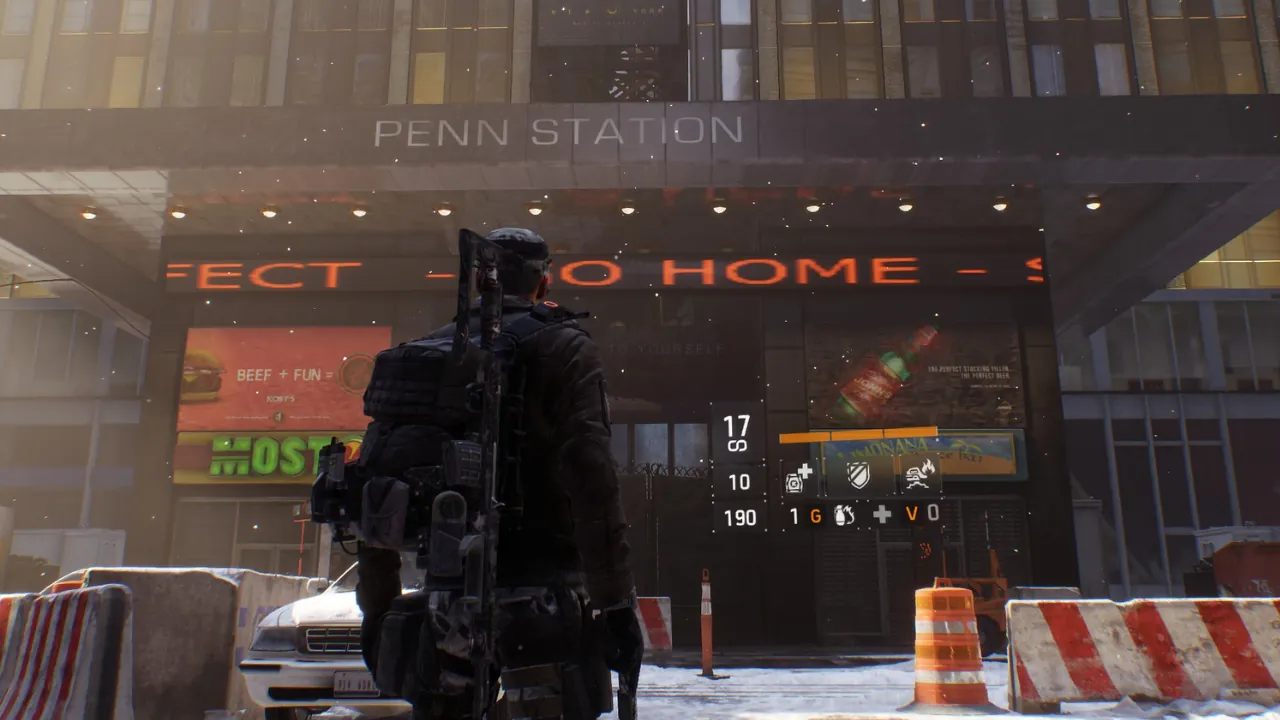
Another major strength of Tom Clancy’s The Division is its visual presentation and atmosphere. Developed using the Snowdrop Engine, the title delivers a detailed version of New York City, filled with abandoned streets, destroyed buildings, and environmental details that reinforce the feeling of a metropolis affected by a major disaster.
The winter setting plays an important role in the game’s identity. The snow-covered streets, cold atmosphere, and limited visibility create a sense of isolation that perfectly matches the post-apocalyptic scenario. Even simple locations feel more immersive because of the attention given to small details, such as abandoned vehicles, damaged stores, and signs of the outbreak.
The lighting system is another highlight. Different weather conditions and times of day change the way the city feels, making exploration more interesting. The contrast between empty streets, emergency areas, and conflict zones helps build a believable atmosphere throughout the campaign.
For a title released in 2016, The Division’s graphics have aged surprisingly well. While some textures and character models may show their age compared to modern releases, the art direction and environmental design continue to make it visually impressive.
The Snowdrop Engine was especially important in shaping this experience. The technology allowed Ubisoft to build a detailed open-world environment with realistic effects, particle systems, and a convincing representation of a city in decline.
Game Length and Replay Value
Tom Clancy’s The Division offers a considerable amount of content, especially for players who enjoy progression-based titles. The main campaign takes around 20 to 25 hours to complete, depending on how much players explore the map, complete side activities, and improve their character along the way.
After finishing the main story, the replay value is mainly based on the looter shooter structure. Rather than experiencing a completely new campaign, players return to activities to obtain better equipment, improve their builds, and prepare for more challenging content.
The endgame is focused on grinding for stronger gear, completing harder missions, and testing optimized builds. At this stage, players will face tougher enemies, fail more often, and need better equipment and strategies to overcome the increased difficulty.
The Dark Zone also becomes an important part of the post-game experience, offering a different type of challenge by mixing PvE and PvP elements. It provides another reason for players to continue improving their agents and searching for valuable equipment.
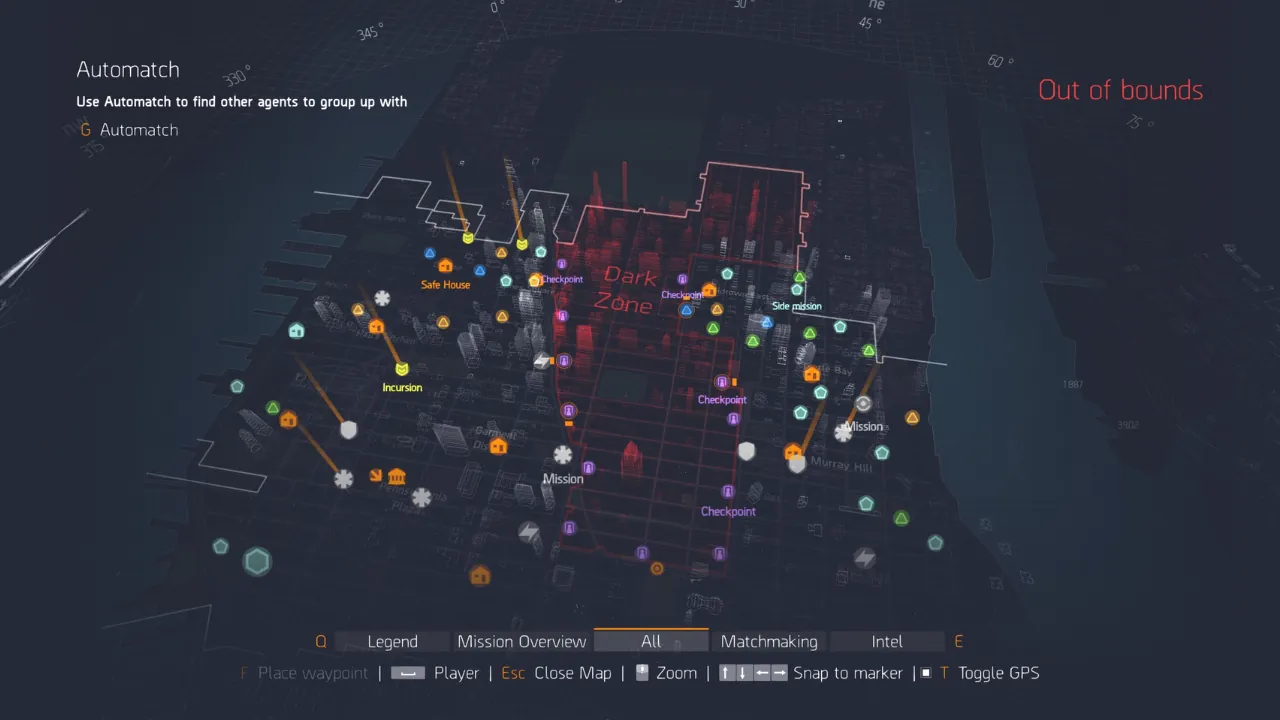
On the other hand, the normal missions become less rewarding after reaching higher levels. Since they provide limited experience and weaker rewards, players are encouraged to move toward harder activities, replay more challenging missions, and participate in endgame content to continue progressing.
The replay value of The Division is mostly tied to grinding. After completing the campaign, the main goal becomes farming better equipment, replaying much harder missions, and improving your build. While this progression loop can be enjoyable, it may become tiring for players who are not interested in constantly repeating activities for stronger gear.
Is Tom Clancy’s The Division Worth Playing Today?
Tom Clancy’s The Division is still an interesting experience for players who enjoy looter shooters, tactical combat, and RPG progression systems. Even years after its release, the title stands out because of its detailed version of New York City, satisfying combat mechanics, and the feeling of constantly improving your agent.
The combination of shooting, character progression, skills, and equipment customization remains one of the production’s strongest aspects. Building your character, finding better gear, and adapting your playstyle can still provide an enjoyable gameplay loop, especially for players who like titles focused on long-term progression.
That said, newcomers should be aware of some limitations. The mission structure can become extremely repetitive, and the endgame relies heavily on grinding for better equipment, replaying harder activities, and improving builds. Players who do not enjoy this type of progression system may find the experience exhausting after completing the main campaign.
The experience is also more enjoyable when played with friends. While going solo is completely possible, the cooperative gameplay makes difficult missions more manageable and adds another layer of fun to the combat.
All in all, The Division is worth playing today, especially for fans of Destiny 2, looter shooters, and RPG-based progression systems. It is not a perfect title, but its atmosphere, combat, and customization options still make it a memorable experience.
I believe The Division is still worth playing today, especially for players who enjoy improving their character and searching for better equipment. The atmosphere of New York, the combat system, and the progression loop are its biggest strengths. That said, the repetitive missions and heavy focus on grinding may discourage players who are looking for a more varied experience.
Where can I buy the game?
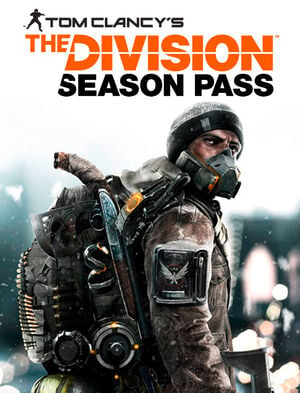
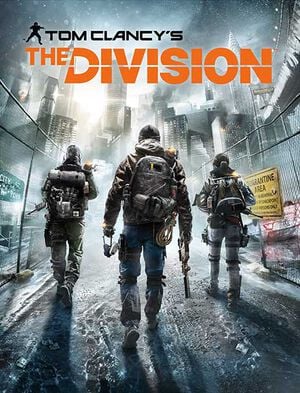
You can purchase the game through my links below, without changing the final price. This way, you’ll be financially supporting my work and encouraging me to bring more reviews like this.


Conclusion
Tom Clancy’s The Division is a solid choice for players who enjoy the looter shooter genre, combining tactical combat, RPG progression, cooperative gameplay, and a memorable post-apocalyptic setting. Despite its repetitive mission structure and heavy focus on grinding, it still delivers a satisfying experience through its combat mechanics, customization options, and detailed version of New York City.
The progression system, loot mechanics, and cooperative features are the main reasons to keep playing, especially for those who enjoy improving their character and creating different builds. While it may not appeal to players looking for a shorter and more varied campaign, The Division remains one of Ubisoft’s most interesting multiplayer-focused titles.
If you’re interested in watching some gameplay, access my full YouTube playlist.
