

Table of Contents
Battlefield V Review explores DICE’s first-person shooter set during World War II, bringing players into one of the most devastating conflicts in history through intense combat, immersive environments, and cinematic War Stories.
Unlike many shooters focused purely on fast-paced action, Battlefield V attempts to create a deeper battlefield experience by combining realistic combat, large-scale battles, vehicle warfare, environmental destruction, and detailed audiovisual presentation.
The game features several campaigns inspired by real events from World War II, taking players across different locations and perspectives. Alongside its single-player content, the multiplayer mode remains one of the game’s main attractions, offering massive battles where infantry, tanks, aircraft, and environmental destruction work together to create unpredictable combat situations.
One of the aspects that immediately stands out is how DICE uses the Frostbite Engine to create a visually impressive battlefield. From collapsing structures and detailed environments to realistic sound design, the game delivers a strong sense of immersion that enhances every encounter.
If you are interested in exploring another perspective of World War I, you can also read my Battlefield 1 Review, where I analyze DICE’s previous entry in the series, its campaign, gameplay, atmosphere, and historical approach.
Throughout this review, I will analyze Battlefield V’s gameplay mechanics, destruction system, graphics, performance, sound design, campaign, historical approach, replay value, and whether the game is still worth playing today.
Gameplay and Combat Mechanics
Battlefield V delivers a combat system built around an immersive World War II setting. While the game is also known for its multiplayer component, the single-player campaign offers a variety of combat situations through its different War Stories, placing players in unique locations and scenarios.
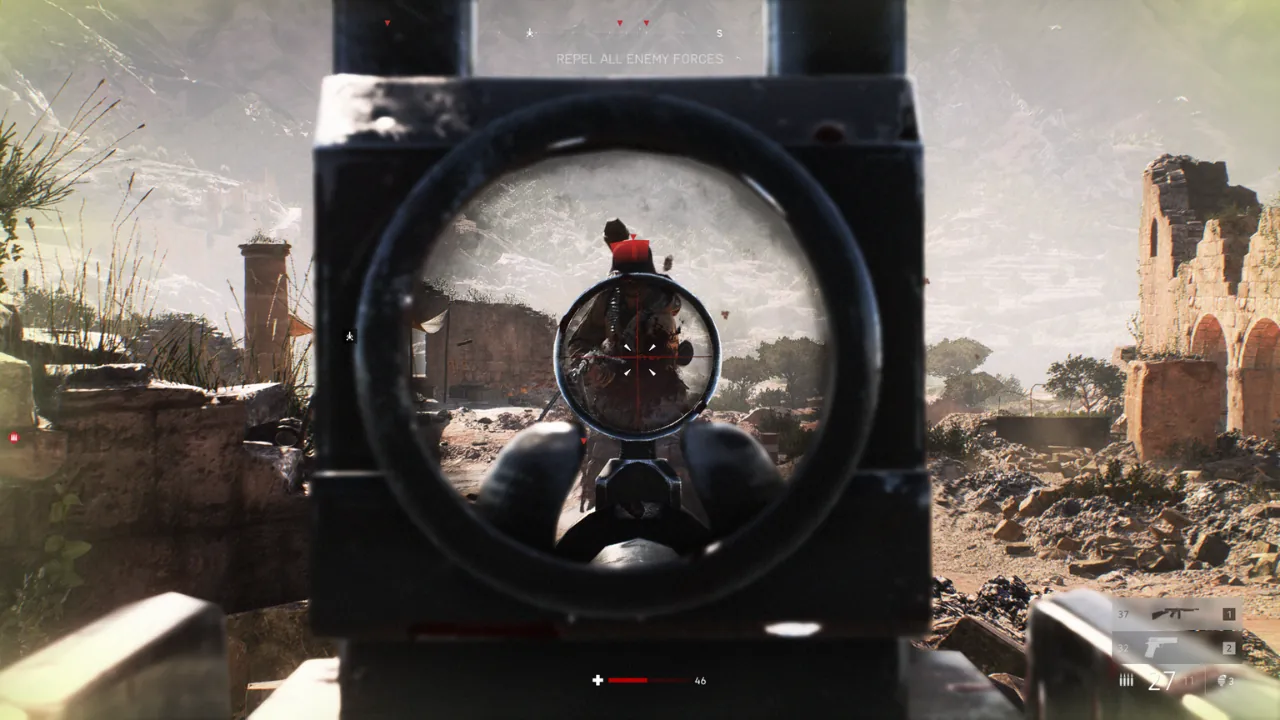
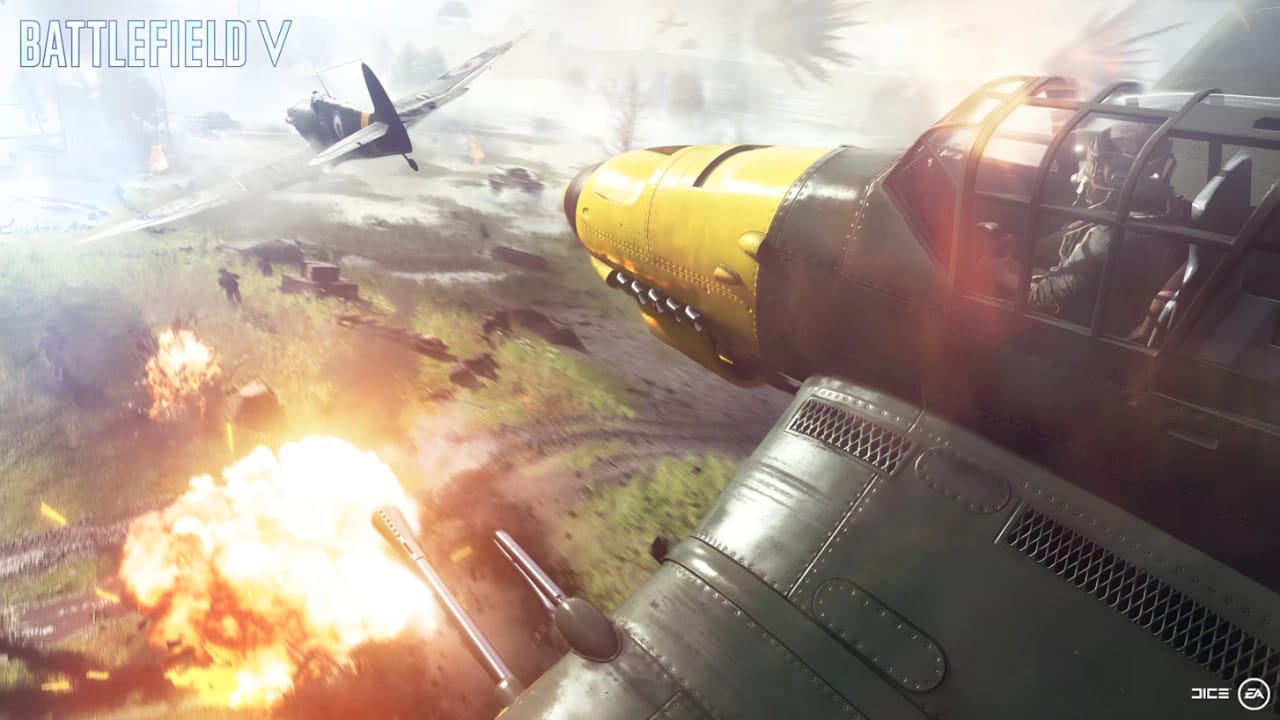
The gameplay combines traditional infantry combat with different types of weapons, vehicles, and tactical approaches. Players can use assault rifles, sniper weapons, explosives, and melee attacks depending on the situation, while also having access to tanks and aircraft during specific missions.
One of the strongest aspects of the combat is how the game builds a sense of scale. Battles often feel chaotic, with explosions, gunfire, and environmental destruction happening around the player. This mix of visual effects, sound design, and battlefield atmosphere helps create the feeling of being part of a larger conflict.
The campaign also encourages players to approach encounters in different ways. Some missions allow more freedom, giving players the option to move carefully, use stealth, or engage enemies directly. This adds some variety compared to a completely linear shooting experience.
The artificial intelligence can vary depending on the situation. In some moments, enemy soldiers provide a decent challenge and react well to the player’s actions, while in others, their behavior can feel predictable.
Although the single-player content is shorter compared to other entries in the franchise, the combat mechanics remain one of the game’s strongest elements. The blend of realistic weapons, vehicles, and immersive environments helps Battlefield V maintain the feeling of a large-scale war.
During my time with Battlefield V’s single-player campaign, I enjoyed the combat because the weapons and environments produced a strong feeling of being in a real battlefield. The mix of infantry combat, vehicles, and destruction made each mission feel more intense.
Destruction System and Battlefield Immersion
One of the defining elements of Battlefield V is its destruction system, which plays an important role in shaping a more dynamic battlefield. Buildings, structures, and defensive positions can be damaged or completely leveled, changing the way players approach combat situations.
Unlike traditional shooters where environments often stay static, the terrain in Battlefield V feels constantly reshaped by the conflict. A safe position behind a wall can quickly become exposed after an explosion, forcing players to adapt and find new strategies during combat.
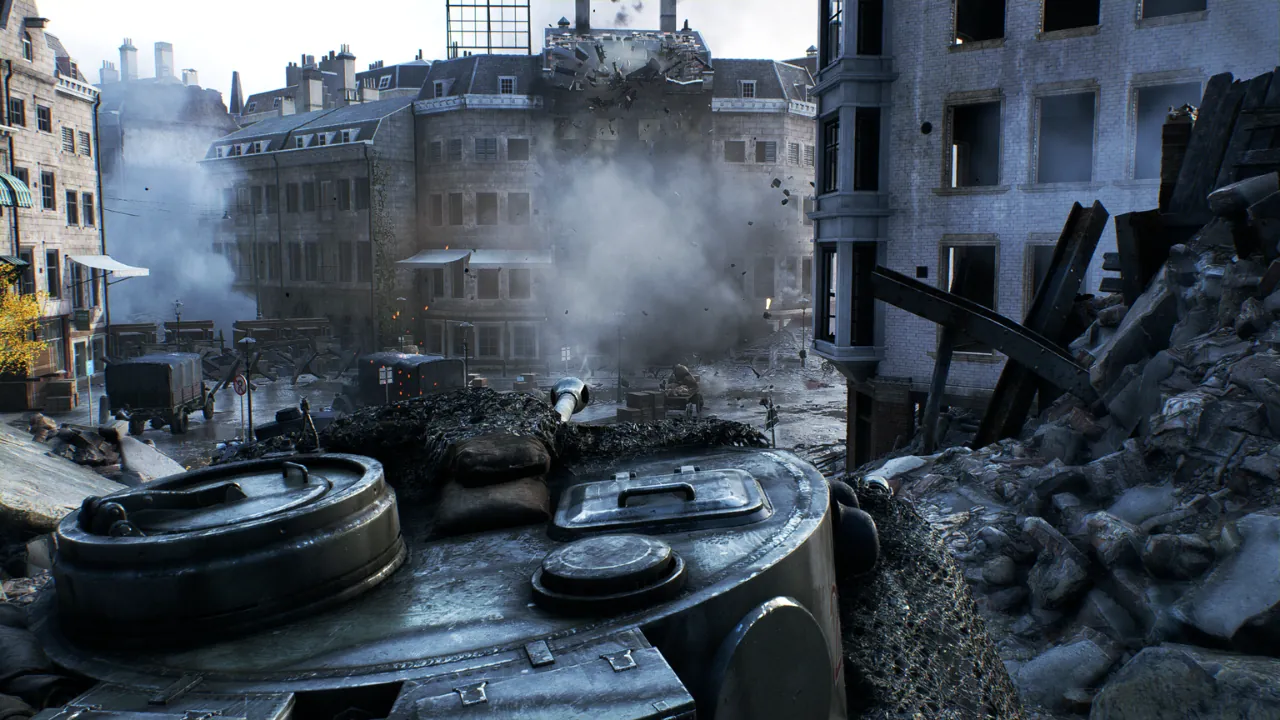
The destruction mechanics also contribute heavily to the game’s immersion. Explosions, crumbling structures, smoke effects, and debris create the feeling of being inside an active war zone. Combined with the game’s detailed environments and realistic sound design, these elements make battles feel more intense and unpredictable.
The system is especially effective because destruction is not only a visual feature. It can influence gameplay by removing cover, opening new paths, and altering the layout of certain areas. This creates moments where the battlefield feels different depending on how the fight develops.
However, the level of destructibility is not always completely consistent. Some objects and structures can be damaged, while others remain untouched, which can slightly reduce the feeling of a fully interactive environment.
Even with these limitations, the destruction system remains one of the strongest aspects of Battlefield V. It helps set the game apart from other first-person shooters by making the battlefield feel like a living space that changes throughout the fight.
In my opinion, the environmental destruction system is one of the features that makes Battlefield V stand out the most. The ability to demolish structures and reshape the battlefield makes the game feel much closer to the reality of what happened during World War II, which is fantastic for immersion.
Watching buildings collapse, defensive positions get wiped out, and the surroundings shift during combat creates a much stronger feeling of being inside a real battlefield. This is one of the aspects that makes the experience more memorable compared to many other first-person shooters.
The destruction system can have a small impact on PC performance, especially on lower-end hardware, but in my experience, it was nothing too serious or that significantly affected the gameplay.
Graphics, Frostbite Engine, and Visual Presentation

Battlefield V is one of the most visually striking entries in the franchise, mainly due to the power of the Frostbite Engine. The technology allows DICE to build highly detailed environments, realistic lighting effects, and eye-catching visual effects that help bring the World War II setting to life.
The game’s environments are one of its biggest highlights. From snowy landscapes to ruined villages and battlefields filled with smoke and debris, each location feels carefully designed to create a strong sense of immersion. The attention to detail in objects, textures, and environmental effects makes exploration during the campaign a memorable experience.
The lighting system also contributes significantly to the game’s presentation. Dynamic weather effects, realistic shadows, explosions, and smoke create a cinematic atmosphere during combat. These elements work together with the destruction system, making battles feel more chaotic and visually striking.
Another important feature is the support for advanced graphical technologies, such as real-time ray tracing on compatible hardware. This improves reflections and lighting accuracy, providing an even more realistic image quality. However, these features require more powerful hardware and can significantly affect performance.
Even years after its release, Battlefield V remains a visually striking game. While some character models and animations may not match the newest titles, the overall art direction, environmental design, and technical presentation still hold up very well.
Performance and Optimization
Battlefield V delivers strong visual quality, but its advanced graphical features also make it a demanding game, especially when using technologies such as real-time ray tracing. The Frostbite Engine provides detailed environments, realistic lighting, and complex destruction effects, but these improvements require more processing power.
On PC, performance can vary significantly depending on the hardware configuration and graphical settings. Features like ray tracing boost visual fidelity by improving reflections and lighting, but they can also lower frame rates during more demanding moments.
Despite this, the game offers good optimization overall. The combination of graphical settings and technologies such as DLSS allows players with compatible hardware to achieve a better balance between image quality and performance.
The heaviest moments usually happen during large-scale battles, where multiple effects occur simultaneously, including explosions, vehicle combat, smoke effects, and environmental destruction. These situations naturally require more from the system compared to smaller encounters.
Sound Design and Audio Experience
The sound design is one of the strongest elements of Battlefield V, playing an important role in shaping a more immersive battlefield atmosphere. The combination of weapon sounds, explosions, vehicles, and environmental effects helps make each encounter feel more intense and realistic.
Each weapon has its own distinct audio identity, allowing players to recognize different firearms based on their sound. The impact of bullets, the reload animations, and the noise of nearby explosions contribute to a stronger feeling of being inside an active war zone.
The audio experience becomes even more striking during larger battles. The sound of tanks rolling across the battlefield, aircraft flying overhead, and explosions happening around the player creates a sense of scale that few first-person shooters achieve.
The soundtrack also supports the emotional tone of the campaign, helping build tension during important moments while maintaining the atmosphere expected from a World War II setting.
Together with the game’s visuals and destruction system, the audio design makes the battlefield feel more alive. The sounds are not just there to accompany the action; they help convey the chaos and intensity of the conflict.
Campaign and War Stories
The single-player campaign of Battlefield V is divided into different War Stories, each focusing on a specific character, location, and moment of World War II. Instead of telling one continuous story, the game presents several smaller narratives that explore different perspectives of the conflict.
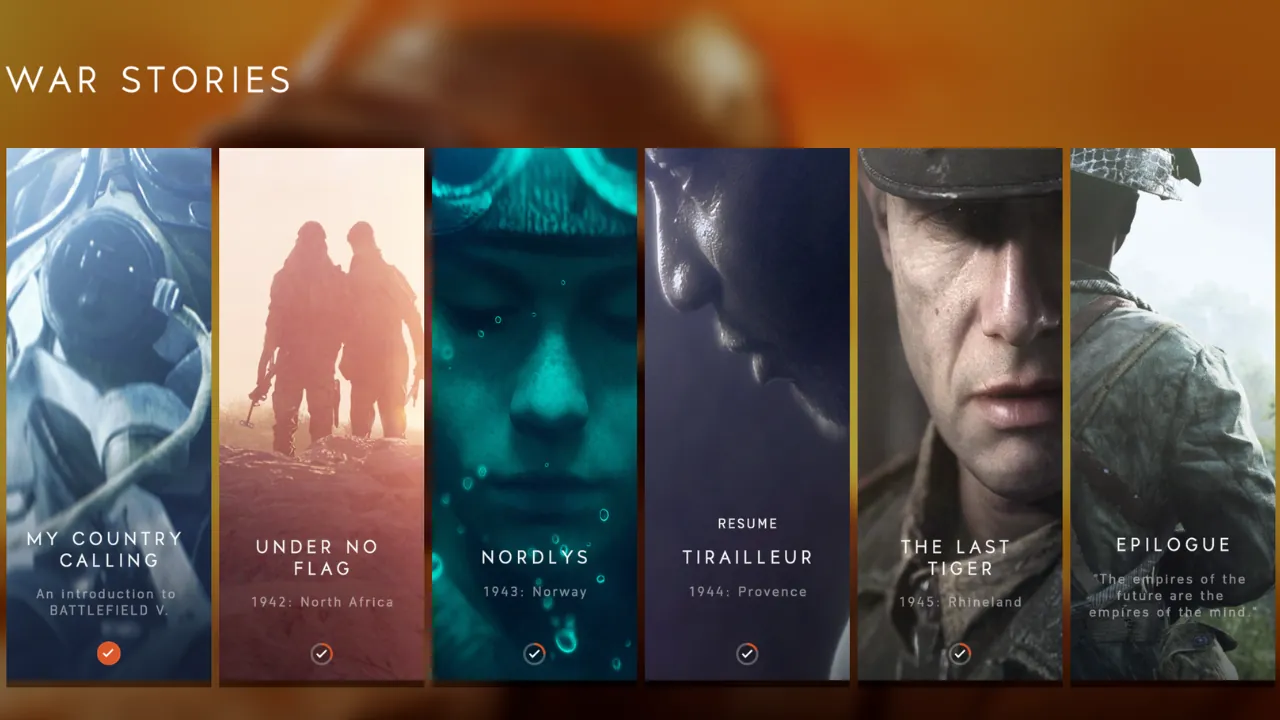
This approach allows the game to show that World War II was not defined by a single front. Each story takes players to different regions and situations, highlighting how the war affected people across various parts of the world.
The campaign focuses on personal experiences during the conflict, showing the struggles, sacrifices, and challenges faced by soldiers in different scenarios. By presenting these individual stories, the game builds a more human perspective of a global event.
Although the campaign is shorter compared to some previous entries in the franchise, the War Stories format helps maintain variety. Each chapter introduces new environments, objectives, and gameplay situations, preventing the entire experience from feeling repetitive.
However, some players may feel that the shorter length limits the depth of these narratives. The stories often introduce interesting characters and historical moments but sometimes end before they can be fully explored.
In my opinion, each War Story is essential because it helps players understand how different places around the world experienced World War II during the same period. The campaign is not only about battles, but also about showing the different events, conflicts, and viewpoints that existed across the world.
I believe this approach is one of the most important aspects of Battlefield V, because it connects the player with different locations and situations from the same historical period. Learning about these different moments through a game makes the experience more meaningful and helps demonstrate the global scale of the war.
Historical Accuracy and Creative Choices
Battlefield V attempts to represent different aspects of World War II through its War Stories, combining historical references with fictionalized narratives created specifically for the game. Instead of presenting a complete historical documentary, the campaign uses real events, locations, military equipment, and conflicts as inspiration while adapting them into interactive experiences.
Each War Story focuses on a different perspective of the war, exploring specific regions and situations that occurred during the conflict. The game presents scenarios inspired by real operations and historical moments, while introducing fictional characters to guide the player’s experience.
The use of fictional protagonists allows DICE to create more personal narratives while still connecting them to the broader context of World War II. This approach gives the campaign more freedom in storytelling, but it also means that some elements are adapted for dramatic purposes rather than being completely faithful representations.
Regarding military equipment and environments, Battlefield V features weapons, vehicles, uniforms, and locations based on the historical period. However, some artistic decisions were made to improve gameplay variety and visual presentation, meaning that certain details do not always perfectly reflect historical accuracy.
This balance between authenticity and creative freedom is common in historical games. Battlefield V uses history as a foundation, while making adjustments to deliver a more engaging and accessible experience for players.
Game Length and Replay Value
The length of Battlefield V’s single-player campaign is relatively short compared to some other first-person shooters. Instead of offering a long traditional campaign, the game focuses on a collection of War Stories, each providing a different perspective of World War II.
According to HowLongToBeat, the main campaign can be completed in around 6 hours, while players who explore more content may spend additional time completing all available stories. However, the total playtime can vary depending on the chosen difficulty and the player’s approach.
The replay value of the campaign is mainly tied to revisiting the different War Stories, trying higher difficulty levels, and exploring the historical scenarios presented throughout the game. Unlike multiplayer-focused titles, the single-player content does not have a large amount of additional activities after completion.
The difficulty level can also influence the total duration. Playing on higher difficulties requires more caution, better positioning, and a more strategic approach during combat encounters.
I completed Battlefield V’s campaign in approximately 11 hours. I played on the hardest difficulty available, which raised the challenge and caused me to die several times during certain missions.
The extra time was not caused by a long campaign, but by the difficulty level demanding more careful approaches during combat. Overall, I consider the length reasonable for a story-focused first-person shooter, although players looking for a much longer single-player experience may find the campaign shorter than expected.
For me, the biggest value of replaying the campaign comes from revisiting the different War Stories and experiencing the various locations and historical perspectives presented throughout the game.
Strengths and Weaknesses
After analyzing the main aspects of Battlefield V, it is clear that the game has several strengths that contribute to its immersive World War II experience, while also presenting some limitations that affect the overall quality of the campaign.
The main strengths of Battlefield V are:
- Immersive battlefield atmosphere
The combination of detailed environments, realistic sound design, destruction mechanics, and visual effects creates a convincing representation of a World War II battlefield. - Frostbite Engine and visual quality
The game remains visually striking thanks to its detailed environments, lighting effects, animations, and realistic presentation. - Sound design
Weapon sounds, explosions, vehicles, and spatial audio contribute significantly to immersion, especially when playing with headphones. - Different perspectives of World War II
The War Stories format allows players to explore different locations and situations from the same historical period, showing the global scale of the conflict. - Satisfying combat mechanics
The combination of weapons, vehicles, destruction, and large-scale battles creates an engaging shooting experience.
The main weaknesses of Battlefield V are:
- Some historical adaptations
While inspired by real events, some creative choices were made to adapt the experience for gameplay, which may not satisfy players looking for complete historical accuracy. - Short campaign length
The War Stories provide interesting perspectives, but the campaign can feel brief compared to other games in the franchise. - Limited narrative depth
Some stories introduce interesting characters and situations but do not always have enough time to fully develop their narratives. - Performance requirements
Advanced graphical features, such as ray tracing, require powerful hardware and can impact performance during more demanding scenes.
Is Battlefield V Worth Playing Today?
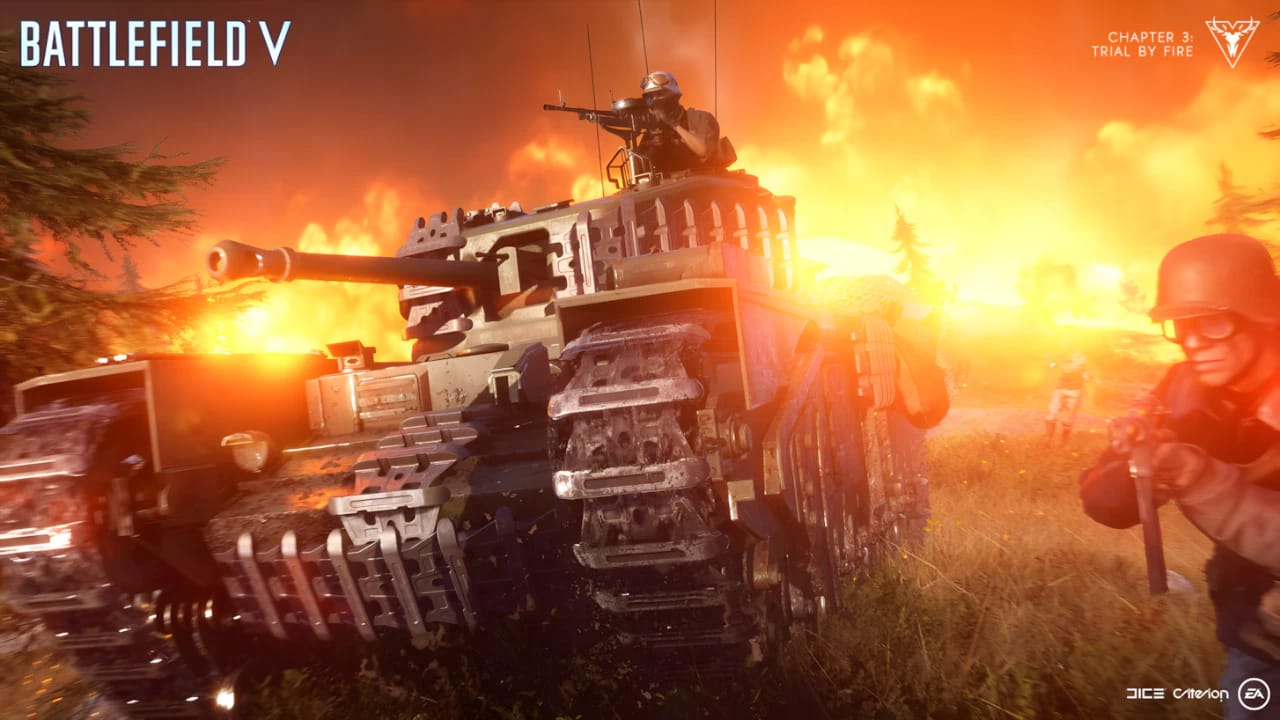
Years after its release, Battlefield V remains an interesting option for players looking for an immersive World War II shooter. While the game had a controversial launch and some limitations in its campaign, many of its strongest aspects continue to stand out.
The combination of the Frostbite Engine, realistic sound design, environmental destruction, and large-scale combat still makes the game visually and technically impressive. The atmosphere created by the detailed environments and intense battles is one of the main reasons why the experience remains memorable.
For players interested in the single-player campaign, the War Stories offer a different approach by exploring multiple perspectives from World War II. Although the campaign is shorter compared to other titles, it succeeds in showing different locations and situations from the conflict.
However, it is important to understand that Battlefield V is not a flawless experience. The shorter campaign, some creative choices regarding historical representation, and the demanding hardware requirements for advanced graphical features may affect some players’ enjoyment.
Overall, Battlefield V is worth playing today, especially for players who appreciate immersive shooters, historical settings, and games focused on realistic battlefield presentation. Its graphics, audio design, and combat mechanics still hold up well, making it a solid entry in the franchise.
Conclusion
Battlefield V is a game that showcases both the strengths and limitations of the franchise. While it is not a flawless experience, its qualities clearly outweigh its flaws. The blend of immersive combat, striking visuals, realistic sound design, and detailed environments creates a memorable World War II experience.
The game is especially recommended for players who enjoy historical settings and want to explore different perspectives of the conflict through video games. The War Stories offer an interesting approach by showing various locations and situations from World War II, helping players understand the global scale of the events.
Despite its shorter campaign and some creative choices regarding historical representation, Battlefield V remains a solid shooter with excellent atmosphere and technical presentation. I would recommend it to players looking for an immersive war experience and those who appreciate challenging gameplay.
If you’re interested in watching some gameplay, access my full YouTube playlist.